Person-centered care, shared decision-making, and service modularity in colorectal cancer treatment: A mixed-method study of patient and professional perspectives
Mayke de Klerk, Evita A. Bartels, Janine Timmers, Lenny M. W. Nahar-van Venrooij, Angèle P. M. Kerckhoffs, Esther de Vries, Bert R. Meijboom

TL;DR
This study explores how person-centered care and shared decision-making are implemented in colorectal cancer treatment, highlighting gaps between standard protocols and individual patient needs.
Contribution
The paper introduces a composite model to assess and improve modular, patient-centered cancer care delivery.
Findings
Formal structures often fail to align with actual patient-centered care delivery.
Healthcare professionals' limited modular thinking restricts care customization.
Preference elicitation and information delivery were inconsistent with patient priorities.
Abstract
Cancer care pathways improve outcomes through standardization but often lack flexibility to address individual needs. In this case study, we applied a composite model to examine its applicability by studying how person-centered care, shared decision-making, and service modularity are enacted within the colorectal cancer pathway of a large Dutch teaching hospital. We conducted a cross-sectional mixed-method single case study. Patients completed questionnaires on health-related well-being and colorectal cancer care experiences. We explored person-centered care, shared decision-making, and service modularity and their interaction using questionnaires (patients) and semi-structured interviews (patients and healthcare professionals). Quantitative data were analyzed with descriptive statistics; qualitative data were analyzed thematically. Our findings showed gaps between formal structures…
Genes, proteins, chemicals, diseases, species, mutations and cell lines named across the full text — each resolved to its canonical identifier and authoritative record.
Click any figure to enlarge with its caption.
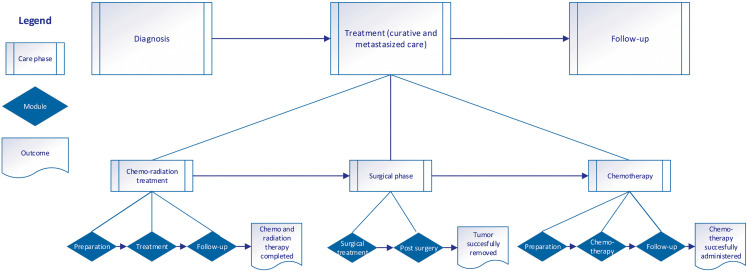 Figure 1
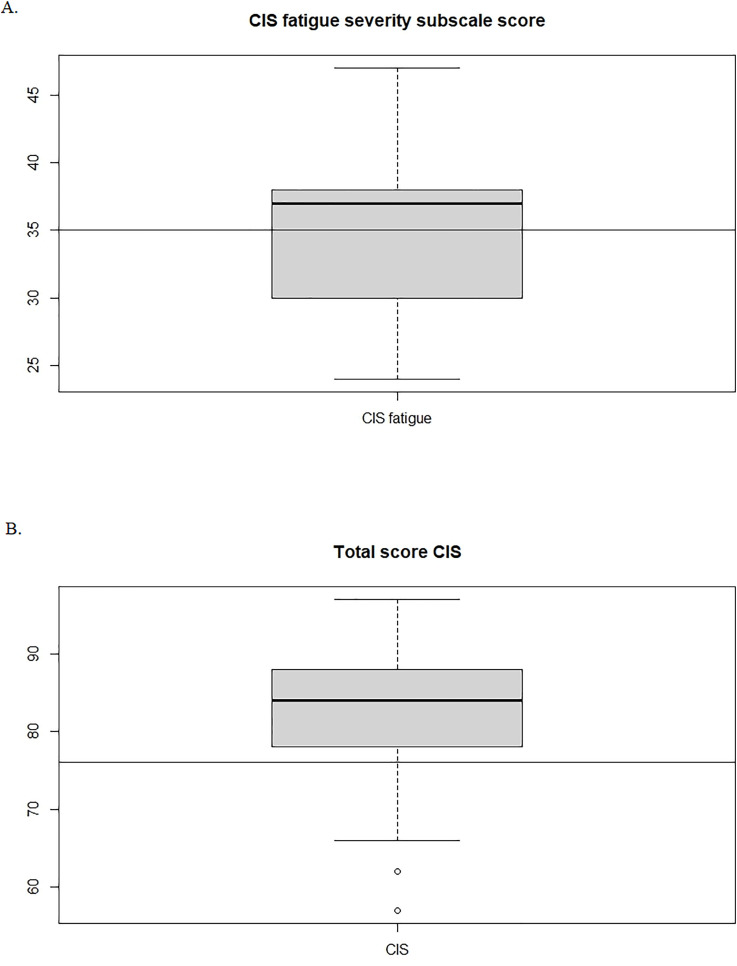 Figure 2
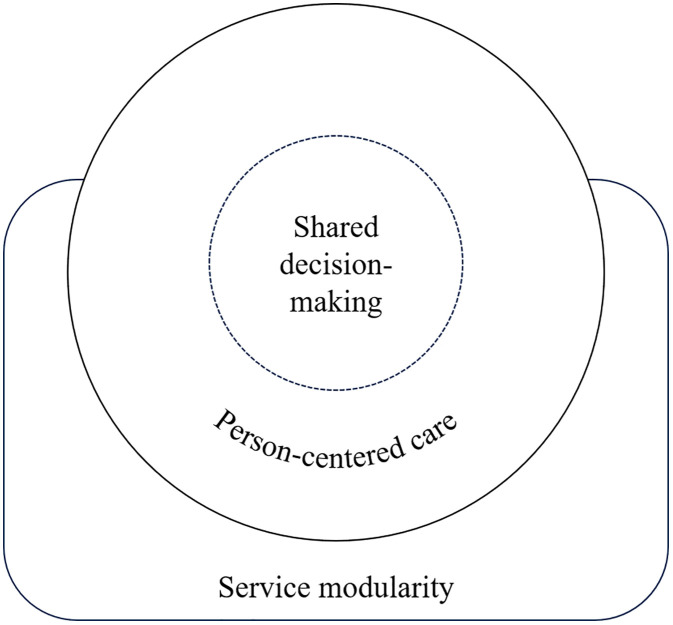 Figure 3
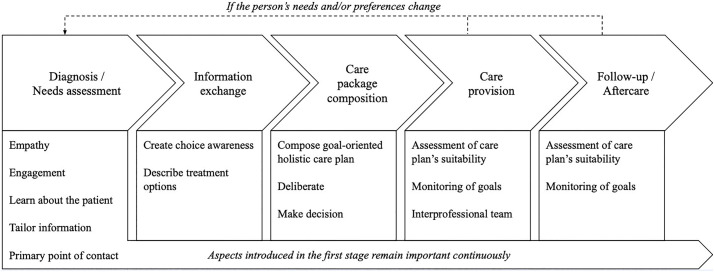 Figure 4
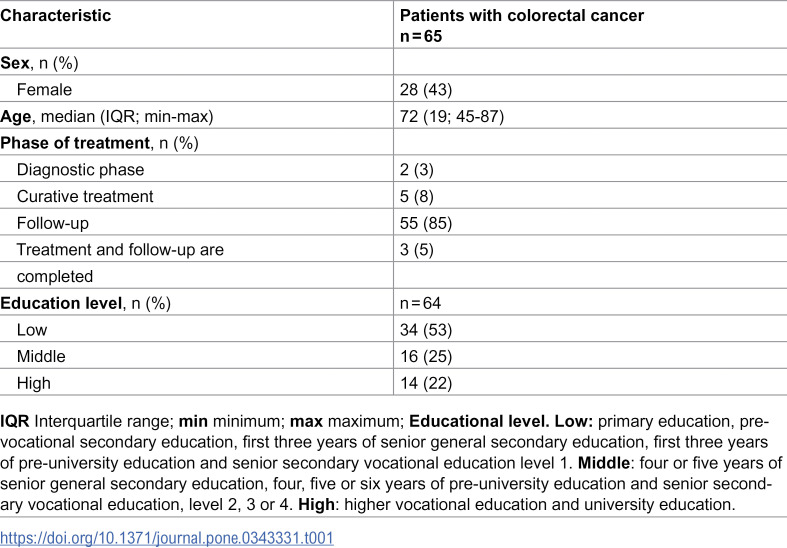 Figure 5
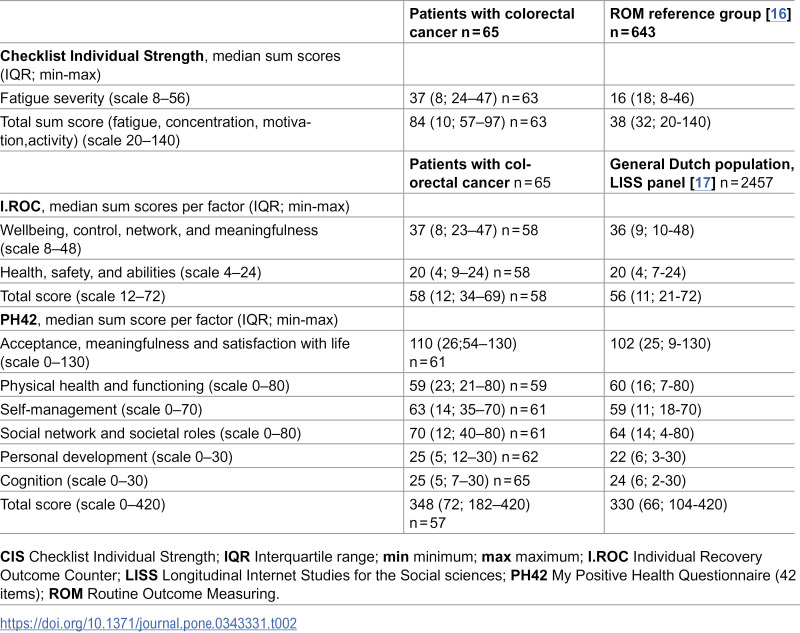 Figure 6
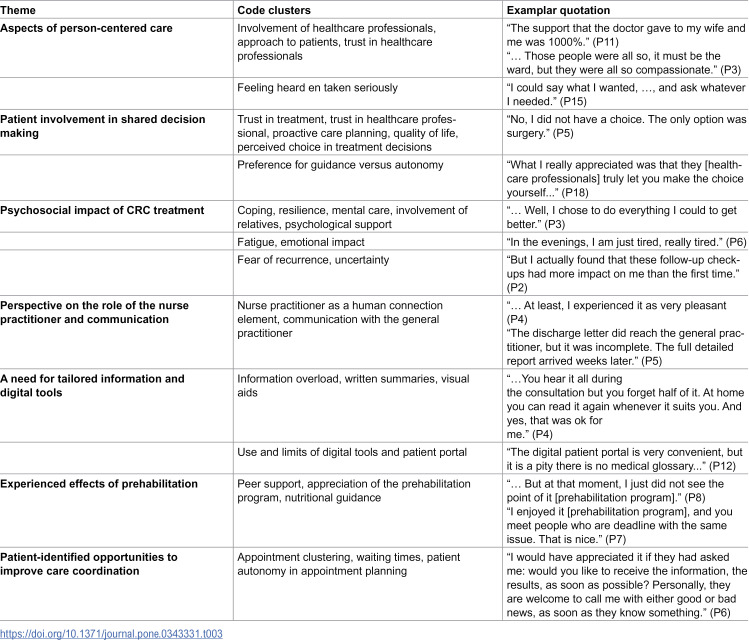 Figure 7
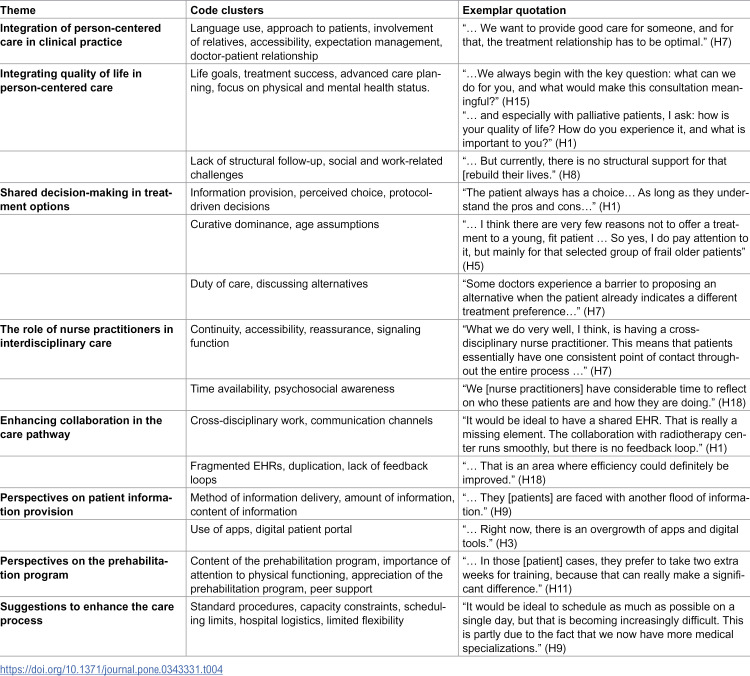 Figure 8
Peer Reviews
No public reviews on file for this paper yet. If you reviewed it on a platform where reviews are public (OpenReview, ICLR, NeurIPS, ICML), you can paste yours below so the community can read it here.
Videos
No videos yet. Explain this paper in a talk, walkthrough, or lecture? Add one.
Taxonomy
TopicsPatient-Provider Communication in Healthcare · Palliative Care and End-of-Life Issues · Cancer survivorship and care