A prospective observational study of plasma concentrations and safety of combined intravenous lidocaine and epidural ropivacaine in laparotomy surgery
Ottilie Trocheris-Fumery, Alexandre Pruvot, Paul Tarpin, Sophie Collette, Sandra Bodeau, Momar Diouf, Jean-Marc Régimbeau, Hervé Dupont, Stéphane Bar, Youssef Bennis, Osama Abou-Arab

TL;DR
This study evaluated the safety of combining intravenous lidocaine and epidural ropivacaine in laparotomy surgery patients, finding it generally safe with no major adverse events.
Contribution
The study provides new evidence on the safety profile of combining intravenous lidocaine and epidural ropivacaine in abdominal surgery.
Findings
Most patients had lidocaine and ropivacaine plasma concentrations within safe ranges.
No cardiac or neurological adverse events were observed within 48 hours post-surgery.
Only two patients exceeded the safety thresholds for drug concentrations.
Abstract
Intravenous lidocaine (IVL), an alternative to epidural analgesia (EA) for laparotomies, has demonstrated anti-inflammatory and anti-hyperalgesic effects. However, its combination with EA raises concerns about systemic toxicity. This study aimed to assess the safety of this combination in patients undergoing laparotomy. We conducted a prospective observational study at Amiens University Hospital in France, involving adult patients scheduled for laparotomies. Intravenous lidocaine was administered at induction as a 1.5 mg/kg bolus (ideal body weight), followed by a continuous infusion of 2 mg/kg/h maintained until the end of surgery. An epidural catheter was inserted before surgery, prior to induction of general anesthesia, no local anesthetic was administered intraoperatively. Epidural analgesia was initiated at the end of surgery with a 5 mg bolus of ropivacaine, followed by a…
Genes, proteins, chemicals, diseases, species, mutations and cell lines named across the full text — each resolved to its canonical identifier and authoritative record.
Click any figure to enlarge with its caption.
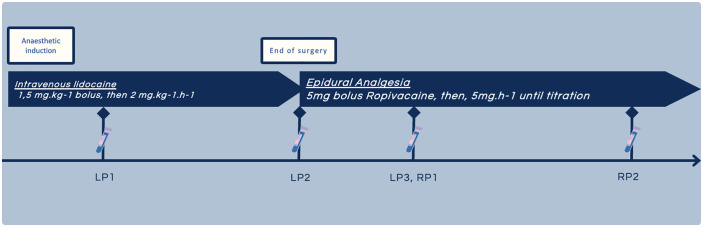 Figure 1
 Figure 2
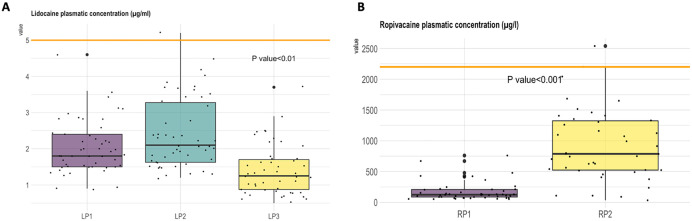 Figure 3
 Figure 4
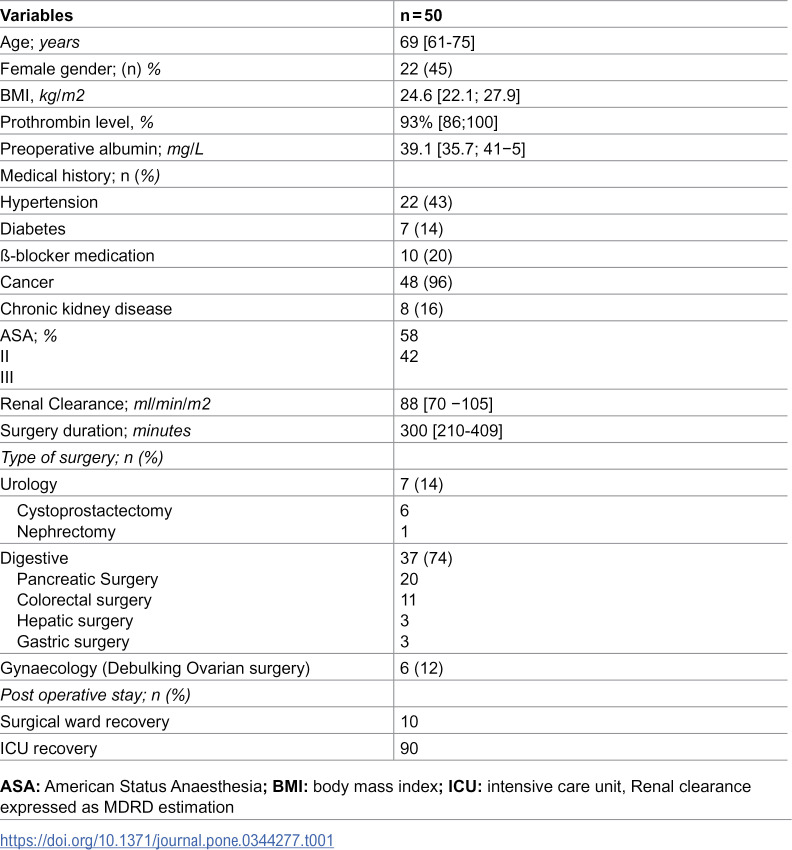 Figure 5
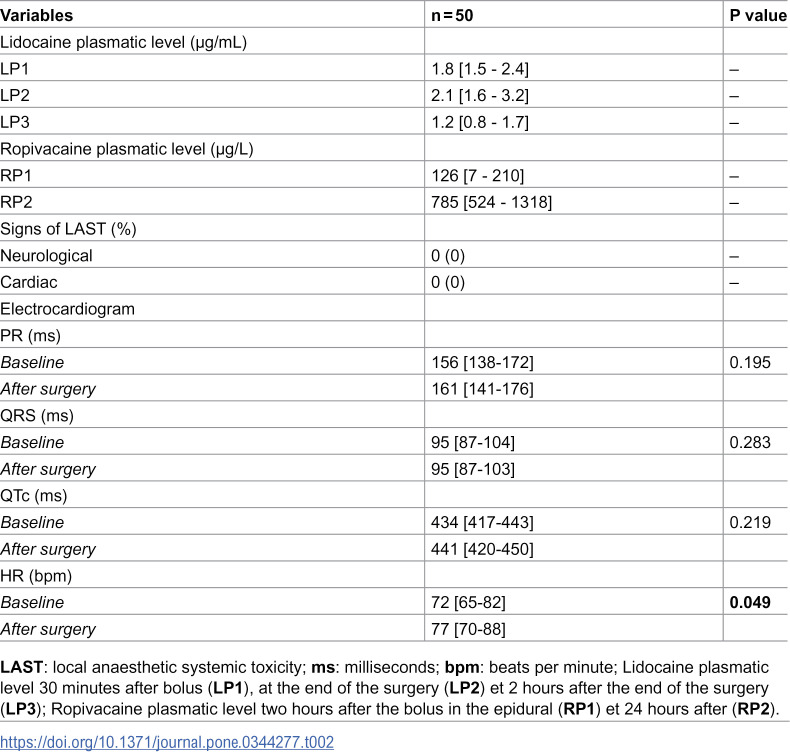 Figure 6
Peer Reviews
No public reviews on file for this paper yet. If you reviewed it on a platform where reviews are public (OpenReview, ICLR, NeurIPS, ICML), you can paste yours below so the community can read it here.
Videos
No videos yet. Explain this paper in a talk, walkthrough, or lecture? Add one.
Taxonomy
TopicsAnesthesia and Pain Management · Anesthesia and Sedative Agents · Cancer, Stress, Anesthesia, and Immune Response