Residual physiological abnormalities after pulmonary endarterectomy and balloon pulmonary angioplasty in CTEPH
Rita Calé, Filipa Ferreira, Mariana Martinho, Sofia Alegria, Débora Repolho, Ana Rita Pereira, João Luz, Tiago Lobão, Patrícia Araújo, Sílvia Vitorino, Hélder Pereira, Daniel Caldeira, R. Widmer, R. Widmer, R. Widmer, R. Widmer

TL;DR
This study finds that while surgeries for pulmonary hypertension improve resting heart function, exercise performance and quality of life remain limited long-term.
Contribution
The study provides new insights into long-term physiological recovery after pulmonary endarterectomy and balloon pulmonary angioplasty in CTEPH patients.
Findings
Both BPA and PEA significantly reduce mean pulmonary arterial pressure and vascular resistance at long-term follow-up.
Persistent exercise pulmonary vascular abnormalities remain despite improvements in resting hemodynamics.
Physical quality of life remains impaired long-term after both procedures.
Abstract
Pulmonary endarterectomy (PEA) is the first-line treatment for chronic thromboembolic pulmonary hypertension (CTEPH), while balloon pulmonary angioplasty (BPA) is an established alternative for inoperable patients. Although both interventions improve resting pulmonary hemodynamics, the extent of long-term physiological recovery during exercise and the persistence of functional limitations remain incompletely characterized. Prospective single-center registry (2017–2023) including 14 patients completing BPA (71 sessions) and 15 undergoing PEA, with median follow-up of 50 months (IQR 36–61). Clinical assessment included resting hemodynamics, invasive exercise right heart catheterization to derive the exercise slope of the mean pulmonary arterial pressure to cardiac output relashionship (mPAP/CO slope), and health-related quality of life (HRQOL) evaluated using the SF-36 questionnaire.…
Genes, proteins, chemicals, diseases, species, mutations and cell lines named across the full text — each resolved to its canonical identifier and authoritative record.
Click any figure to enlarge with its caption.
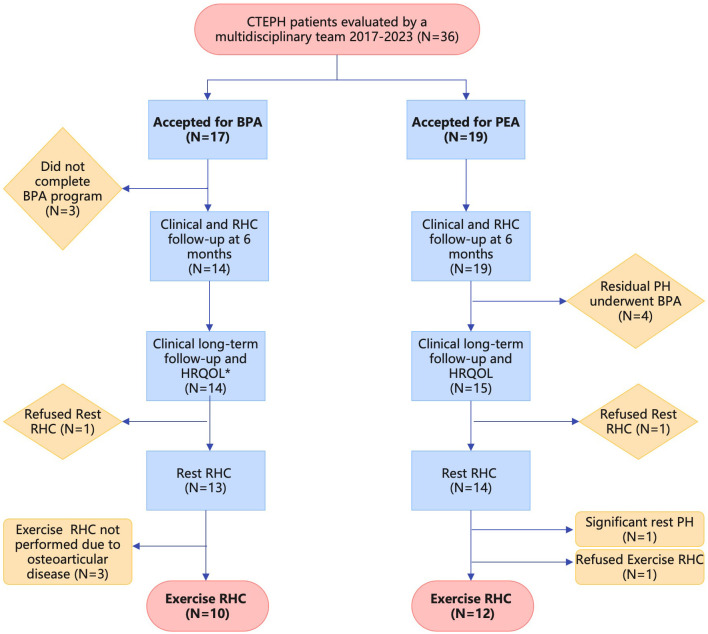 Figure 1
 Figure 2
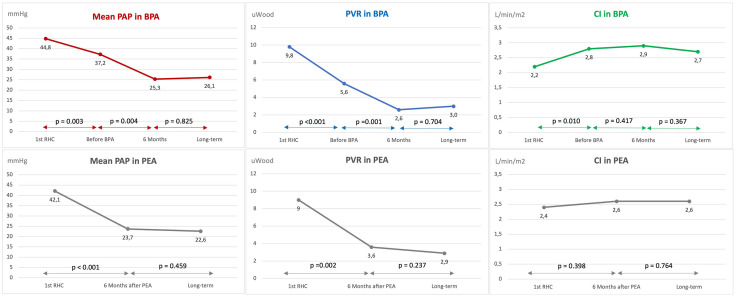 Figure 3
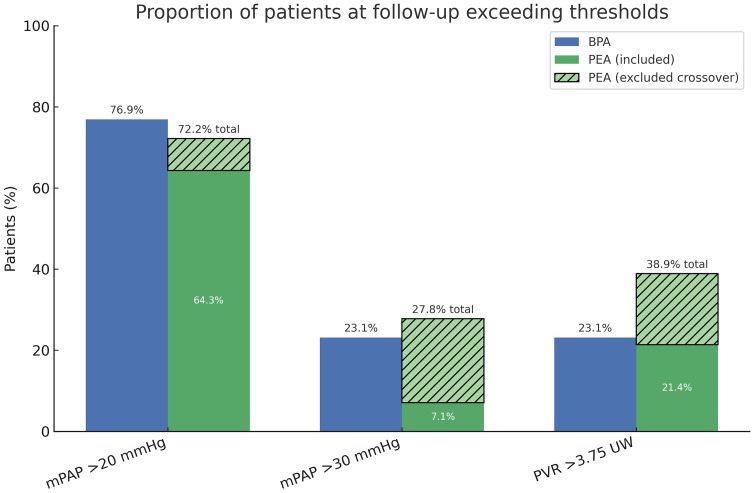 Figure 4
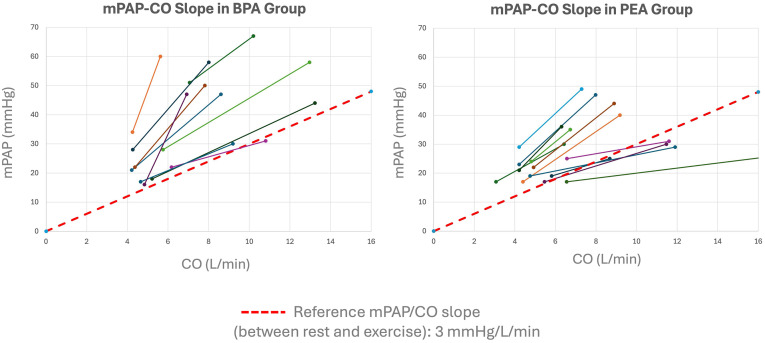 Figure 5
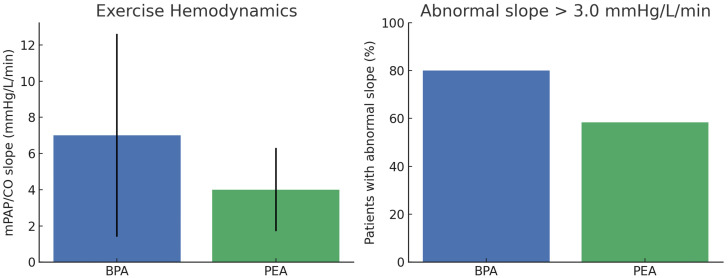 Figure 6
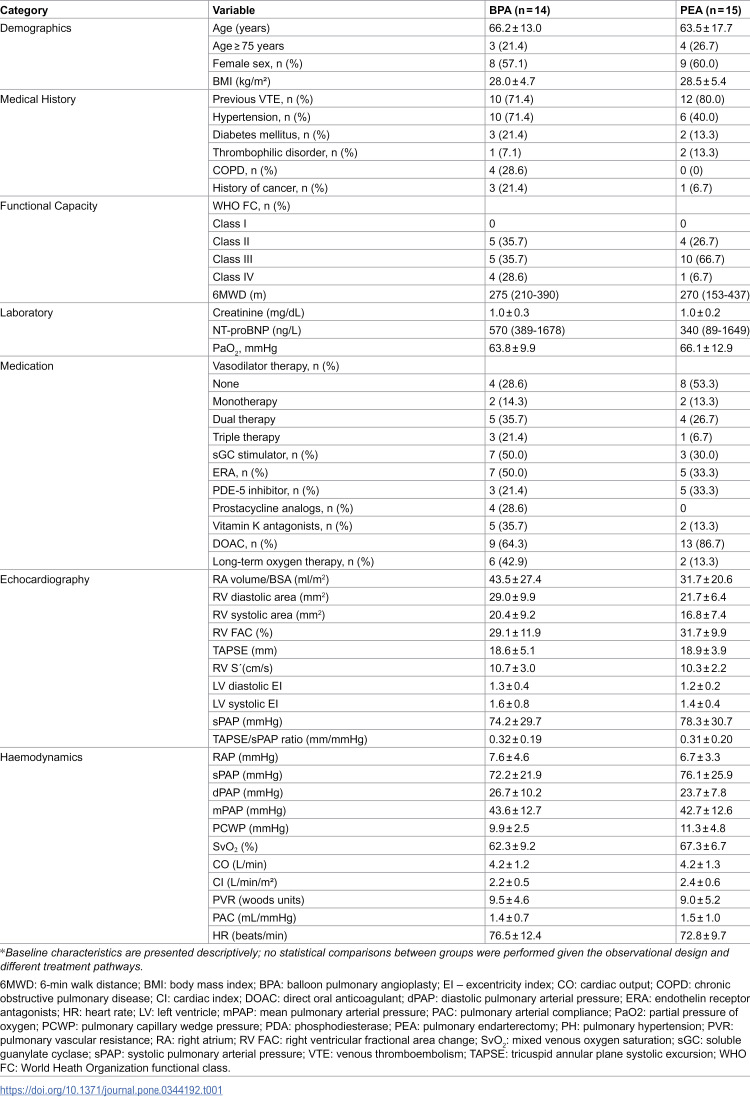 Figure 7
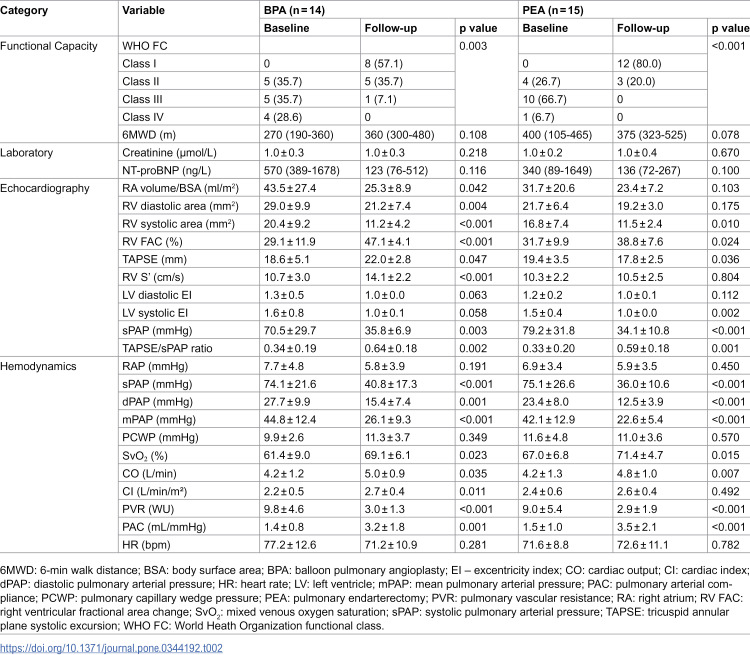 Figure 8
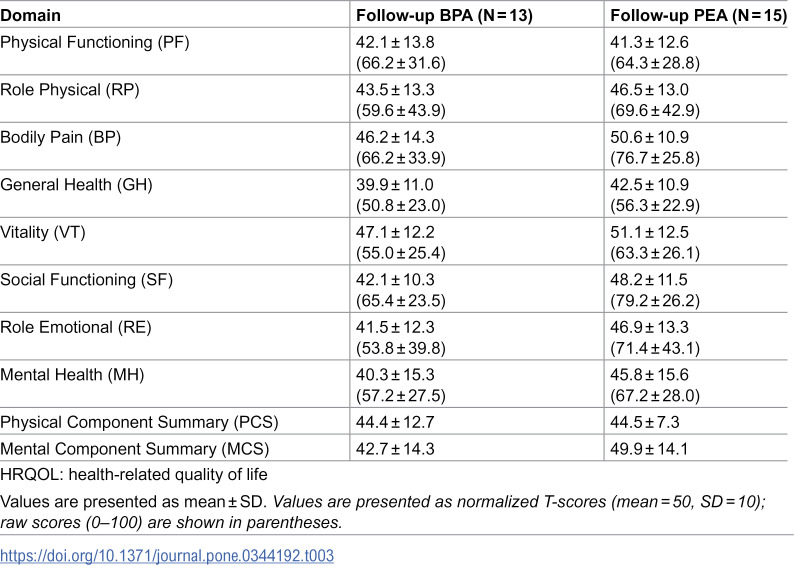 Figure 9
Peer Reviews
No public reviews on file for this paper yet. If you reviewed it on a platform where reviews are public (OpenReview, ICLR, NeurIPS, ICML), you can paste yours below so the community can read it here.
Videos
No videos yet. Explain this paper in a talk, walkthrough, or lecture? Add one.
Taxonomy
TopicsPulmonary Hypertension Research and Treatments · Transplantation: Methods and Outcomes · Respiratory Support and Mechanisms