PAH-former: Transfer learning for efficient discovery of pulmonary arterial hypertension-associated genes
Toshinaru Kawakami, Sosuke Hosokawa, Masamichi Ito, Atsumasa Kurozumi, Ryohei Tanaka, Shun Minatsuki, Junichi Ishida, Takayuki Isagawa, Satoshi Kodera, Norihiko Takeda, Nanako Kawaguchi, Nanako Kawaguchi, Nanako Kawaguchi

TL;DR
This study introduces PAH-former, a deep learning model that identifies genes linked to pulmonary arterial hypertension using limited patient data and validates them experimentally.
Contribution
A novel transfer learning approach called PAH-former for efficient discovery of PAH-associated genes from scarce data.
Findings
PAH-former identified 134 candidate genes, including known and novel ones, predicted to influence PAH.
RNA interference validation showed that knockdown of top candidates increased SOX18 expression.
The model offers a broadly applicable strategy for gene discovery in rare diseases.
Abstract
Pulmonary arterial hypertension (PAH) is a severe disease with limited effective therapies, making the discovery of new therapeutic targets crucial. While single-cell RNA sequencing (sc-RNA seq) offers a powerful tool for this purpose, its application is hampered by the scarcity of patient samples. This study addresses the problem of how to efficiently identify novel, functionally relevant disease-associated genes from limited publicly available data. We employed transfer learning by fine-tuning Geneformer, a deep learning model, with public sc-RNA seq data from patients with PAH to create a specialized model called PAH-former. This model was used to perform in silico perturbation analysis to identify and rank candidate genes predicted to influence the disease state. For validation, we performed RNA interference-mediated knockdown of top novel candidate genes in human pulmonary artery…
Genes, proteins, chemicals, diseases, species, mutations and cell lines named across the full text — each resolved to its canonical identifier and authoritative record.
Click any figure to enlarge with its caption.
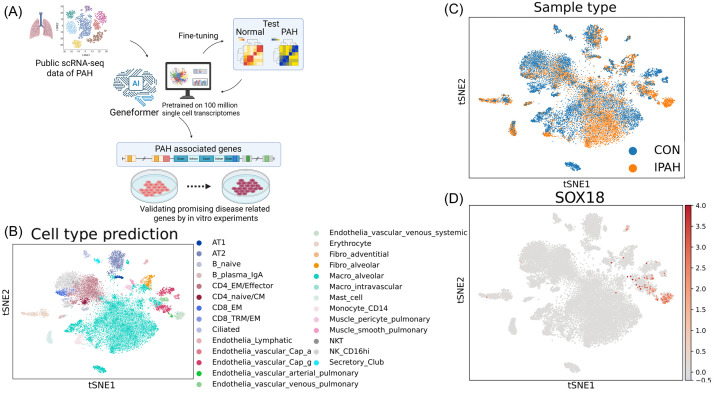 Figure 1
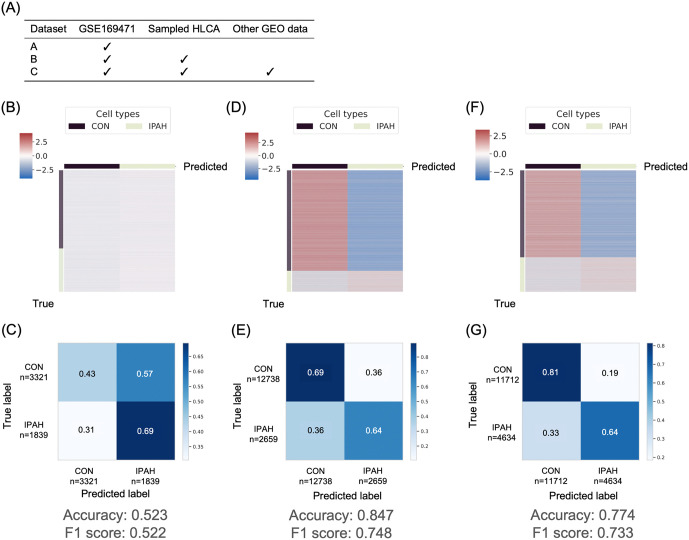 Figure 2
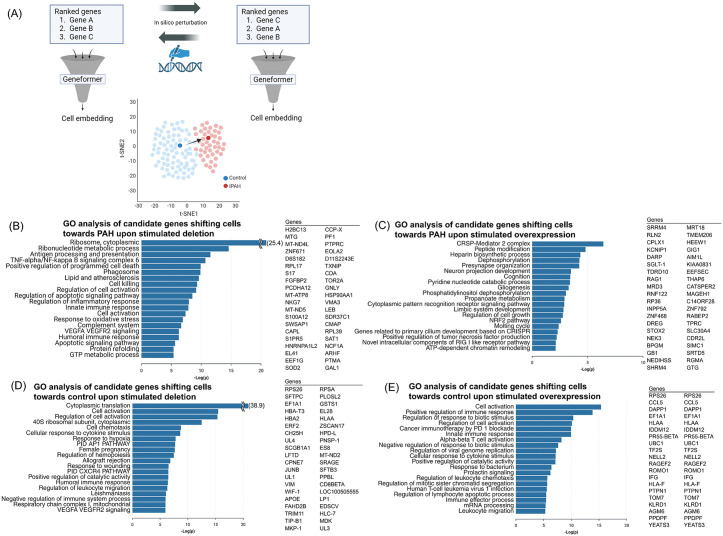 Figure 3
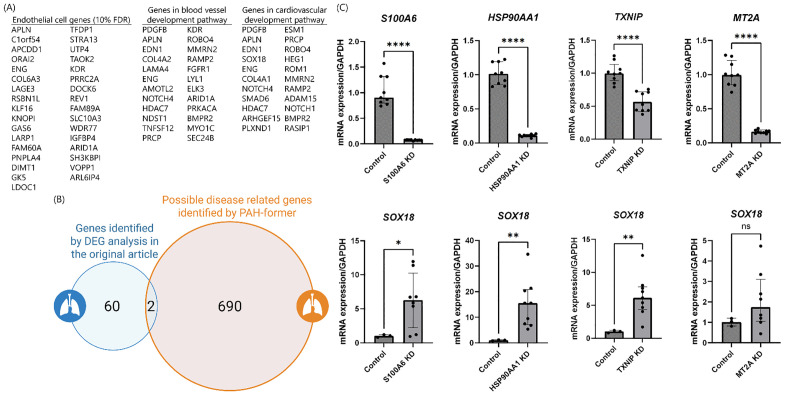 Figure 4
Peer Reviews
No public reviews on file for this paper yet. If you reviewed it on a platform where reviews are public (OpenReview, ICLR, NeurIPS, ICML), you can paste yours below so the community can read it here.
Videos
No videos yet. Explain this paper in a talk, walkthrough, or lecture? Add one.
Taxonomy
TopicsPulmonary Hypertension Research and Treatments · Genomics and Rare Diseases · Phosphodiesterase function and regulation