LC3-associated phagocytosis in macrophage responses to Paracoccidioides spp
Getúlio Pereira de Oliveira, Herdson Renney de Sousa, Kaio César de Melo Gorgonha, Lara Laís Montalvão Tomaz, Tatiana Karla dos Santos Borges, Kellyanne Teixeira Rangel, Scott Fabricant, Fernanda Koser Gustafson, Lucas Friaça Albuquerque, Angelo Rossi, Fabián Andrés Hurtado

TL;DR
This study shows that LC3-associated phagocytosis helps macrophages fight Paracoccidioides fungi, a cause of a Latin American disease, and suggests it could be a target for new treatments.
Contribution
The study reveals that LAP is involved in macrophage defense against Paracoccidioides spp. with distinct activation mechanisms compared to other fungi.
Findings
LC3 recruitment to phagosomes was observed in macrophages infected with Paracoccidioides spp.
ATG5 RNA interference reduced antifungal activity in J774.16 cells, showing LAP's importance.
Syk and NADPH inhibition did not affect LAP against P. brasiliensis, indicating unique activation pathways.
Abstract
Paracoccidioidomycosis (PCM) is a systemic infection that is endemic to Latin America, caused by thermodimorphic fungi from the Paracoccidioides genus. These fungi are facultative intracellular parasites of macrophages. LC3-associated phagocytosis (LAP), a non-canonical form of autophagy, plays a critical role in the response of these phagocytes to similar pathogens. In this study, we investigated the role of LAP in the macrophage responses to Paracoccidioides spp. We detected LAP in macrophages infected with Paracoccidioides spp by immunofluorescence microscopy with antibodies to LC3. Piceatannol and diphenyleneiodonium chloride (DPI), respectively Syk and nicotinamide adenine dinucleotide phosphate oxidase (NADPH) inhibitors, were used to understand the role their pathways played. To determine the function of LAP, we targeted ATG5, a key autophagy gene, by RNA interference. We…
Genes, proteins, chemicals, diseases, species, mutations and cell lines named across the full text — each resolved to its canonical identifier and authoritative record.
Click any figure to enlarge with its caption.
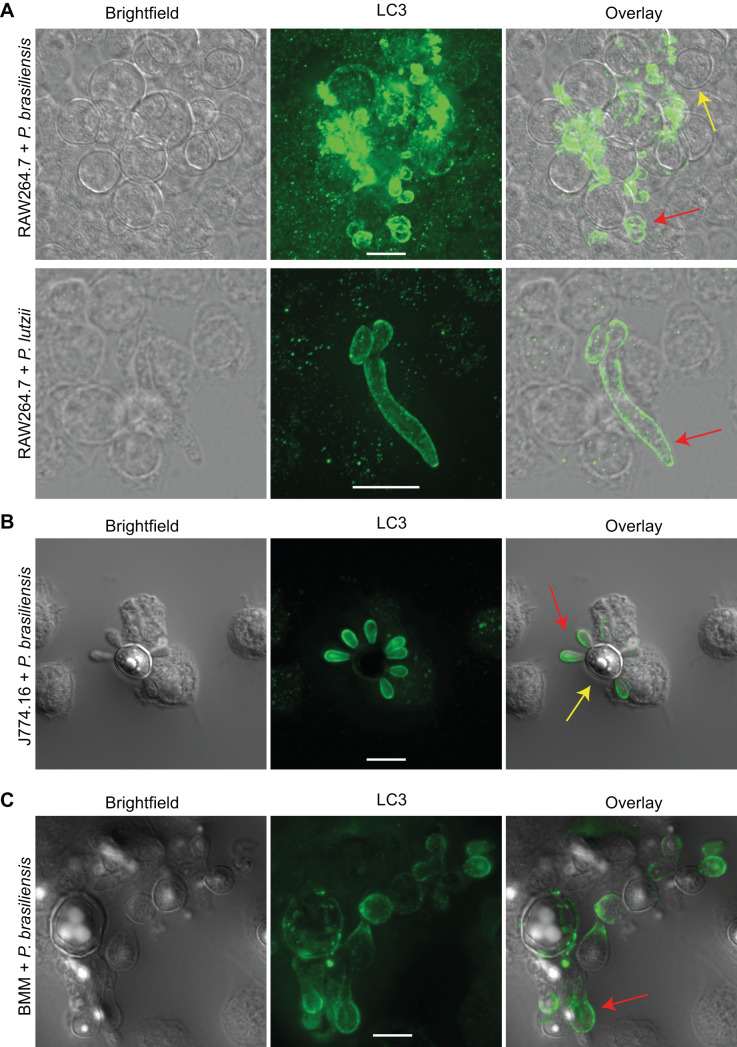 Figure 1
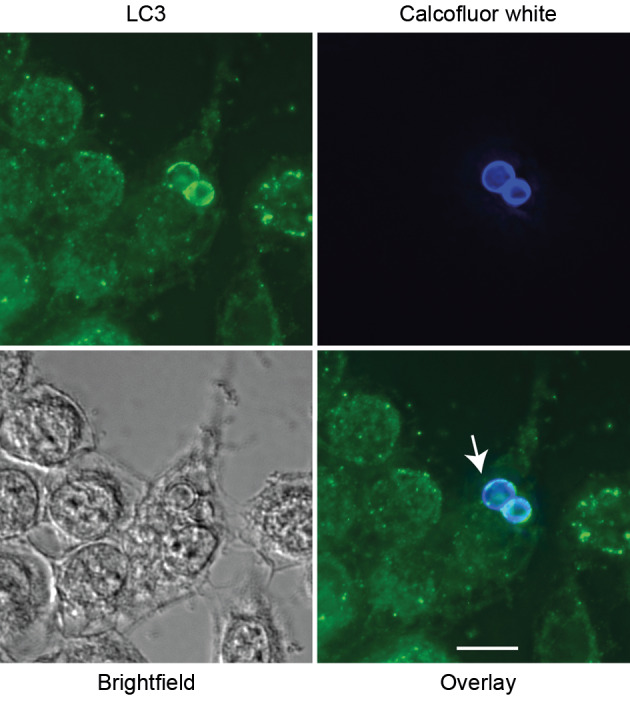 Figure 2
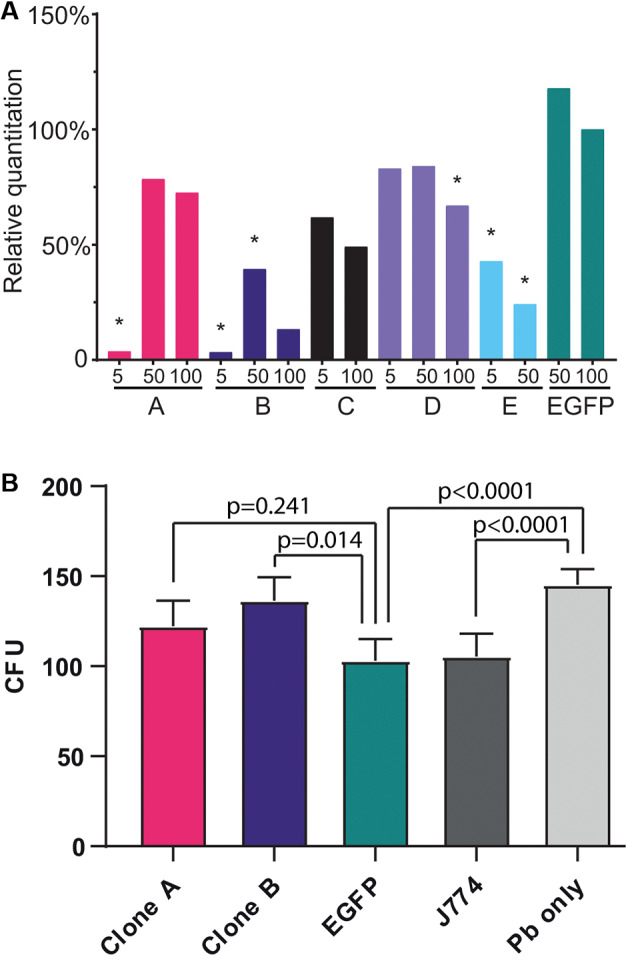 Figure 3
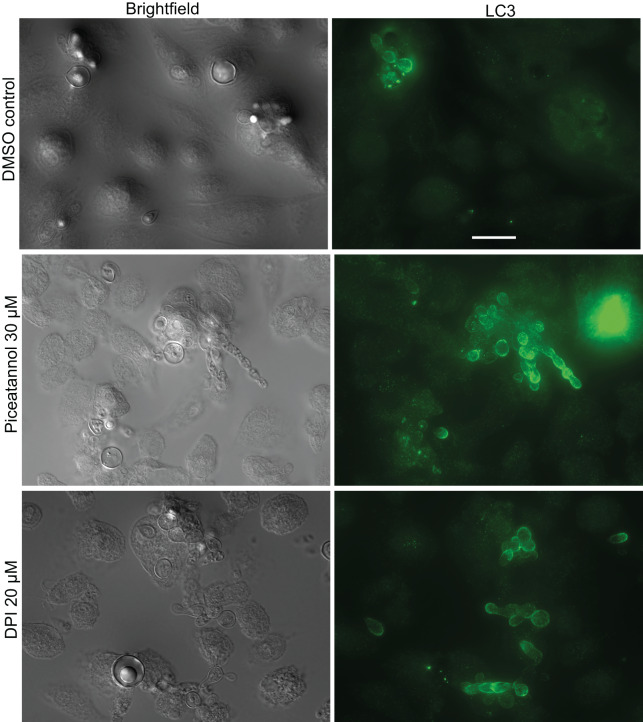 Figure 4
Peer Reviews
No public reviews on file for this paper yet. If you reviewed it on a platform where reviews are public (OpenReview, ICLR, NeurIPS, ICML), you can paste yours below so the community can read it here.
Videos
No videos yet. Explain this paper in a talk, walkthrough, or lecture? Add one.
Taxonomy
TopicsFungal Infections and Studies · Antifungal resistance and susceptibility · Toxoplasma gondii Research Studies