Neurons with granulovacuolar degeneration bodies are resilient to tau-induced protein synthesis impairment
Jasper F. M. Smits, Thijmen W. Ligthart, Marta Jorge-Oliva, Skip Middelhoff, Fleur Schipper, Débora Pita-Illobre, Ka Wan Li, Wiep Scheper

TL;DR
Some neurons in Alzheimer's disease resist damage from tau proteins by forming structures called GVBs, which help maintain protein production and protect against neurodegeneration.
Contribution
The study identifies CK1δ as a key regulator of GVB formation, linking it to a protective stress response in neurons affected by tau pathology.
Findings
GVB+ neurons are resilient to tau-induced impairment of global protein synthesis.
GVB+ neurons retain the ability to induce long-term potentiation–induced protein synthesis despite tau pathology.
CK1δ activity is essential for GVB formation and is sequestered in GVBs via autophagy.
Abstract
In Alzheimer’s disease, many surviving neurons with tau pathology contain granulovacuolar degeneration bodies (GVBs), neuron-specific lysosomal structures induced by pathological tau assemblies. This could indicate a neuroprotective role for GVBs; however, the mechanism of GVB formation and its functional implications are elusive. Here, we demonstrate that casein kinase 1δ (CK1δ) activity is required for GVB formation. CK1δ is sequestered in the GVB during this process in an autophagy-dependent manner. We show that neurons with GVBs (GVB+) are resilient to tau-induced impairment of global protein synthesis and are protected against tau-mediated neurodegeneration. GVB+ neurons do not exhibit differential activation of transient translational stress responses but have increased ribosomal content. Unlike neurons without GVBs, GVB+ neurons fully retain the capacity to induce long-term…
Genes, proteins, chemicals, diseases, species, mutations and cell lines named across the full text — each resolved to its canonical identifier and authoritative record.
Click any figure to enlarge with its caption.
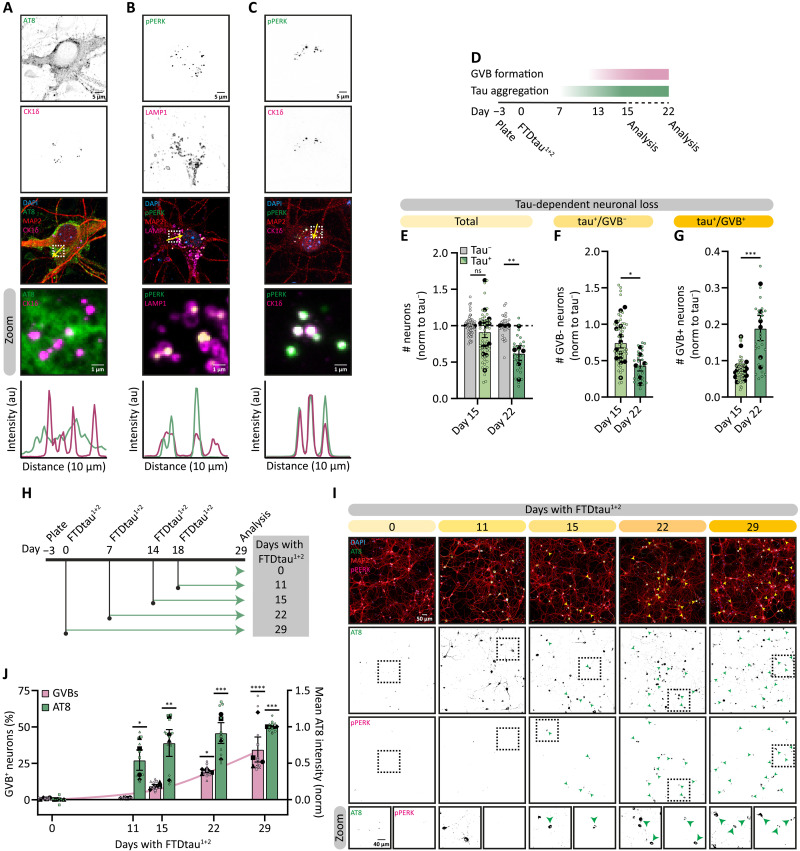 Figure 1
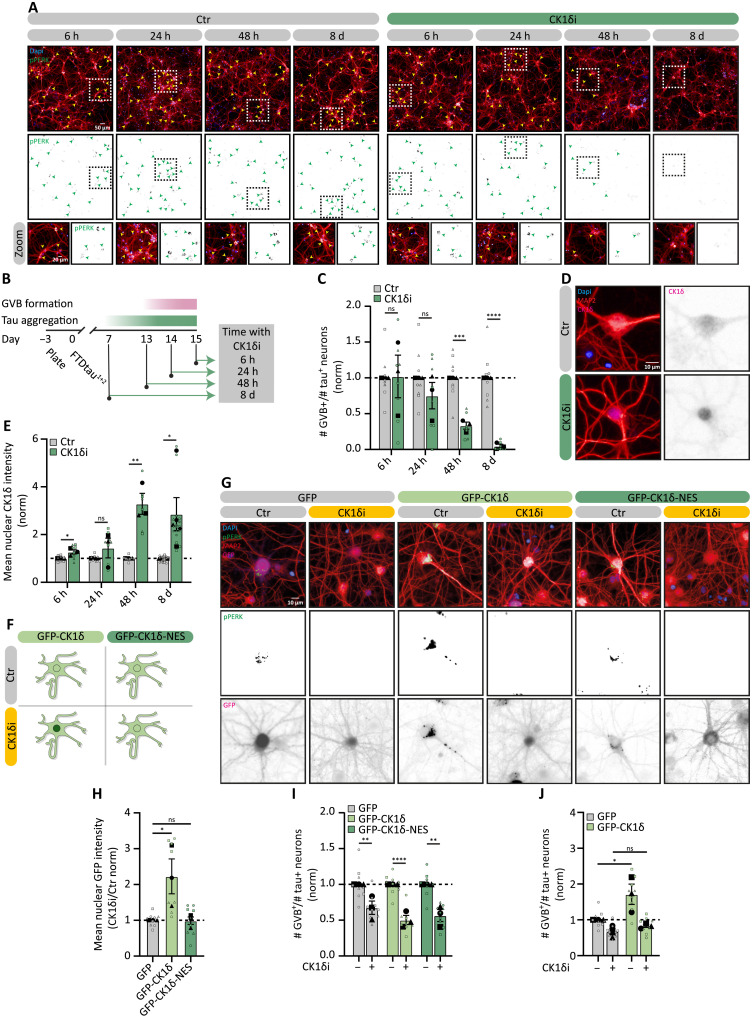 Figure 2
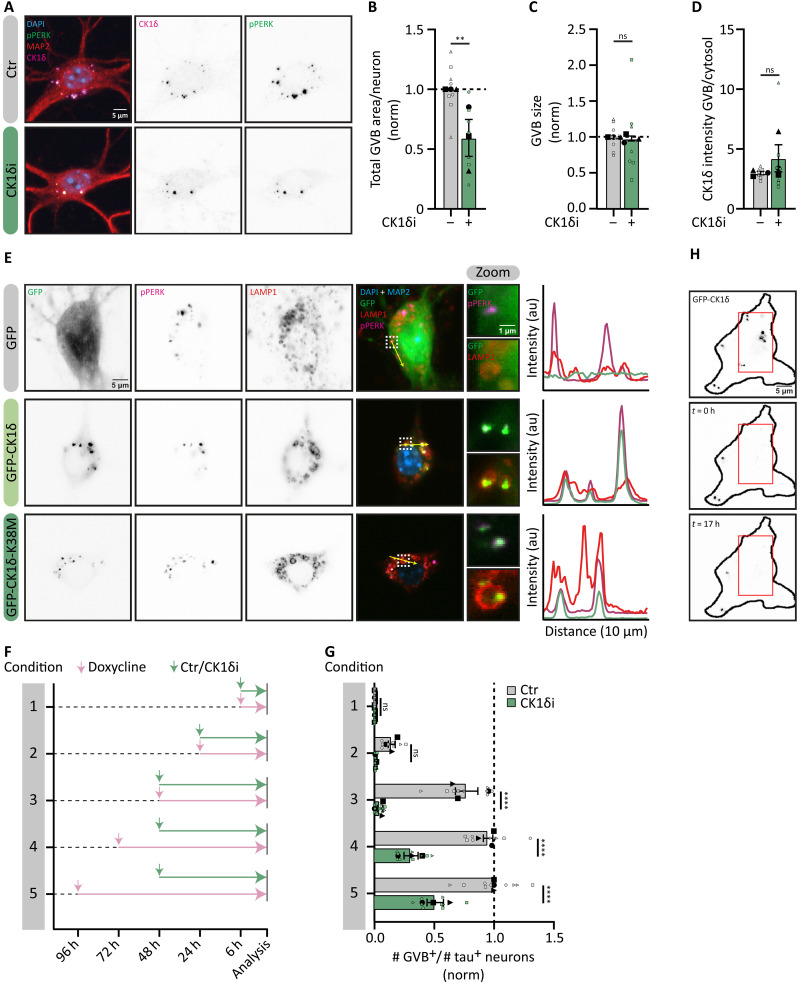 Figure 3
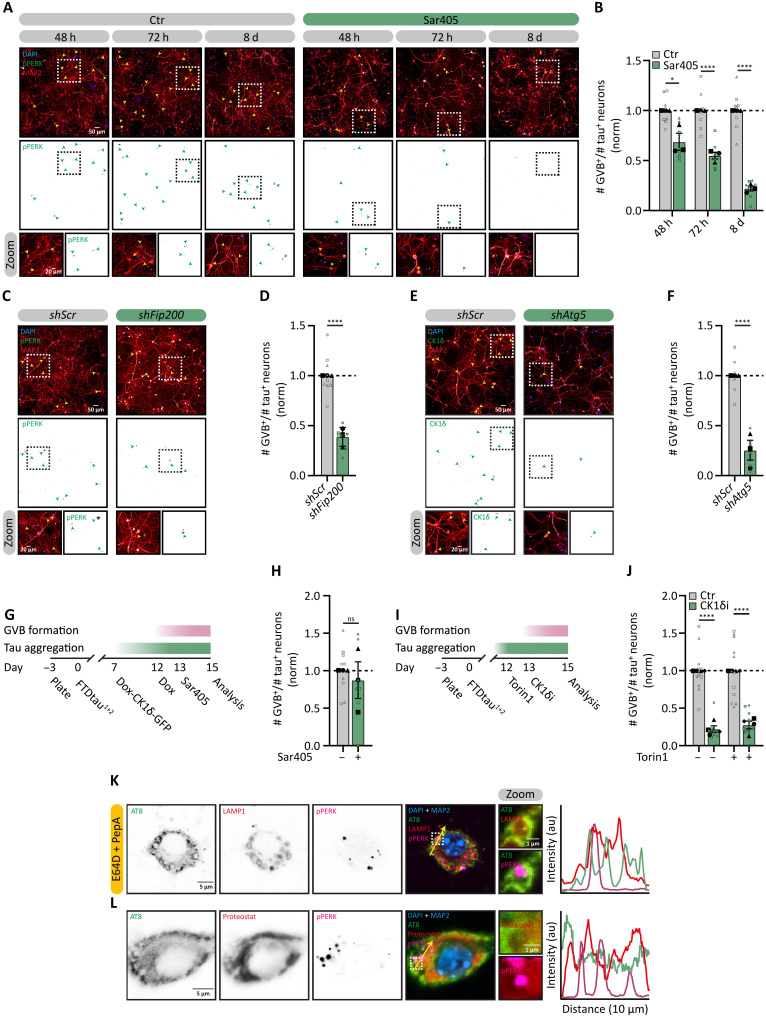 Figure 4
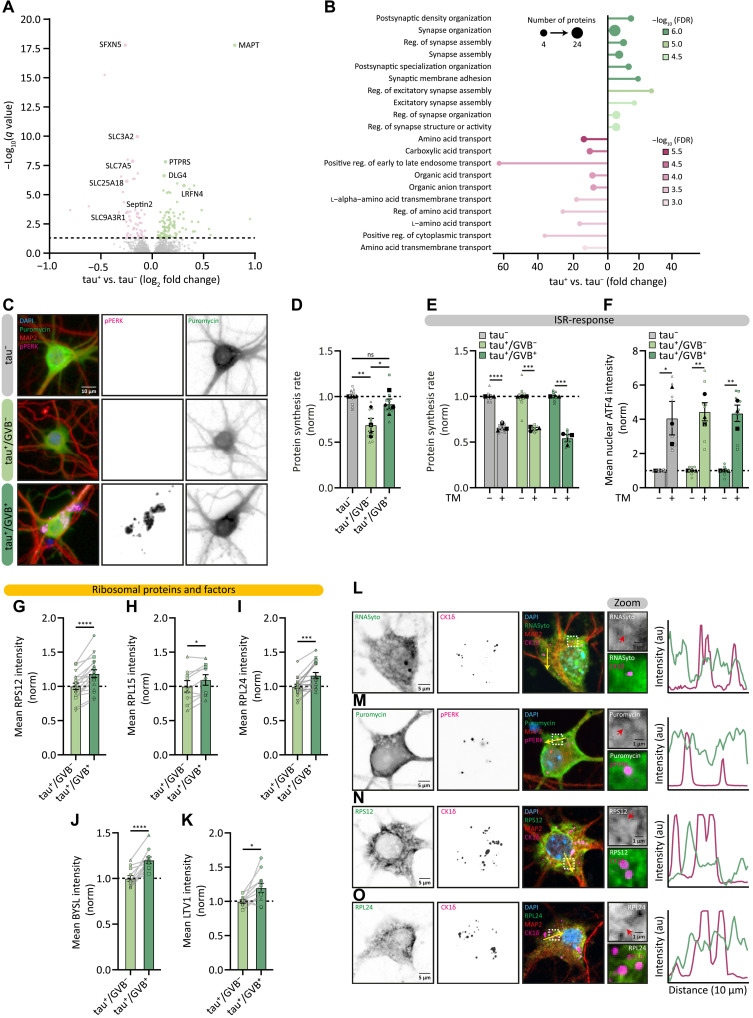 Figure 5
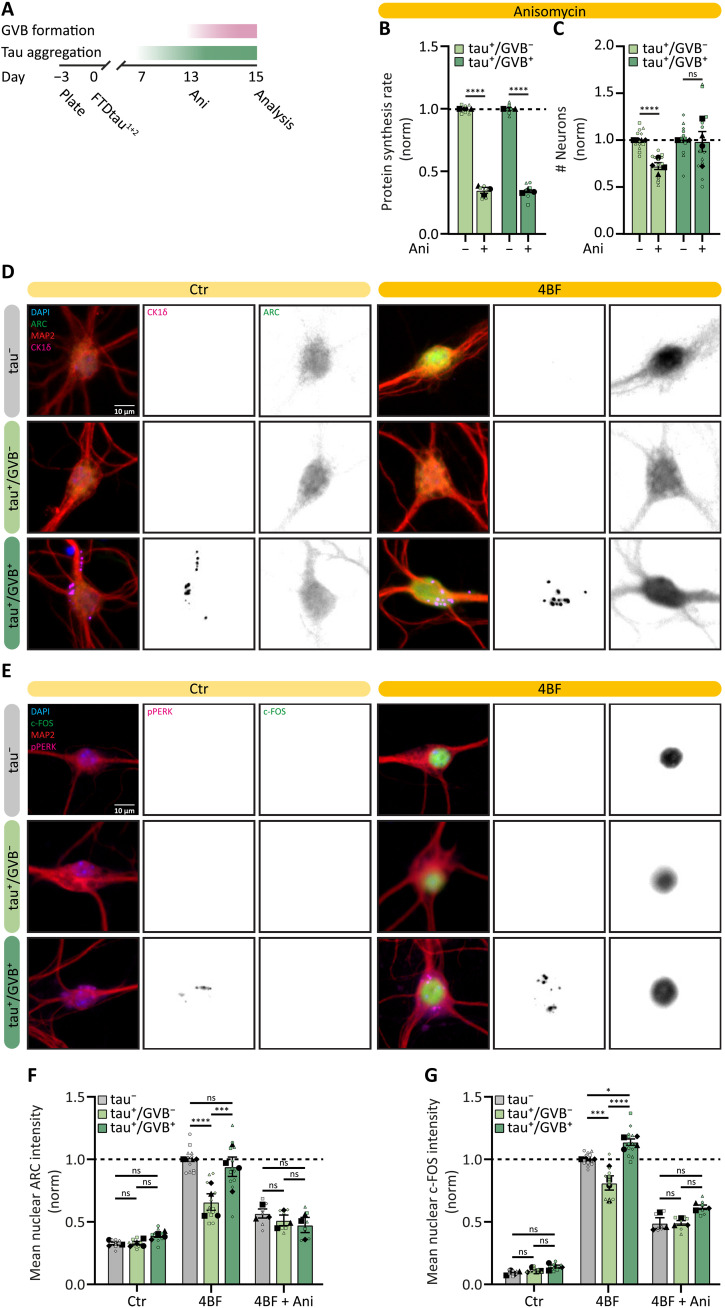 Figure 6
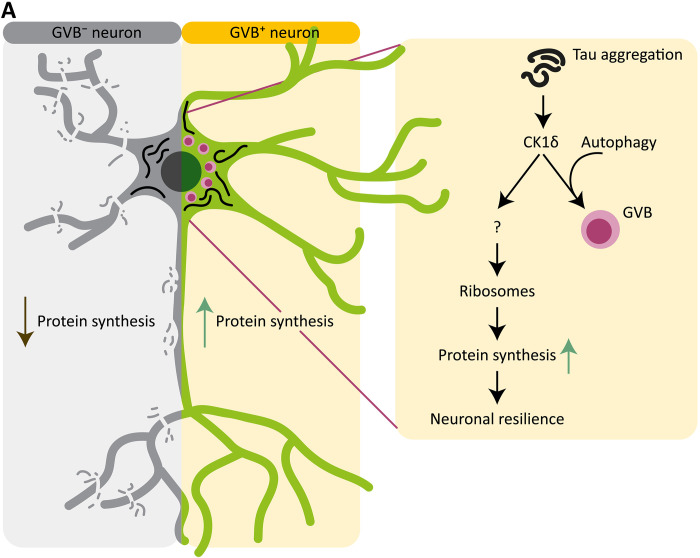 Figure 7
Peer Reviews
No public reviews on file for this paper yet. If you reviewed it on a platform where reviews are public (OpenReview, ICLR, NeurIPS, ICML), you can paste yours below so the community can read it here.
Videos
No videos yet. Explain this paper in a talk, walkthrough, or lecture? Add one.
Taxonomy
TopicsAlzheimer's disease research and treatments · Autophagy in Disease and Therapy · Parkinson's Disease Mechanisms and Treatments