Toll-like receptor signaling outcome is determined by the stoichiometry of the endogenous TRIFosome
Martin C. Moncrieffe, Prasanna Suresh, Joe Boyle, Yuhao Cui, Bharti Nawalpuri, Brett Verstak, Yu P. Zhang, Ziwei Zhang, Marcus Taylor, Edward H. Egelman, Nicholas Gay, David Klenerman, Clare Bryant

TL;DR
This study reveals how TRIF proteins form signaling platforms in immune cells, showing both new and existing mechanisms of immune response.
Contribution
The study identifies TRIF's ability to form filamentous oligomers and reveals a previously unknown mode of TLR signaling.
Findings
TRIF forms filamentous oligomers that associate with RIP1 and RIP3 kinases.
TLR3/4 activation triggers interferon signaling before TRIFosome formation.
TRIF is predominantly monomeric in unstimulated macrophages.
Abstract
Toll-like receptors (TLRs) drive innate immunity via assembly of macromolecular signal transduction platforms [supramolecular organizing centers (SMOCs)] coordinated by adaptor proteins such as Toll/interleukin-1 receptor (IL-1R) domain–containing adaptor-inducing interferon-β (TRIF), but whether oligomeric TRIFosomes form is unknown. Here, using cryo–electron microscopy and biophysical characterization of full-length TRIF in vitro, we show that it forms filamentous oligomers, which associate with the TRIF signaling partners receptor interacting protein 1 (RIP1) and RIP3 kinases, suggesting that oligomeric TRIFosomes could form. Endogenous TRIF, however, is predominantly monomeric in the absence of ligand, only forming TRIFosome oligomers in macrophages after stimulation of TLR4 or TLR3 when large, macromolecular signaling complexes form. TRIFosomes are fully formed 45 min after TLR3 or…
Genes, proteins, chemicals, diseases, species, mutations and cell lines named across the full text — each resolved to its canonical identifier and authoritative record.
Click any figure to enlarge with its caption.
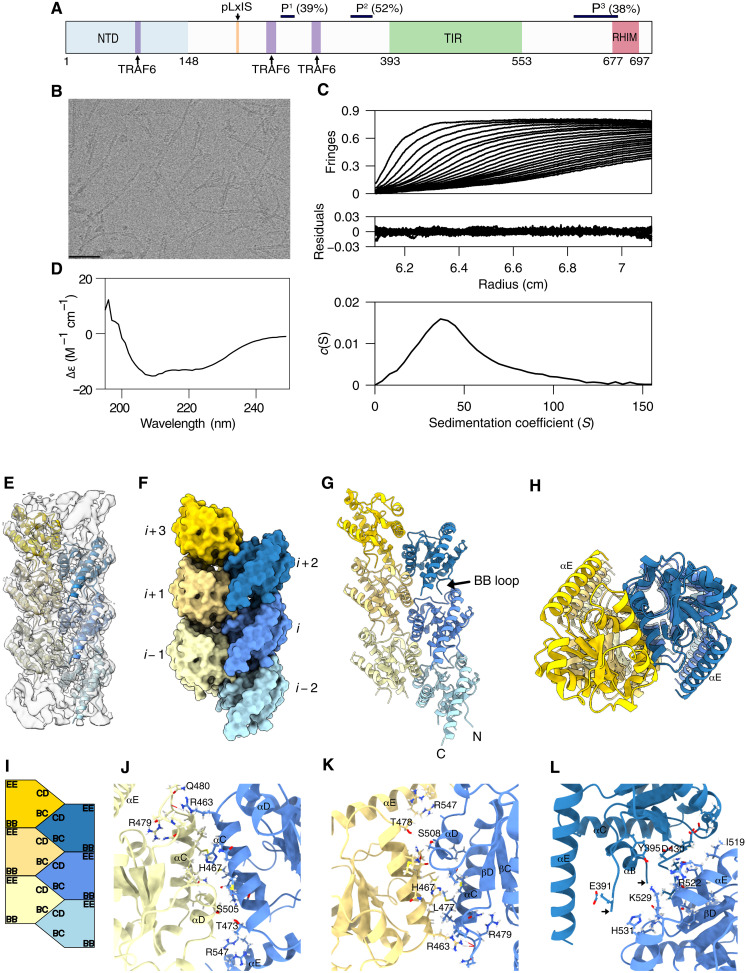 Figure 1
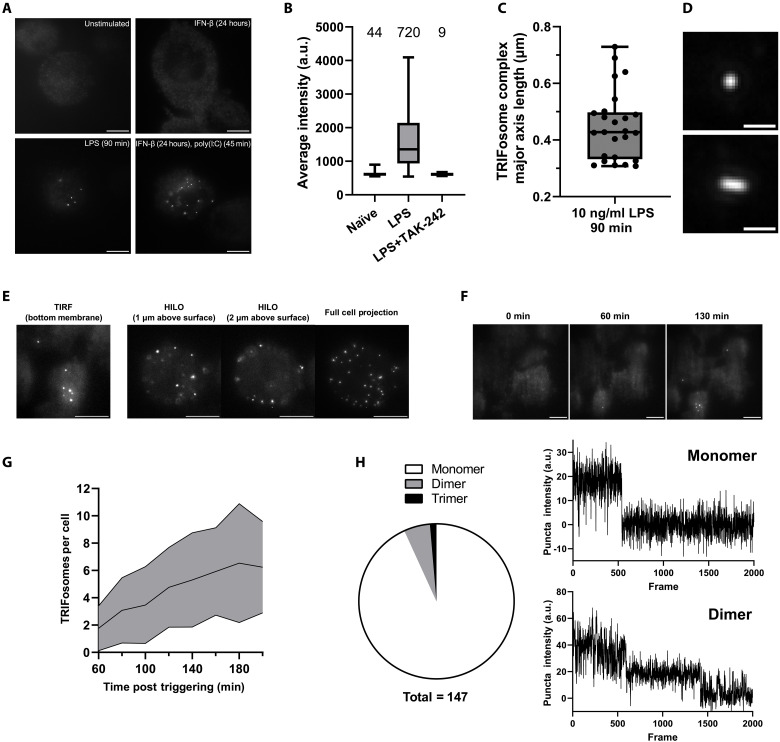 Figure 2
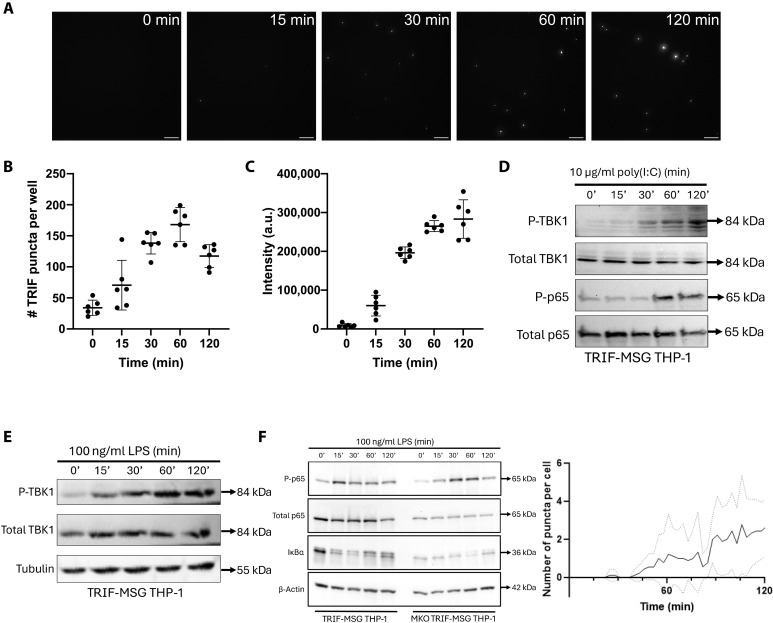 Figure 3
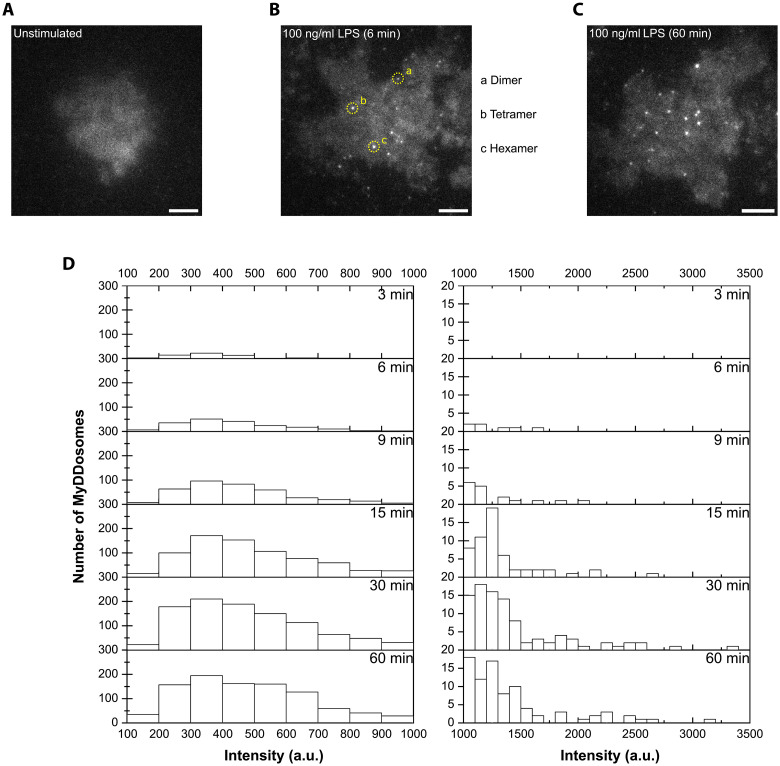 Figure 4
Peer Reviews
No public reviews on file for this paper yet. If you reviewed it on a platform where reviews are public (OpenReview, ICLR, NeurIPS, ICML), you can paste yours below so the community can read it here.
Videos
No videos yet. Explain this paper in a talk, walkthrough, or lecture? Add one.
Taxonomy
TopicsImmune Response and Inflammation · interferon and immune responses · Cell Adhesion Molecules Research