A male-pheromone-elevated transcription factor ZNF362.1 in female schistosomes determines sexual maturation
Mengjie Gu, Wenjun Cheng, Shan Li, Gongwen Chen, Xu Chen, Ruiqi Jiang, Minwei Yuan, Jing Wang, Wei Zhang, Cun Yi, Yuxiang Xie, Xiaoling Wang, Wei Hu, Jipeng Wang

TL;DR
A male pheromone triggers a gene in female schistosomes that is crucial for their sexual development, offering new targets for treating schistosomiasis.
Contribution
Discovery of znf362.1 as a key transcription factor in female schistosome sexual maturation triggered by male pheromones.
Findings
ZNF362.1 is essential for BATT-induced maturation of female schistosome reproductive organs.
ZNF362.1 activates Smp_349410, a gene encoding a CPEB1 homolog critical for oocyte and vitellocyte differentiation.
SmCPEB1 regulates cyclin B1 mRNA polyadenylation and S1 cell differentiation in the vitellaria.
Abstract
Egg production by female schistosomes drives both transmission and pathology of schistosomiasis, affecting over 200 million people. Female maturation relies on the male-derived pheromone β-alanyl-tryptamine (BATT), but underlying molecular mechanisms are unclear. We identified the BATT-responsive transcription factor gene znf362 as a key regulator of female reproductive development. Functional studies showed that znf362.1, but not znf362.2, is essential for BATT-induced ovary and vitellaria maturation. Single-cell transcriptomics and in situ hybridization revealed up-regulation of znf362.1 in oocytes and vitellaria S1 cells after BATT exposure. Multiomics analysis showed ZNF362.1 directly activates Smp_349410, a female gonad-specific gene encoding a CPEB1 homolog. Loss of znf362.1 or Smp_349410 impaired oocyte and vitellocyte differentiation without affecting progenitors.…
Genes, proteins, chemicals, diseases, species, mutations and cell lines named across the full text — each resolved to its canonical identifier and authoritative record.
Click any figure to enlarge with its caption.
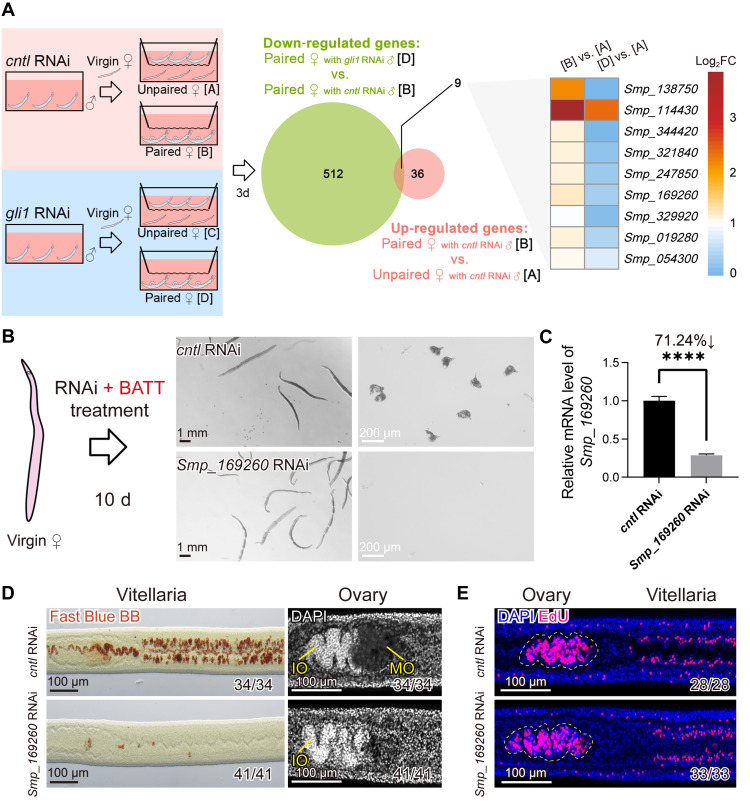 Figure 1
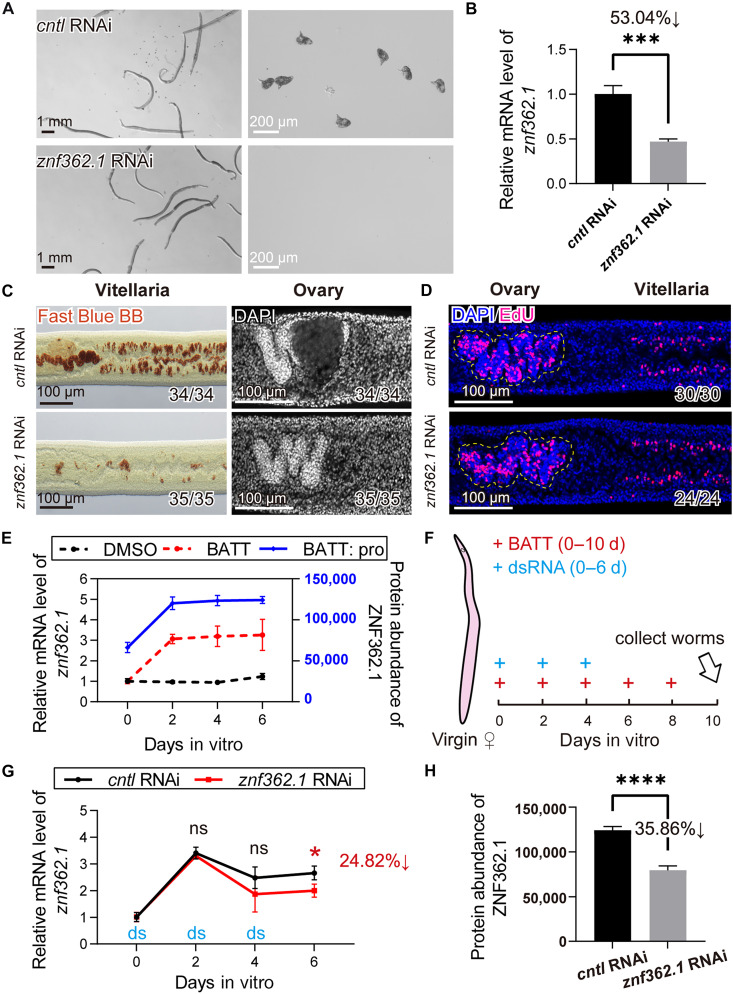 Figure 2
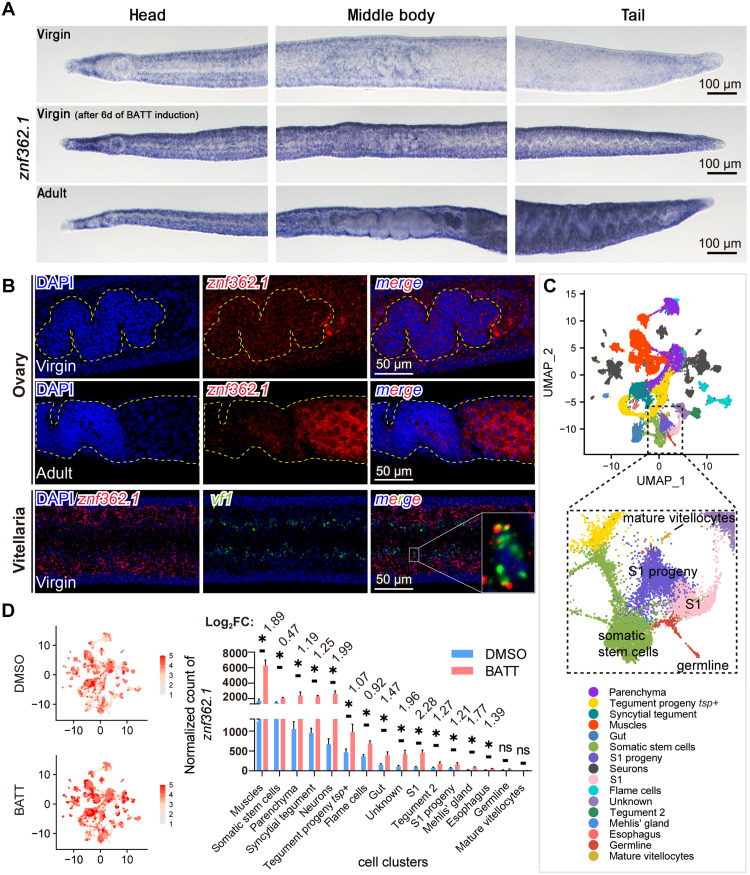 Figure 3
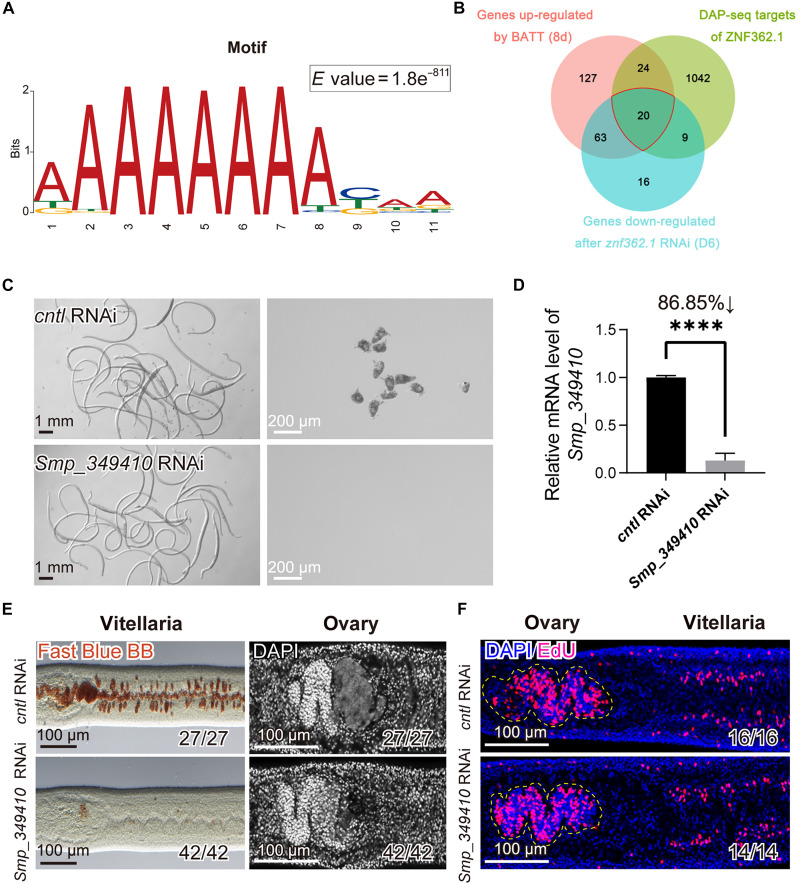 Figure 4
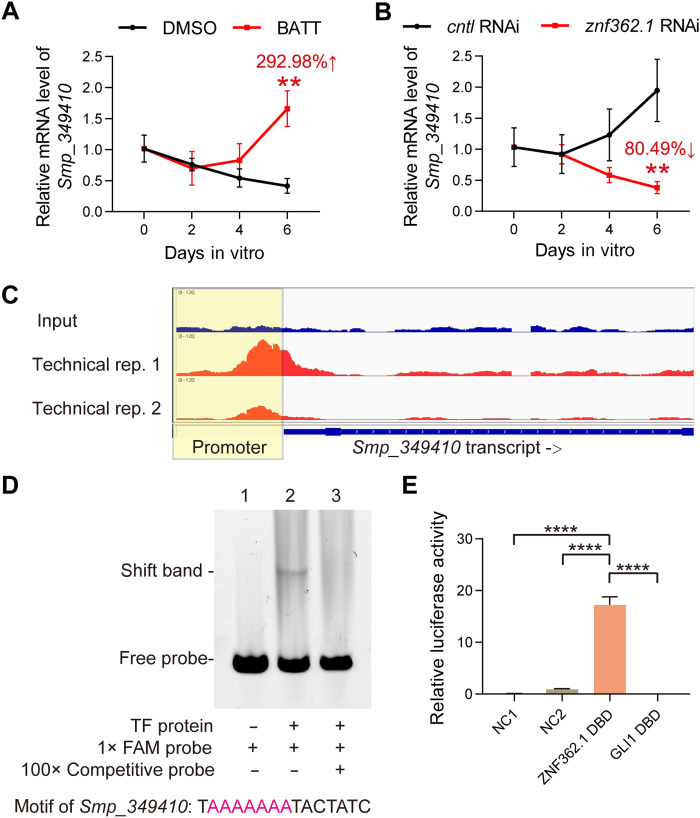 Figure 5
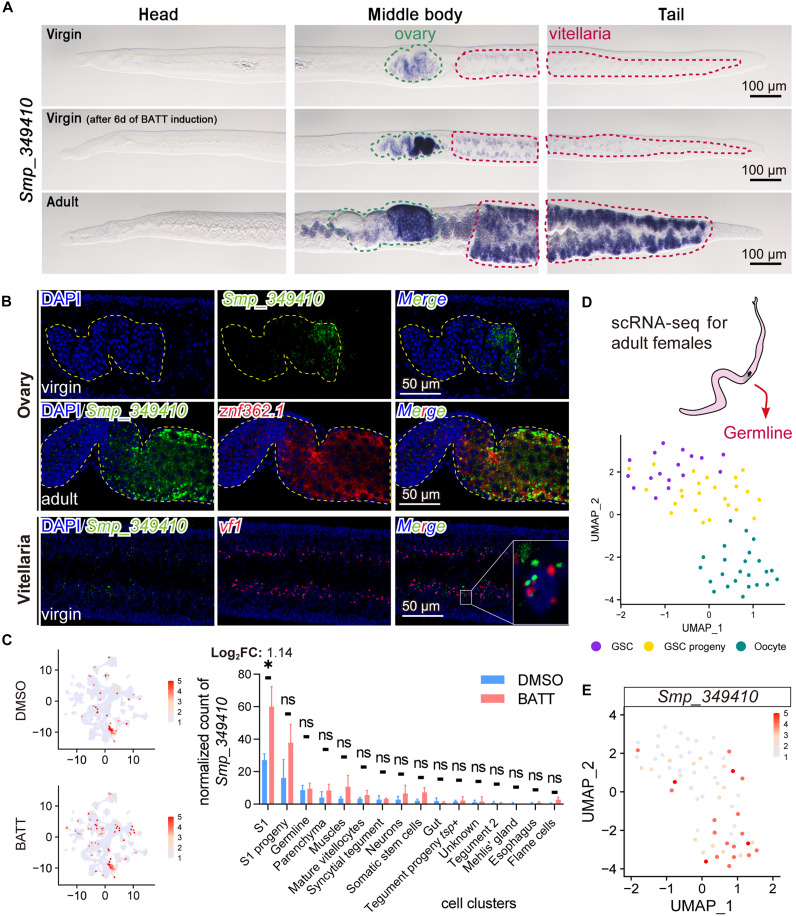 Figure 6
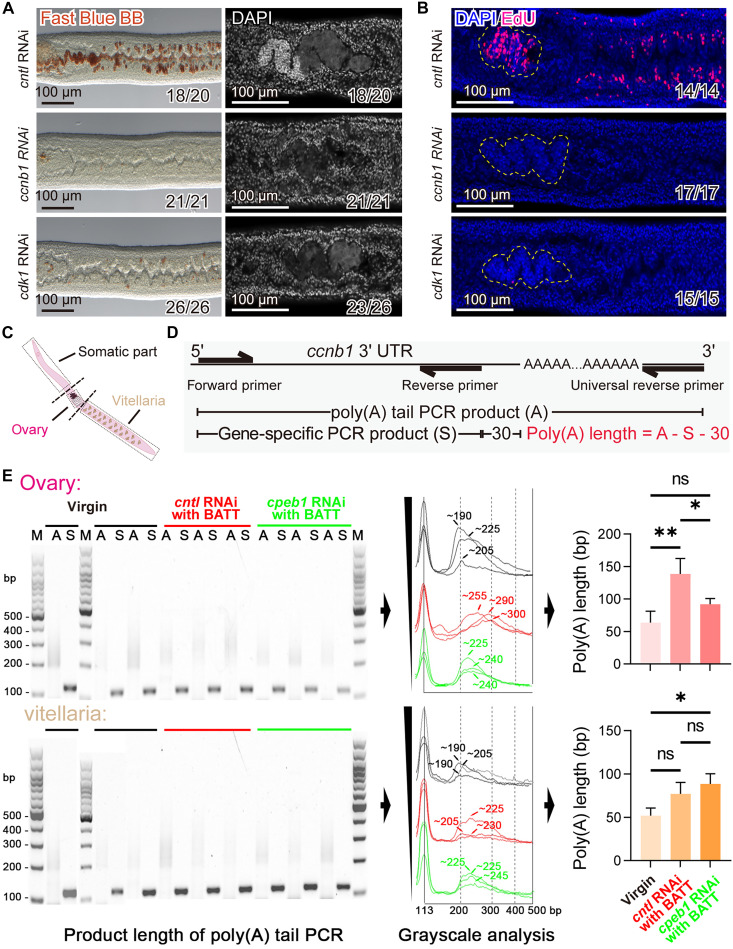 Figure 7
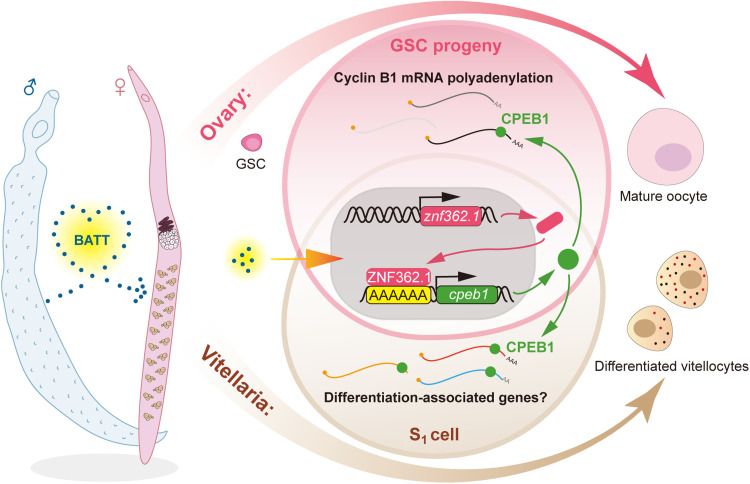 Figure 8
Peer Reviews
No public reviews on file for this paper yet. If you reviewed it on a platform where reviews are public (OpenReview, ICLR, NeurIPS, ICML), you can paste yours below so the community can read it here.
Videos
No videos yet. Explain this paper in a talk, walkthrough, or lecture? Add one.
Taxonomy
TopicsParasites and Host Interactions · Reproductive System and Pregnancy · Genetics, Aging, and Longevity in Model Organisms