Two-dimensional NIR-II AIE nanotheranostic probes with ultralarge Stokes shifts for surgical navigation and ablation of glioma
Yisheng Liu, Xiang Su, Yong Zhong, Ping Shangguan, Jun Zhu, Zhengqun Luo, Haigang Wu, Dong Wang, Ting Han, Jiefei Wang, Bingyang Shi, Ben Zhong Tang

TL;DR
A new two-dimensional NIR-II probe with a large Stokes shift helps in accurately guiding brain tumor surgery and subsequent treatment.
Contribution
A novel tetracyanoquinodimethane-derived NIR probe (TNQ2) with a 445-nm Stokes shift and aggregation-enhanced emission is developed.
Findings
TNQ2 self-assembles into sub-160 nm two-dimensional J-aggregates with red-shift absorption and aggregation-enhanced emission.
The probe enables high-sensitivity NIR-II fluorescence imaging-guided glioma resection and phototherapy.
The strategy establishes a new paradigm for developing advanced NIR phototheranostics for brain diseases.
Abstract
Near-infrared (NIR) fluorescence probes featuring ultralarge Stokes shifts and efficient aggregate-state luminescence are highly desirable for bioimaging yet remain scarce due to formidable synthetic challenges and intricate photophysical modulation. We report a facile one-step click reaction to synthesize a tetracyanoquinodimethane-derived NIR probe (TNQ2) that overcomes the long-standing nonfluorescence limitation while achieving an unprecedented 445-nanometer Stokes shift. TNQ2 self-assembles into the smallest-sized two-dimensional J-aggregates (sub-160 nanometers) with a red-shift absorption from 545 to 725 nanometers and aggregation-enhanced emission around 1000 nanometers. The radiative/nonradiative modulation balances the fluorescence/photothermal/photodynamic effect to support high-sensitivity NIR-II fluorescence imaging-guided precise glioma resection and postoperative…
Genes, proteins, chemicals, diseases, species, mutations and cell lines named across the full text — each resolved to its canonical identifier and authoritative record.
Click any figure to enlarge with its caption.
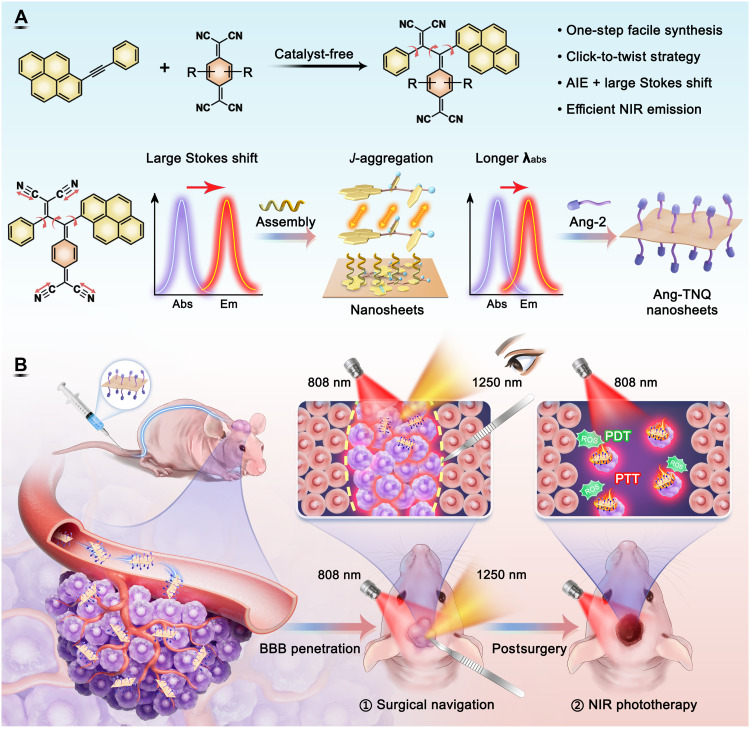 Figure 1
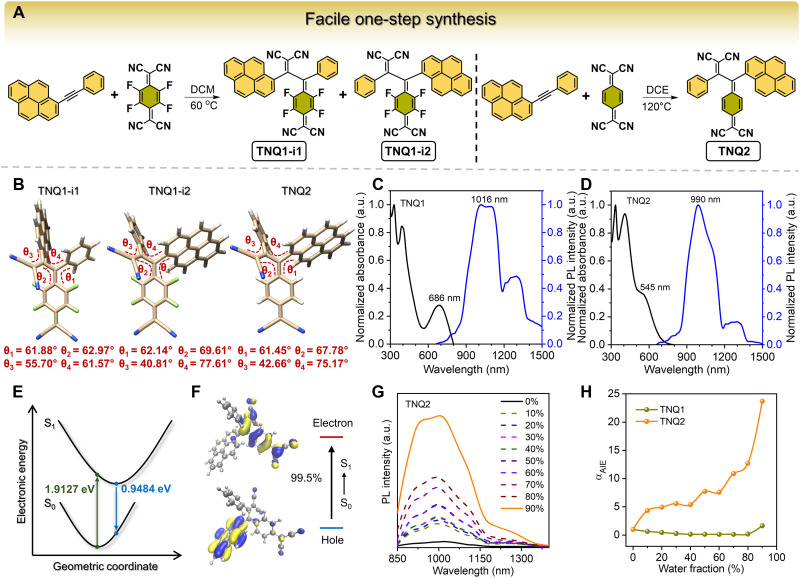 Figure 2
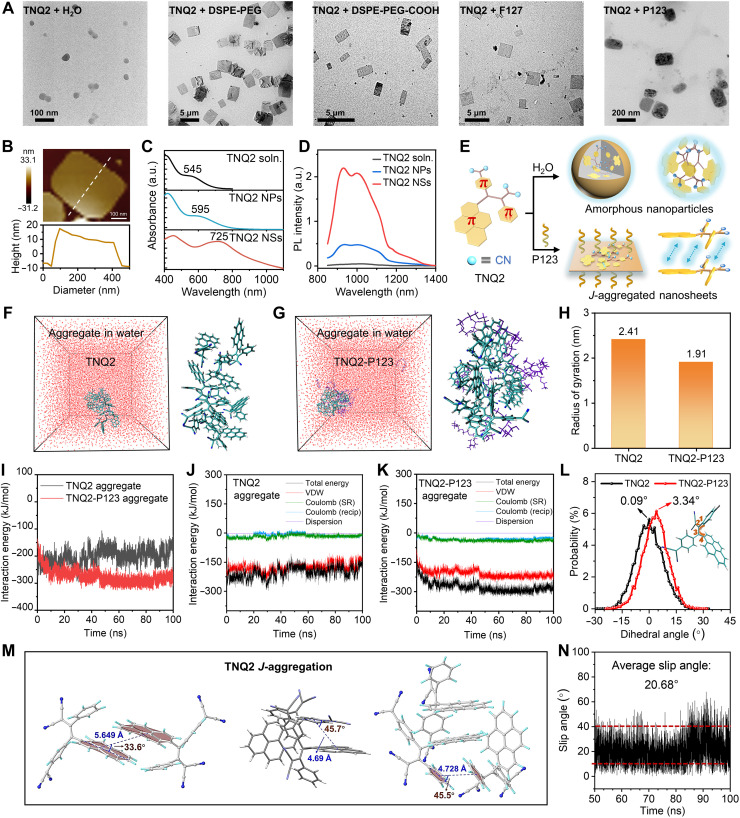 Figure 3
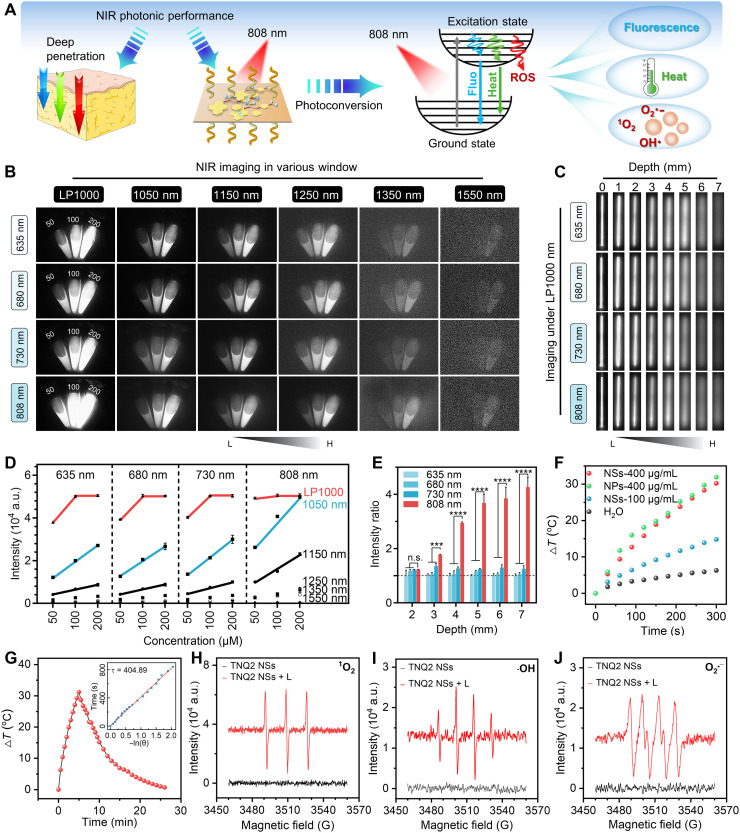 Figure 4
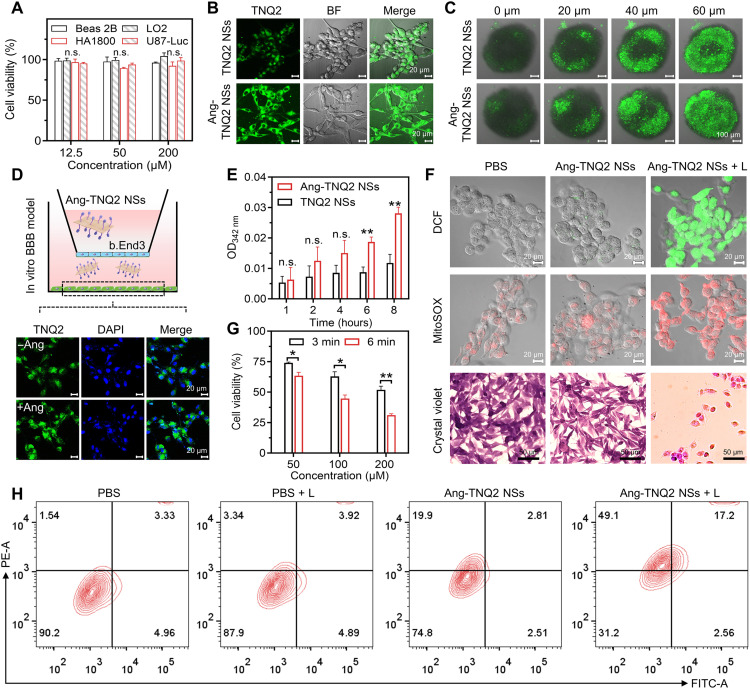 Figure 5
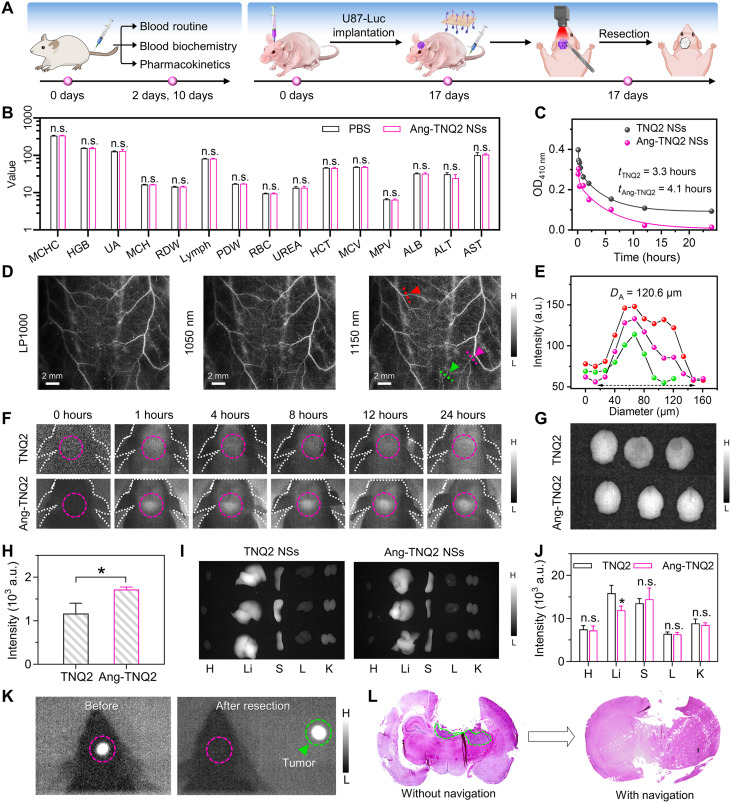 Figure 6
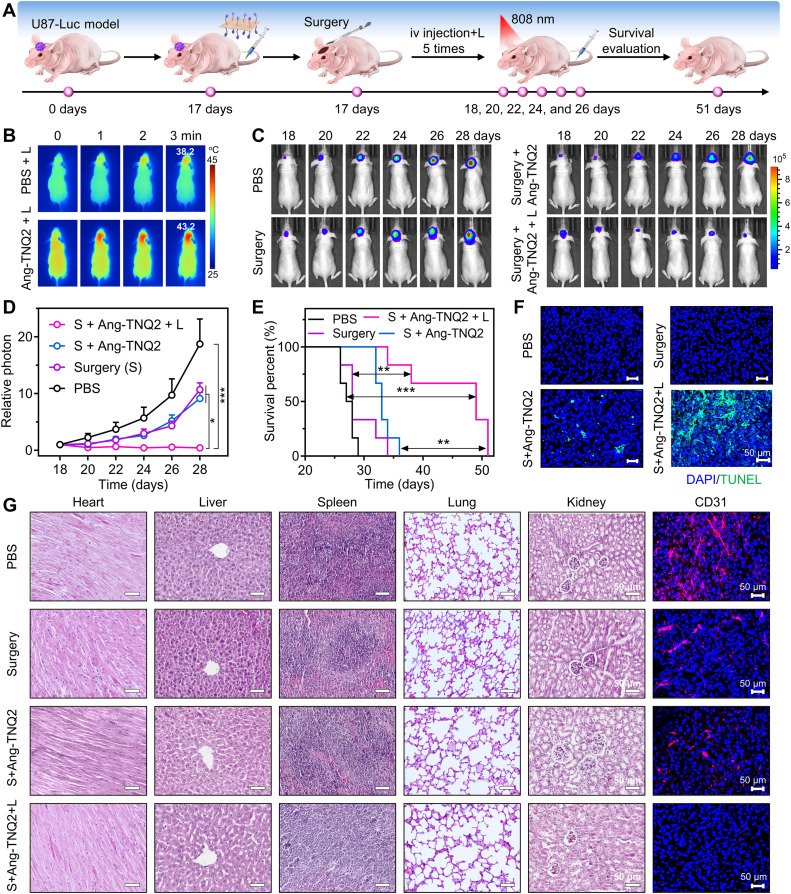 Figure 7
Peer Reviews
No public reviews on file for this paper yet. If you reviewed it on a platform where reviews are public (OpenReview, ICLR, NeurIPS, ICML), you can paste yours below so the community can read it here.
Videos
No videos yet. Explain this paper in a talk, walkthrough, or lecture? Add one.
Taxonomy
TopicsNanoplatforms for cancer theranostics · Luminescence and Fluorescent Materials · Gold and Silver Nanoparticles Synthesis and Applications