VCAN Is Essential for ERK5-Driven Tumorigenesis in Soft Tissue Sarcoma
Jaime Jiménez-Suárez, Francisco J. Cimas, José Joaquín Paricio, Borja Belandia, Yosra Berrouayel, Elena Arconada-Luque, Sofía Matilla-Almazán, Cesare Soffientini, Stefano Percio, Silvia Redondo-García, Natalia García-Flores, Cristina Garnés-García, Pablo Fernández-Aroca

TL;DR
This study shows that VCAN is a key player in ERK5-driven soft tissue sarcoma, suggesting it could be a new target for treatment.
Contribution
The study identifies VCAN as a novel transcriptional target of ERK5 and a central mediator of ERK5-related oncogenesis in soft tissue sarcoma.
Findings
ERK5 positively regulates VCAN expression in both murine and human sarcoma models.
VCAN silencing mimics ERK5 silencing effects, impairing tumor growth and function.
Human STS samples show elevated VCAN and ERK5 levels with strong correlation between them.
Abstract
The ERK5 signaling pathway has recently emerged as a critical regulator of soft tissue sarcoma (STS) biology, contributing to tumor initiation, progression, and maintenance. In this study, we identify VCAN, a chondroitin sulfate proteoglycan, as a novel transcriptional target of ERK5 and a central mediator of ERK5-related oncogenesis. Through a combination of genetic (silencing, overexpression) and pharmacological approaches, applied in both a chemically induced murine sarcoma model and several human STS cell lines, we demonstrate that ERK5 positively regulates VCAN expression. Functionally, VCAN silencing (by shRNAs) recapitulates the phenotypes of ERK5 silencing, including impaired migration, adhesion, proliferation, and tumorigenesis. Conversely, VCAN overexpression rescues these effects, confirming its essential role in ERK5-mediated oncogenesis. Furthermore, transcriptomic…
Genes, proteins, chemicals, diseases, species, mutations and cell lines named across the full text — each resolved to its canonical identifier and authoritative record.
Click any figure to enlarge with its caption.
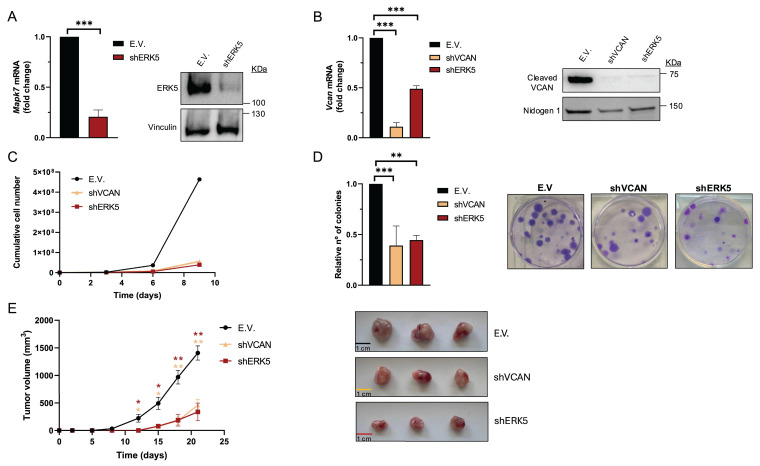 Figure 1
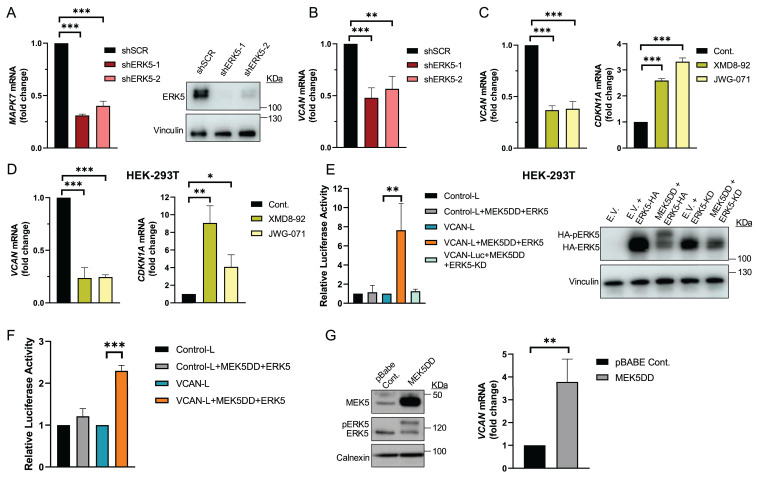 Figure 2
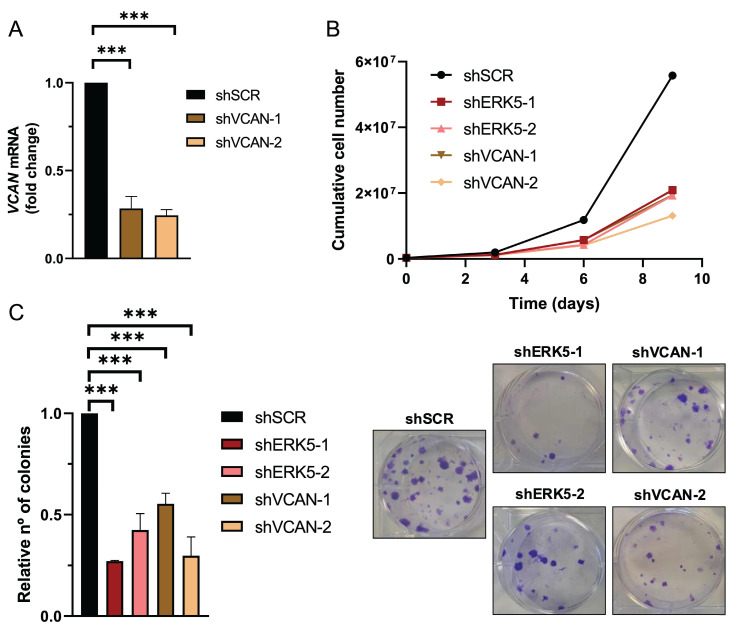 Figure 3
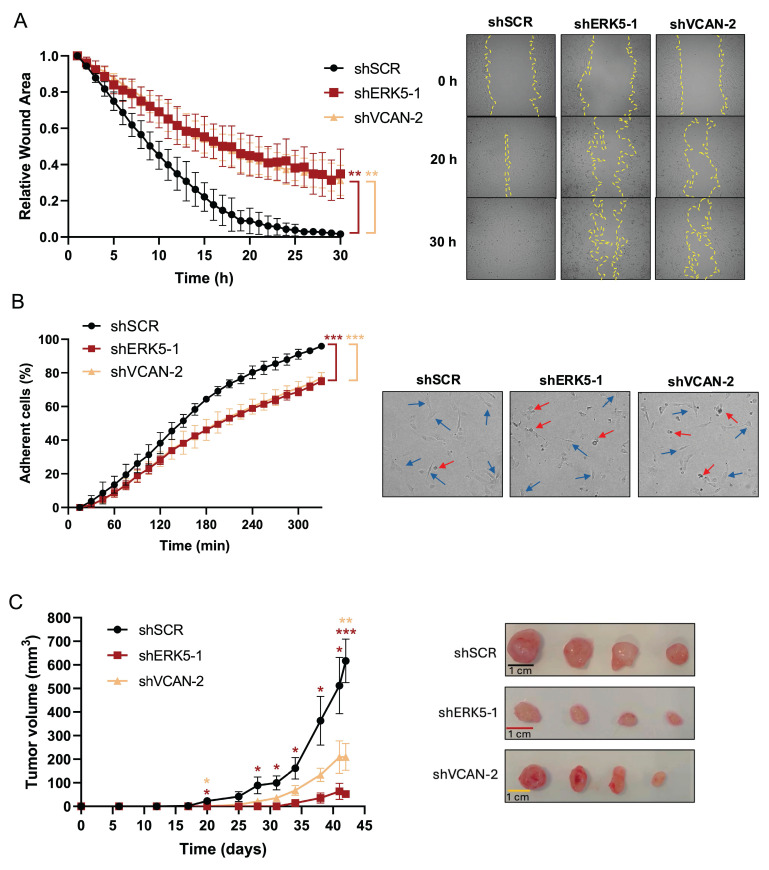 Figure 4
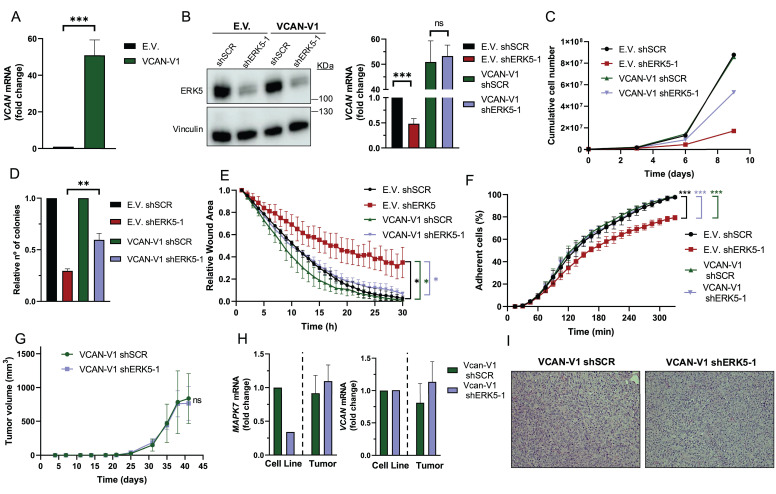 Figure 5
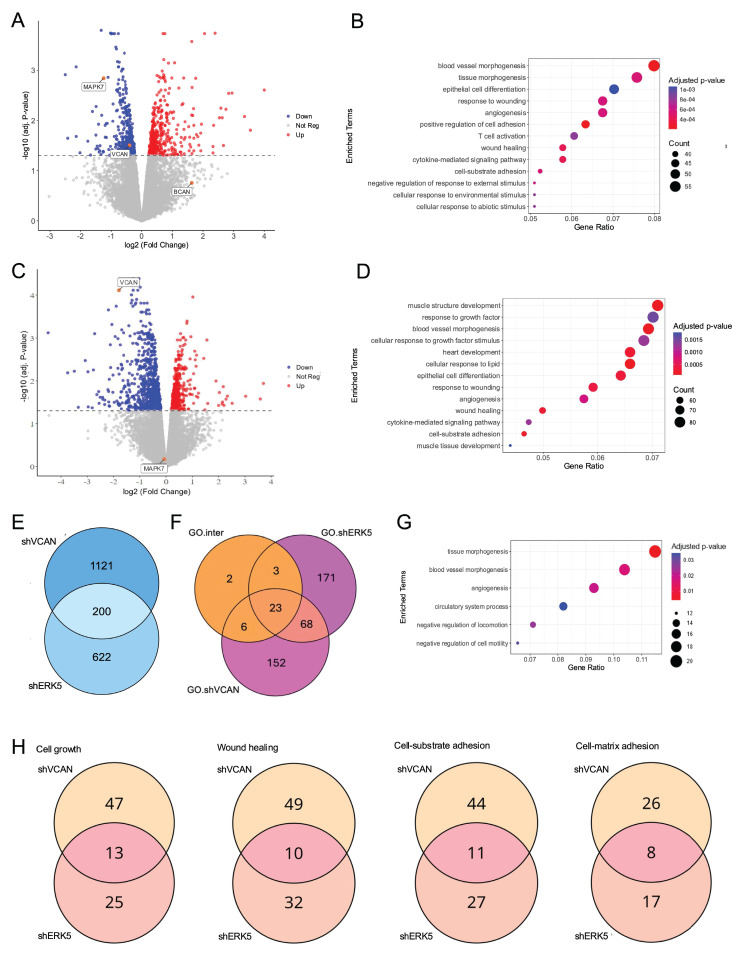 Figure 6
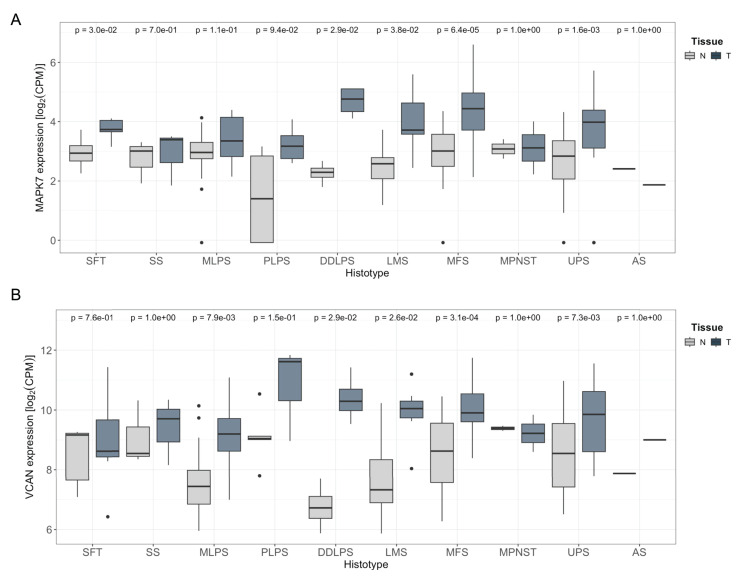 Figure 7
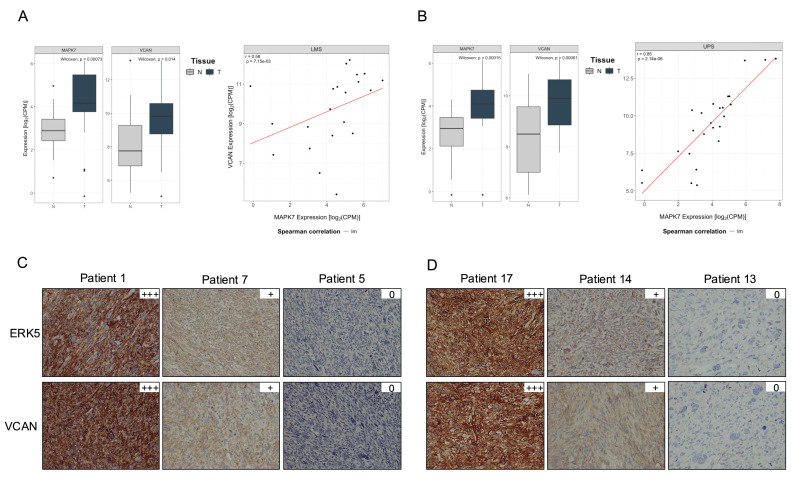 Figure 8
Peer Reviews
No public reviews on file for this paper yet. If you reviewed it on a platform where reviews are public (OpenReview, ICLR, NeurIPS, ICML), you can paste yours below so the community can read it here.
Videos
No videos yet. Explain this paper in a talk, walkthrough, or lecture? Add one.
Taxonomy
TopicsMelanoma and MAPK Pathways · Cell Adhesion Molecules Research · Sarcoma Diagnosis and Treatment