Population Genomic Structure of Sorghum Landraces Across Landscape, Environment and Culture
Eleanna E. Vasquez Cerda, Emily S. Bellis, Aayudh Das, Emma R. Slayton, Geoffrey P. Morris, Jesse R. Lasky

TL;DR
This study explores how geography, culture, and travel time have shaped the genetic diversity of sorghum landraces across Africa and Eurasia.
Contribution
The study introduces a mechanistic model linking human travel time to genomic variation in sorghum landraces.
Findings
Sorghum landraces show spatial and linguistic structure following isolation by distance.
Human travel time explains much of the genomic structure within regions.
Language and climate factors together explain up to 27% of genomic variation among landraces.
Abstract
The spread of staple crops to diverse environments over time and their current genetic structure may reflect historical dispersal by humans, sustained human preference for particular traits and adaptation to local environments. Sorghum is a drought‐tolerant crop native to Africa cultivated by hundreds of millions of smallholders globally. Here we examined the ecological context of population‐genomic structure of 1806 sorghum landraces across Africa and Eurasia to infer the relative contribution of environmental and cultural factors to sorghum genetic diversity across different relative time periods. Sorghum landraces were spatially and linguistically structured at a large scale and within subregions, following a pattern of isolation by distance. Within regions, much of the genomic structure was best explained by a mechanistic model of human travel time. In our assessment of hierarchical…
Genes, proteins, chemicals, diseases, species, mutations and cell lines named across the full text — each resolved to its canonical identifier and authoritative record.
Click any figure to enlarge with its caption.
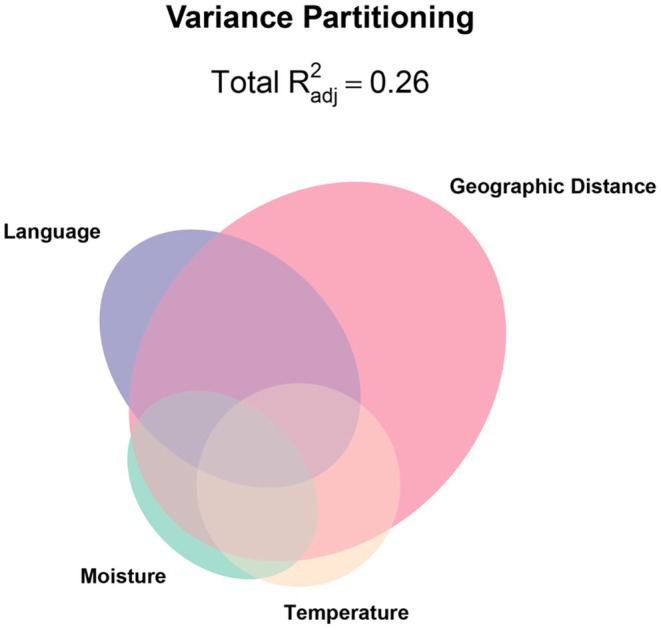 Figure 1
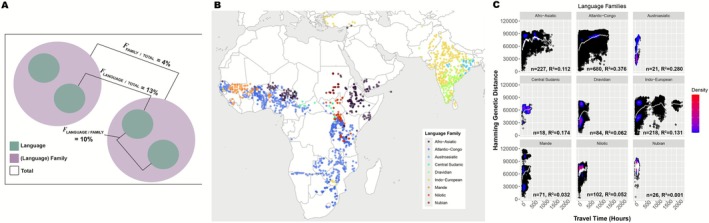 Figure 2
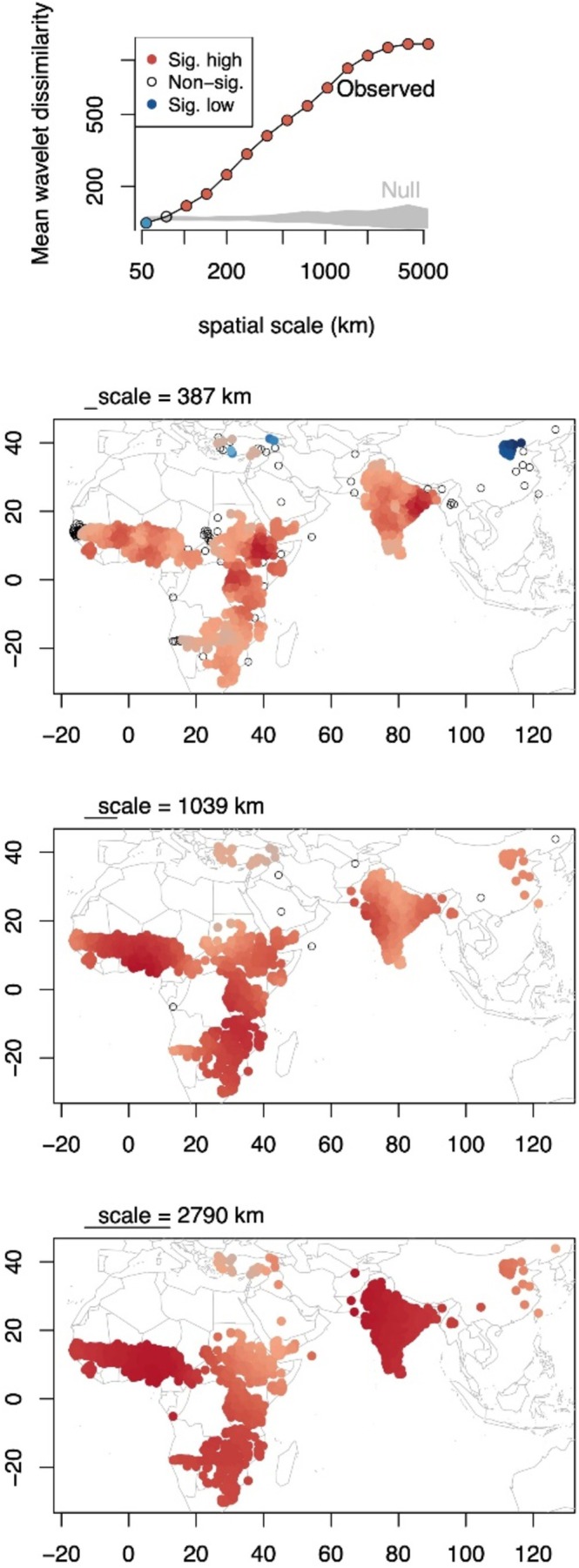 Figure 3
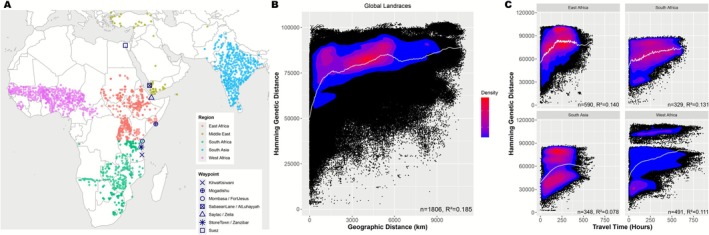 Figure 4
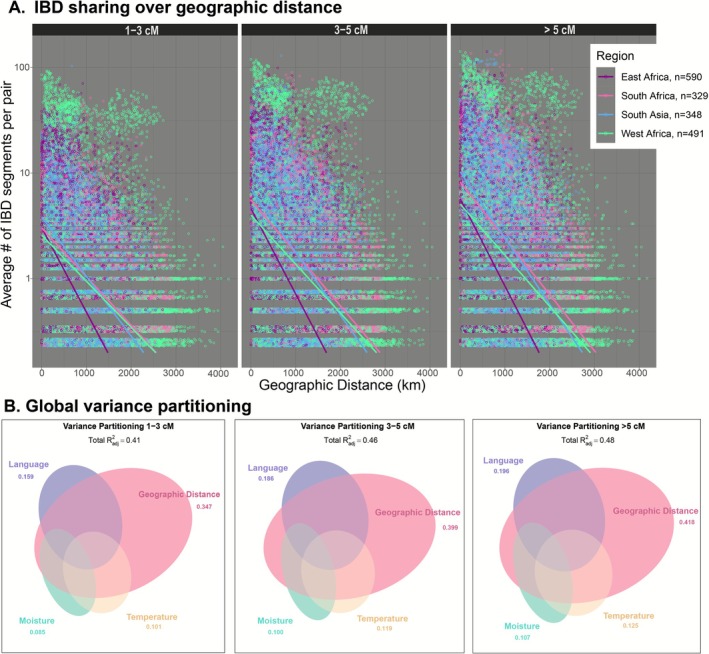 Figure 5
Peer Reviews
No public reviews on file for this paper yet. If you reviewed it on a platform where reviews are public (OpenReview, ICLR, NeurIPS, ICML), you can paste yours below so the community can read it here.
Videos
No videos yet. Explain this paper in a talk, walkthrough, or lecture? Add one.
Taxonomy
TopicsGenetic diversity and population structure · Genetic Mapping and Diversity in Plants and Animals · Forensic and Genetic Research