Deep Learning Super‐Resolution Spectrometer Based on Fiber Random Laser With Ultrahigh Spectral Purity
Jinjiang Zhao, Xiaomei Gao, Zilong Lu, Feng Zhang, Xiaoyu Shi, Tianrui Zhai

TL;DR
A deep learning-based spectrometer using fiber random laser achieves super-resolution with much faster reconstruction times and smaller size.
Contribution
A deep learning super-resolution spectrometer using fiber random laser with ultrahigh spectral purity and reduced reconstruction time.
Findings
The spectrometer achieves super-resolution images with an 80% reduction in reconstruction time.
The use of a nested fiber microcavity improves the spectral purity and miniaturization of the light source.
A convolutional neural network recovers super-resolution spectra from 80% fewer raw frames.
Abstract
The super‐resolution technique based on random laser (RL) achieve the spectra that break through the frequency resolution limit of the original spectrometer. However, the speed of super‐resolution spectrometer methods based on RL is limited by the time‐consuming need to record many thousands of sub‐resolution sparse spectral frames. Here, we propose a deep learning super‐resolution spectrometer based on fiber random laser with ultrahigh spectral purity, obtaining super‐resolution images from up to an 80% reduction in reconstruction time compared with what is usually needed. By coupling to a nested fiber microcavity, the decay rates of RL quasi‐modes broaden, resulting in an excellent micro–nano light source for a super‐resolution spectrometer showing high spectral purity, good directivity, and a miniature size. Based on this micro–nano light source, the sparse frames for reconstructing…
Genes, proteins, chemicals, diseases, species, mutations and cell lines named across the full text — each resolved to its canonical identifier and authoritative record.
Click any figure to enlarge with its caption.
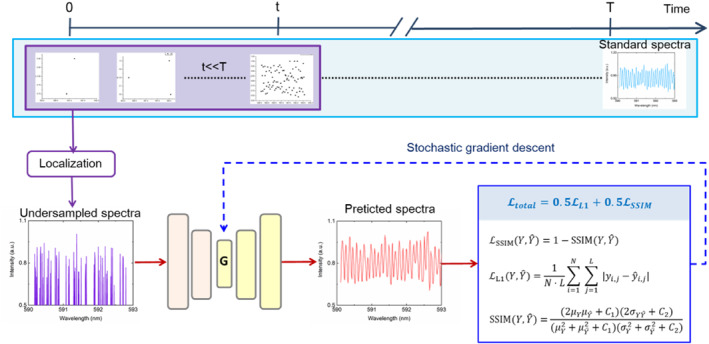 Figure 1
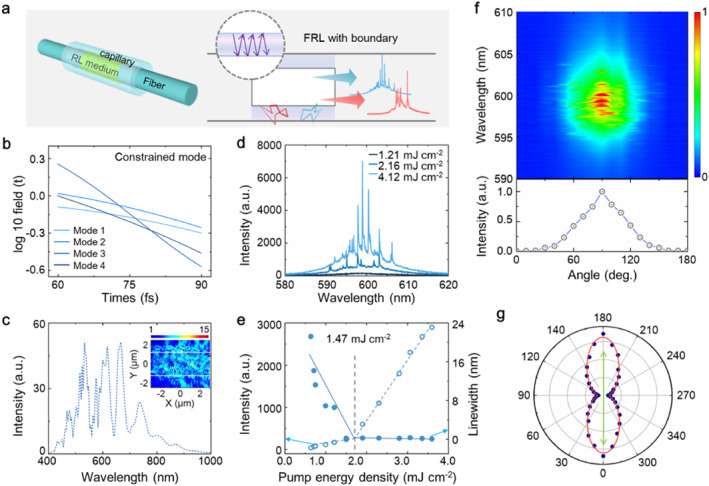 Figure 2
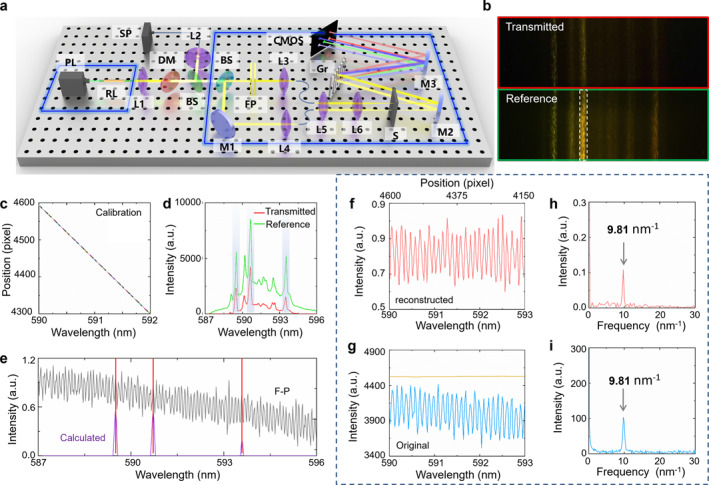 Figure 3
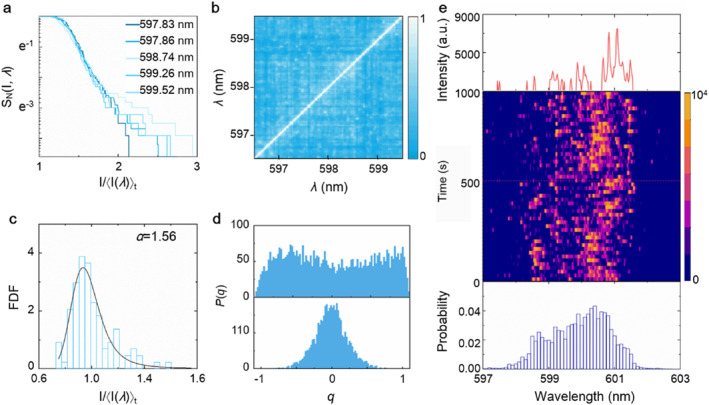 Figure 4
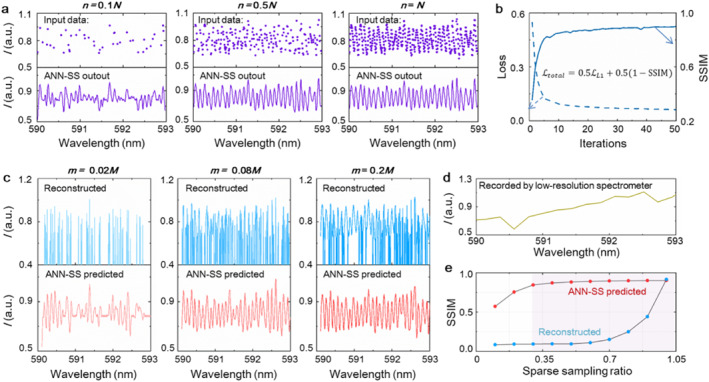 Figure 5
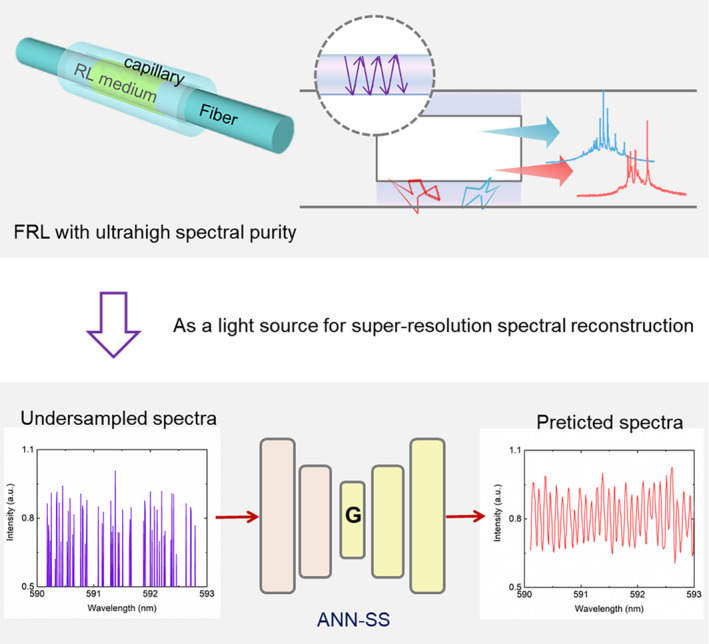 Figure 6
Peer Reviews
No public reviews on file for this paper yet. If you reviewed it on a platform where reviews are public (OpenReview, ICLR, NeurIPS, ICML), you can paste yours below so the community can read it here.
Videos
No videos yet. Explain this paper in a talk, walkthrough, or lecture? Add one.
Taxonomy
TopicsRandom lasers and scattering media · Advanced Optical Sensing Technologies · Optical Polarization and Ellipsometry