Sensitivity Evaluation for Global Perturbations in Non‐Hermitian Skin‐Effect Sensors
Letian Yu, Cesare Soci, Y. D. Chong, Baile Zhang

TL;DR
This paper explores how non-Hermitian sensors can detect global noise and disorder, showing that sensitivity increases exponentially with system size, enabling ultrasensitive sensing.
Contribution
The study introduces a new method using maximum transient growth to detect global perturbations in non-Hermitian sensors.
Findings
Sensitivity to global static and dynamic disorder scales exponentially with lattice size.
Maximum transient growth, not spectral shifts, drives the observed exponential sensitivity.
Non-Hermitian systems show potential for ultrasensitive detection of distributed fluctuations.
Abstract
Non‐Hermiticity has introduced new physical mechanisms into sensing, with approaches based on exceptional points and non‐Hermitian skin effects demonstrating potential sensitivity enhancements over conventional sensing technologies. By monitoring the frequency shifts of specific eigenmodes, previous studies on non‐Hermitian sensors have revealed extraordinary sensitivity to local perturbations. In contrast, the influence of global perturbations such as noise and disorder, which generally involve complex spectra and may even suppress these eigenmodes, seems largely incompatible with the current non‐Hermitian sensing framework and has received far less attention. Here, motivated by recent theoretical advances on pseudospectra theory, we investigate the possibility of employing maximum transient growth to probe the level of global perturbations in non‐Hermitian skin‐effect sensors. Using…
Genes, proteins, chemicals, diseases, species, mutations and cell lines named across the full text — each resolved to its canonical identifier and authoritative record.
Click any figure to enlarge with its caption.
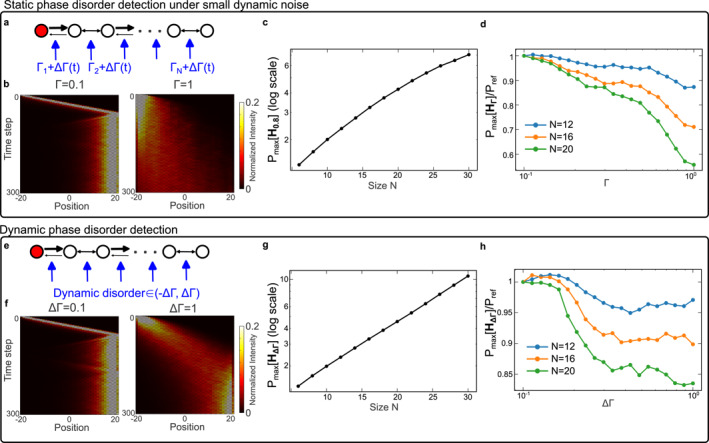 Figure 1
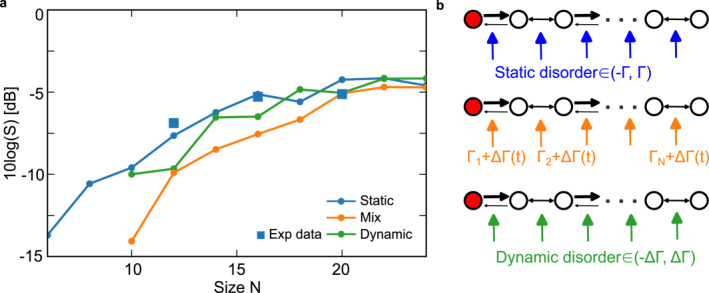 Figure 2
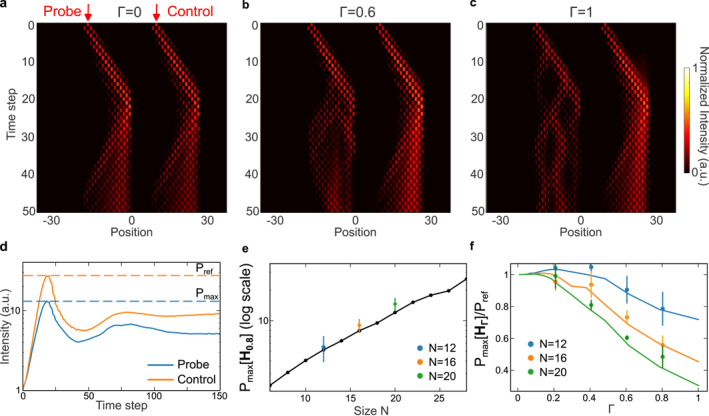 Figure 3
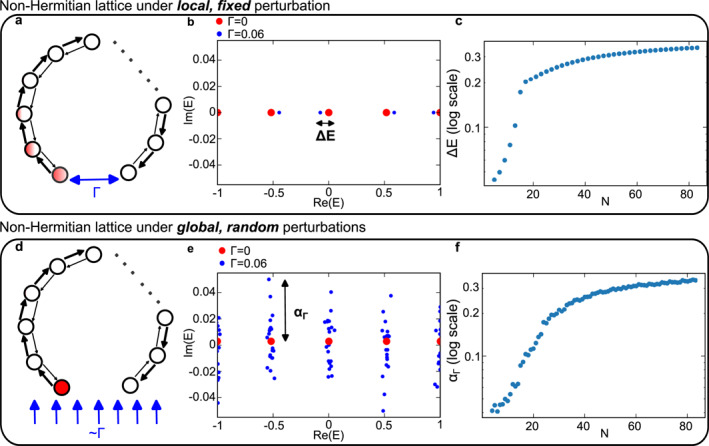 Figure 4
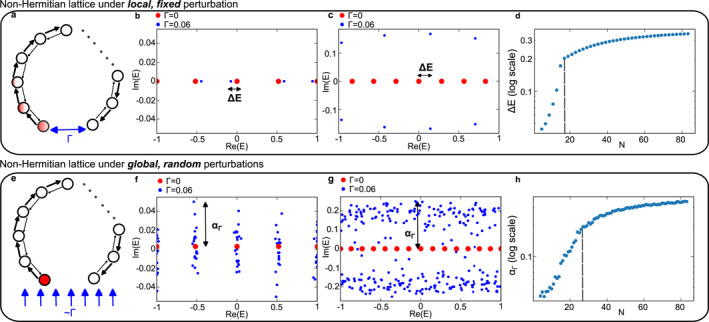 Figure 5
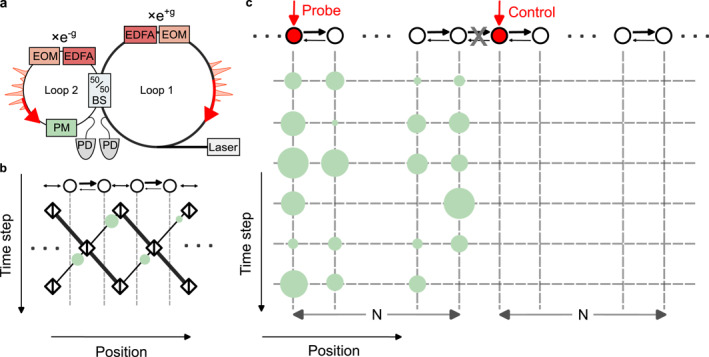 Figure 6
Peer Reviews
No public reviews on file for this paper yet. If you reviewed it on a platform where reviews are public (OpenReview, ICLR, NeurIPS, ICML), you can paste yours below so the community can read it here.
Videos
No videos yet. Explain this paper in a talk, walkthrough, or lecture? Add one.
Taxonomy
TopicsQuantum Mechanics and Non-Hermitian Physics · Chaos control and synchronization · Mechanical and Optical Resonators