Machine Learning‐Driven Cooling Window Design Beyond Hyperbolic Metamaterials
Seok‐Beom Seo, Ye‐Rin Choi, Jong‐Goog Lee, Gumin Kang, Hyungduk Ko, Run Hu, Sun‐Kyung Kim

TL;DR
Machine learning designs better cooling window coatings than traditional methods, achieving higher transparency and infrared reflection in thinner layers.
Contribution
Demonstrates experimentally that ML-driven aperiodic multilayers outperform hyperbolic metamaterials in cooling window coatings.
Findings
ML-designed coatings achieved 0.57 visible transmittance and 0.98 near-infrared reflectance in 156 nm thickness.
ML coatings showed tunable visible colors, unlike HMM counterparts restricted to specific hues.
Fabricated ML coatings confirmed superior optical and thermal performance compared to HMM designs.
Abstract
Analytical multilayers designed under quarter‐wave conditions, such as antireflective coatings and distributed Bragg reflectors, generally perform effectively within narrow spectral bands but often face challenges in meeting multispectral demands. In contrast, machine learning (ML)‐driven inverse design enables exploration of vast parameter spaces to realize tailored spectral responses across multiple bands. However, whether ML‐optimized multilayers can outperform analytical designs under identical material and thickness constraints often remains an open question. Here, we experimentally validate the superiority of ML‐driven design through a metal/dielectric multilayer cooling‐window coating that simultaneously requires high average visible transmittance (AVT) and high average near‐infrared reflectance (ANR). By integrating a factorization machine with simulated annealing, we discovered…
Genes, proteins, chemicals, diseases, species, mutations and cell lines named across the full text — each resolved to its canonical identifier and authoritative record.
Click any figure to enlarge with its caption.
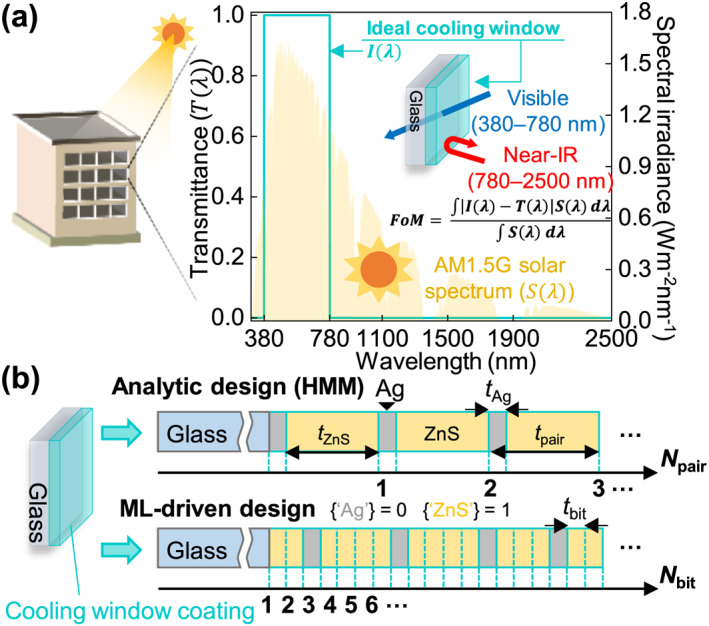 Figure 1
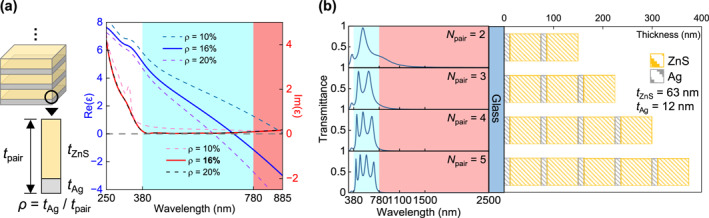 Figure 2
 Figure 3
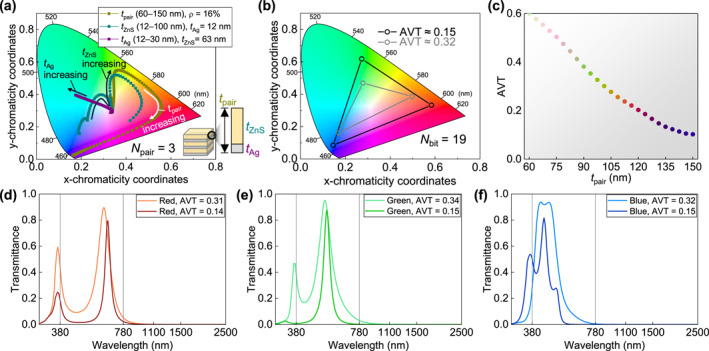 Figure 4
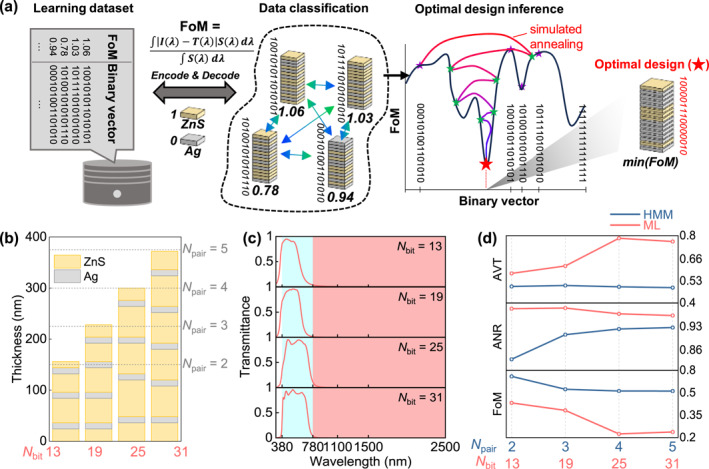 Figure 5
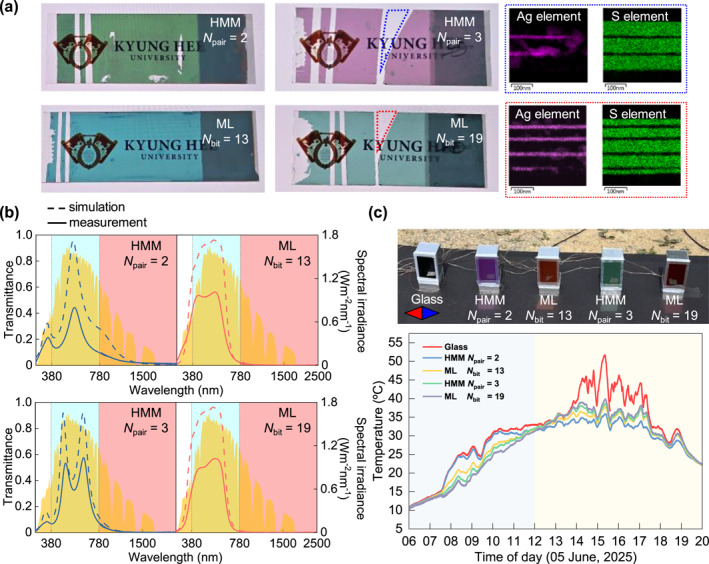 Figure 6
Peer Reviews
No public reviews on file for this paper yet. If you reviewed it on a platform where reviews are public (OpenReview, ICLR, NeurIPS, ICML), you can paste yours below so the community can read it here.
Videos
No videos yet. Explain this paper in a talk, walkthrough, or lecture? Add one.
Taxonomy
TopicsCellular and Composite Structures · Topology Optimization in Engineering · Acoustic Wave Phenomena Research