HIV risks and vulnerabilities reported among adolescent girls and young women accessing DREAMS services in three Zambian districts: Monze, Mazabuka, and Mongu, 2020–2022
Kalima Tembo, Caitlin Baumhart, Linah Mwango, Brianna Lindsay, Pawel Olowski, Julian Chipukuma, Adebayo Olufunso, Morley Mujansi, Boyd Kaliki, Omega Chituwo, Carlos Muleya, Annie Mwila, Cassidy W. Claassen

TL;DR
This study examines HIV risks among adolescent girls and young women in Zambia, highlighting vulnerabilities like violence, orphanhood, and risky sexual behaviors.
Contribution
The study provides age-disaggregated data on HIV risks and vulnerabilities among AGYW in Zambia, supporting targeted prevention strategies.
Findings
Emotional or physical violence and orphanhood were most common among girls aged 10–14 years.
Older AGYW (15–24 years) reported high rates of no/irregular condom use and transactional sex.
Clinical service engagement was associated with being out of school and risky sexual behaviors.
Abstract
Adolescent girls and young women (AGYW) in sub-Saharan Africa face socio-economic and gender-related factors that heighten risk of HIV infection. We examined HIV risks and vulnerabilities among AGYW enrolled in the Determined Resilient Empowered AIDS-free Mentored and Safe (DREAMS) program in Zambia. AGYW aged 10–24 years were screened at enrollment in DREAMS using a standardized tool assessing exposure to sexual and reproductive health risks, gender-based violence, and orphanhood. We analyzed 24 months of data (October 2020–September 2022) from six centers in Southern and Western Provinces. We characterized age-disaggregated risks and used multivariable logistic regression to examine associations with engagement in HIV-related clinical services. Among 63,118 AGYW screened, 34.9% were aged 10–14 years, 50.7% aged 15–19 years, and 14.4% aged 20–24 years. Emotional or physical violence…
Genes, proteins, chemicals, diseases, species, mutations and cell lines named across the full text — each resolved to its canonical identifier and authoritative record.
Click any figure to enlarge with its caption.
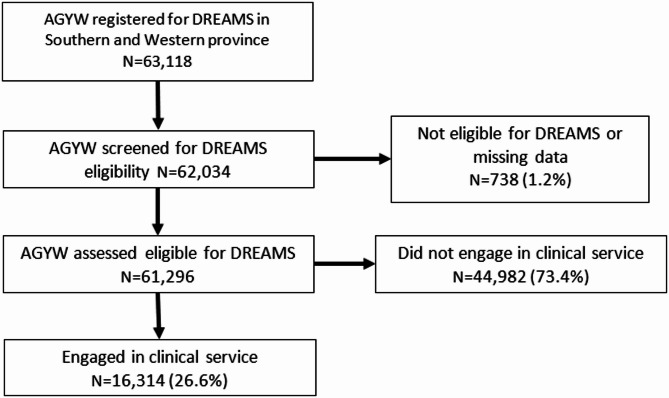 Figure 1
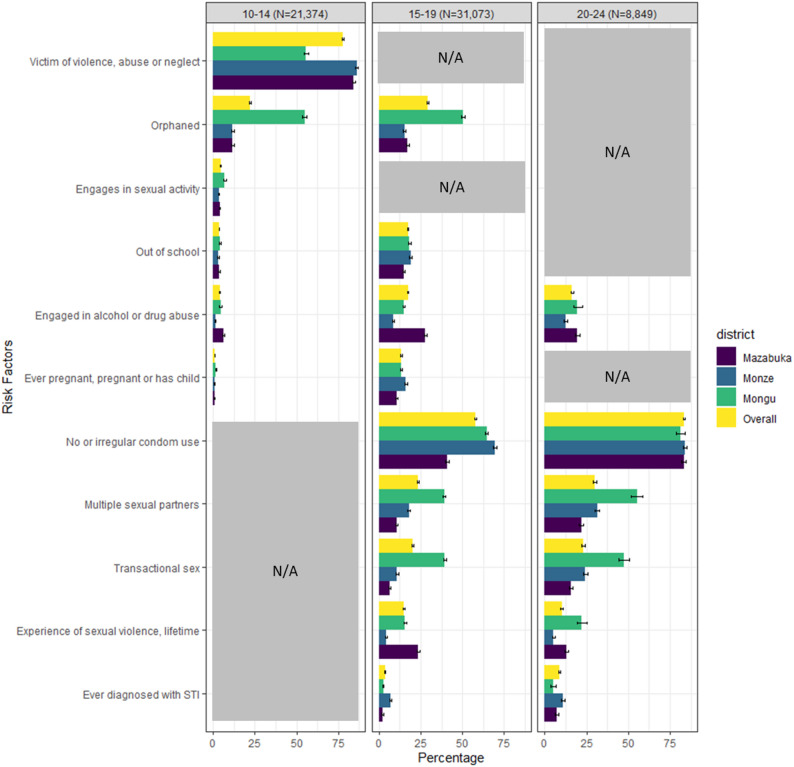 Figure 2
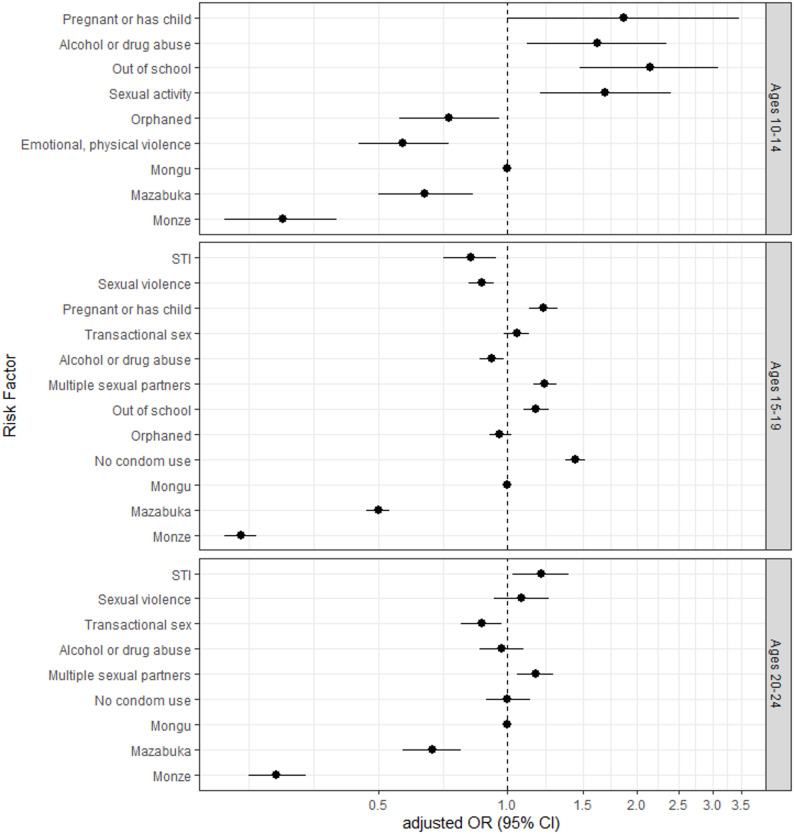 Figure 3
Peer Reviews
No public reviews on file for this paper yet. If you reviewed it on a platform where reviews are public (OpenReview, ICLR, NeurIPS, ICML), you can paste yours below so the community can read it here.
Videos
No videos yet. Explain this paper in a talk, walkthrough, or lecture? Add one.
Taxonomy
TopicsAdolescent Sexual and Reproductive Health · HIV/AIDS Research and Interventions · Poverty, Education, and Child Welfare