Mosquito direct skin feeding bioassay: 15 years of experience and a standardised approach in Mali
Daman Sylla, Jen C. C. Hume, Heather Goodman, Adama Sacko, Jennifer L. Kwan, Abdrahamane Fofana, Mahamadoun H. Assadou Maiga, Abdoulaye Katile, M.’bouye Doucoure, Mamady Kone, Boubacar Coulibaly, Agnes Guindo, Moussa Diallo, Mariam Doumbia, Salifou M. Kone, Amatigue Zeguime

TL;DR
Researchers in Mali developed and standardized a mosquito feeding test to safely and effectively evaluate malaria transmission-blocking vaccines over 15 years.
Contribution
A standardized, scalable, and safe mosquito direct skin feeding bioassay for evaluating transmission-blocking malaria vaccines in clinical trials.
Findings
37,984 DSF bioassays were safely performed on 2,796 participants with minimal adverse events and high acceptance.
DSF positivity rates were significantly higher in individuals with known Plasmodium falciparum parasitaemia.
The DSF bioassay is a viable surrogate endpoint for evaluating transmission-blocking vaccine efficacy in field settings.
Abstract
New malaria control tools are urgently needed. Transmission-blocking vaccines (TBVs) target sexual parasite stages in mosquitoes to prevent disease spread. TBV testing requires specialised mosquito transmission assays, such as the Direct Skin Feeding (DSF) bioassay. DSF is a xenodiagnostic tool that mimics parasite transmission to mosquitoes as it naturally occurs but has not previously been scaled up nor standardised for use in clinical trials. DSF bioassays were performed on large cohorts of participants, including children five years and older, during observational and interventional studies conducted over a 15-year period at sites around Bamako, Mali. Human, mosquito and parasite parameters were monitored to assess DSF safety and acceptability, vector performance, and individual- and population-level transmission dynamics. Standardised procedures developed for DSF included mosquito…
Genes, proteins, chemicals, diseases, species, mutations and cell lines named across the full text — each resolved to its canonical identifier and authoritative record.
Click any figure to enlarge with its caption.
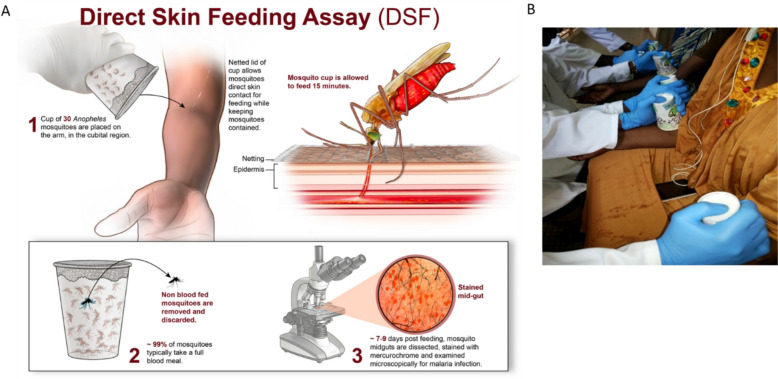 Figure 1
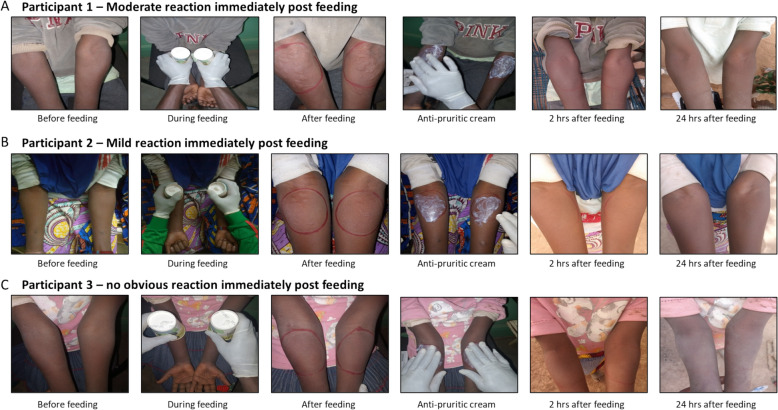 Figure 2
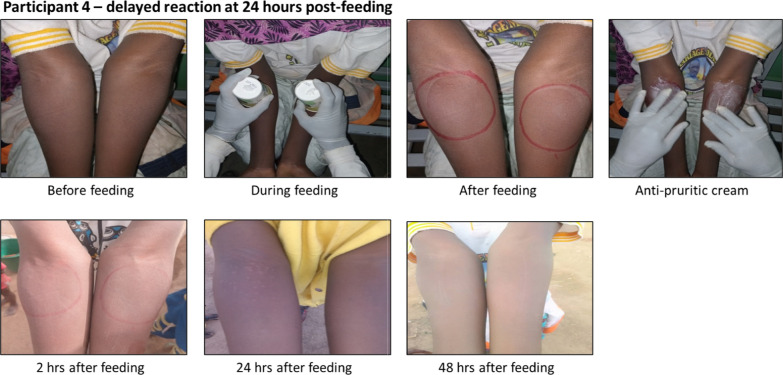 Figure 3
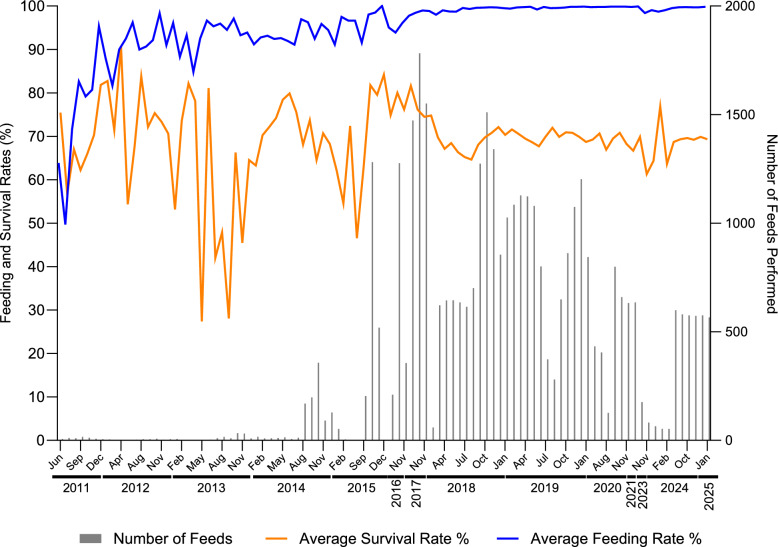 Figure 4
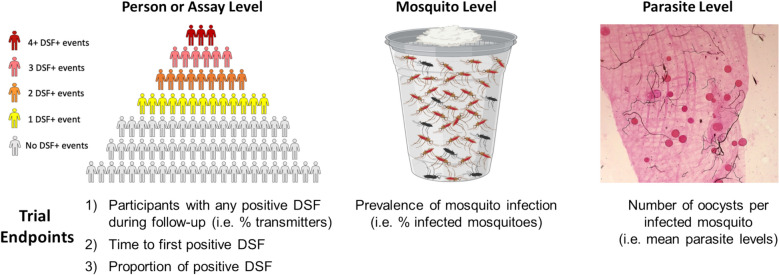 Figure 5
Peer Reviews
No public reviews on file for this paper yet. If you reviewed it on a platform where reviews are public (OpenReview, ICLR, NeurIPS, ICML), you can paste yours below so the community can read it here.
Videos
No videos yet. Explain this paper in a talk, walkthrough, or lecture? Add one.
Taxonomy
TopicsMalaria Research and Control · Mosquito-borne diseases and control · Parasitic Diseases Research and Treatment