Long-term relief of refractory trigeminal neuropathy using high-frequency spinal cord stimulation at the cervicomedullary junction: a 6-year follow-up case report
Daniela Floridia, Rossana Panasiti, Anna Anselmo, Francesco Corallo, Maria Pagano, Irene Cappadona, Salvatore Leonardi, Rocco S. Calabrò

TL;DR
A patient with severe facial pain found long-term relief through high-frequency spinal cord stimulation at a specific brainstem location.
Contribution
This case demonstrates the long-term efficacy of high-frequency spinal cord stimulation at the cervicomedullary junction for refractory trigeminal neuropathy.
Findings
Complete relief of paroxysmal electric shock-like pain was achieved with 10 kHz HFSCS targeting the cervicomedullary junction.
Analgesia was sustained for 6 years with only a transient relapse due to battery depletion.
Neurophysiological evidence showed reduced trigeminal nociceptive activity following the procedure.
Abstract
Chronic neuropathic pain profoundly impairs quality of life and often remains refractory to pharmacological or surgical management. Spinal cord stimulation (SCS) is considered a second-line therapy when conventional treatments fail. In this context, high-frequency spinal cord stimulation (HFSCS) targeting the cervicomedullary junction (CMJ) has emerged as a promising option for drug-refractory facial pain syndromes, including trigeminal neuropathy, though clinical evidence remains limited. We report the case of a 67-year-old woman who developed severe right-sided trigeminal neuropathic pain following petroclival meningioma surgery. After multiple unsuccessful interventions, she underwent implantation of a 10 kHz HFSCS system targeting the CMJ. An epidural lead was placed at the C1-C2 level and connected to an implantable pulse generator, delivering continuous stimulation. The procedure…
Genes, proteins, chemicals, diseases, species, mutations and cell lines named across the full text — each resolved to its canonical identifier and authoritative record.
Click any figure to enlarge with its caption.
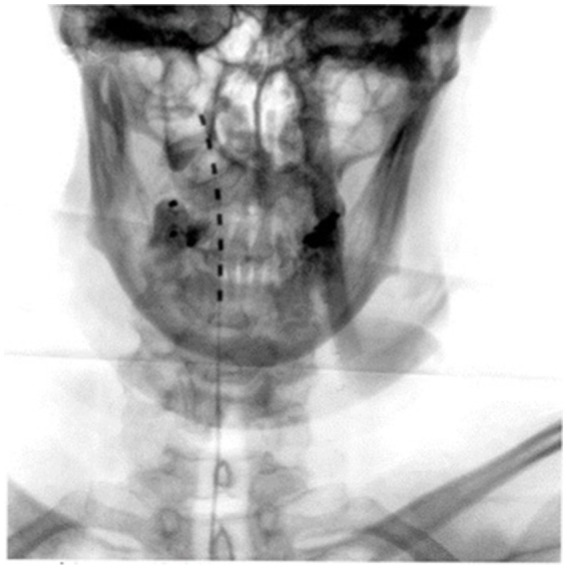 Figure 1
Peer Reviews
No public reviews on file for this paper yet. If you reviewed it on a platform where reviews are public (OpenReview, ICLR, NeurIPS, ICML), you can paste yours below so the community can read it here.
Videos
No videos yet. Explain this paper in a talk, walkthrough, or lecture? Add one.
Taxonomy
TopicsPain Management and Treatment · Trigeminal Neuralgia and Treatments · Pain Mechanisms and Treatments