Design, synthesis, and biological profiling of fluorinated cannabidiol and cannabigerol derivatives as promising therapeutic agents
Ferenc Dániel Petróczi, Angéla Tótik, Miklós Bege, József Király, Erzsébet Szabó, Zsuzsanna Szabó, Nikoletta Dobos, Rasha Ghanem Kattoub, Charu Upadhyay, Eszter Ostorházi, Jan Hodek, Jan Weber, József Arany, Dorottya Ádám, Christos C. Zouboulis, Attila Oláh, István Bajza

TL;DR
Researchers designed and tested fluorinated versions of CBD and CBG to improve their medical potential by enhancing their absorption and effectiveness.
Contribution
The study introduces fluorinated derivatives of CBD and CBG that show improved pharmacokinetics and diverse therapeutic activities.
Findings
Aliphatic fluorinated modifications improved absorption and pharmacokinetics compared to aromatic groups.
Monosubstituted derivatives with aliphatic fluorine side chains, especially trifluoroethyl, were most promising.
Some derivatives showed anticancer, antimalarial, and sebaceous lipogenesis-modulating effects.
Abstract
Cannabidiol (CBD) and cannabigerol (CBG) are non-psychotropic phytocannabinoids that have significant, broad-spectrum therapeutic potential in a variety of pharmacological areas, but their unfavorable pharmacokinetics, such as extensive first-pass metabolism and low bioavailability, hinder their effective medical applications. Therefore, there is a great need for appropriate chemical modifications to improve their physicochemical properties. Incorporation of fluorine atom(s) at appropriate positions often improves the metabolic stability of the parent compound, increasing its bioavailability, and enhances its binding affinity to therapeutic targets, making fluorine a highly valuable element in modern drug development. Furthermore, amino functional groups may improve the water solubility and bioavailability of the compounds. Building on these principles, our strategy focused on…
Genes, proteins, chemicals, diseases, species, mutations and cell lines named across the full text — each resolved to its canonical identifier and authoritative record.
Click any figure to enlarge with its caption.
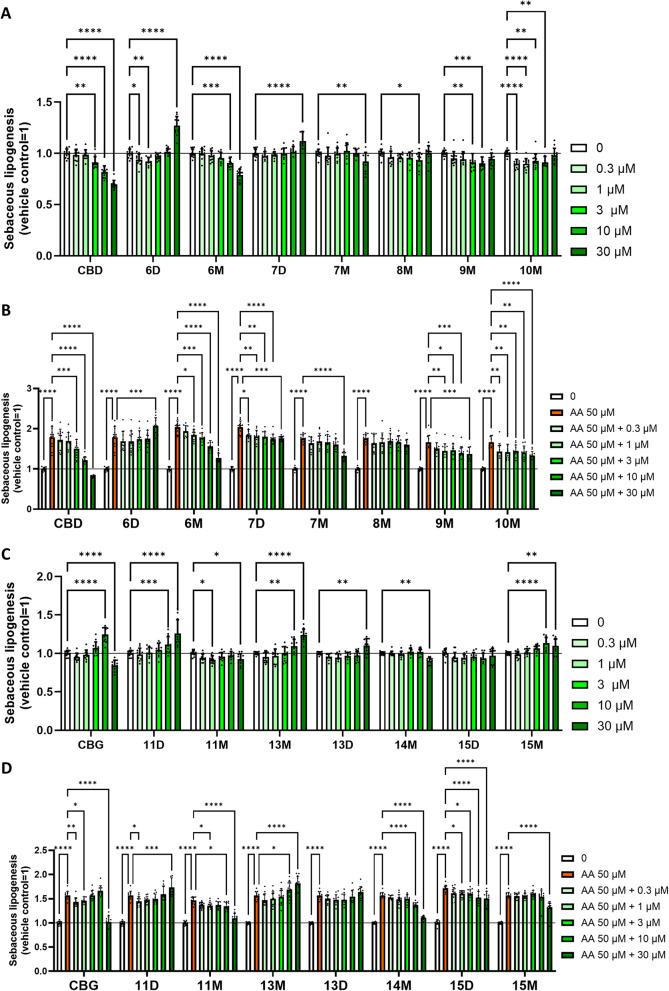 Figure 1
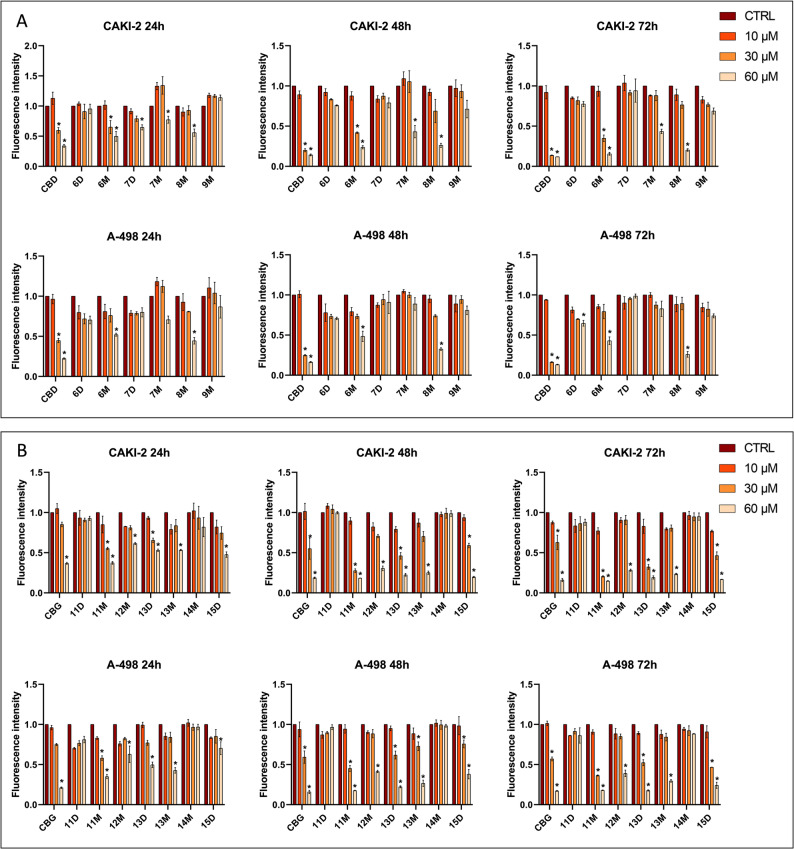 Figure 2
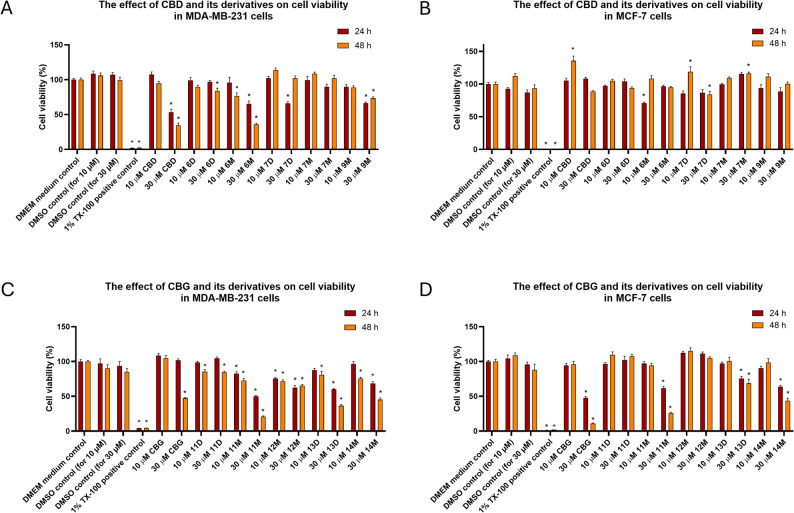 Figure 3
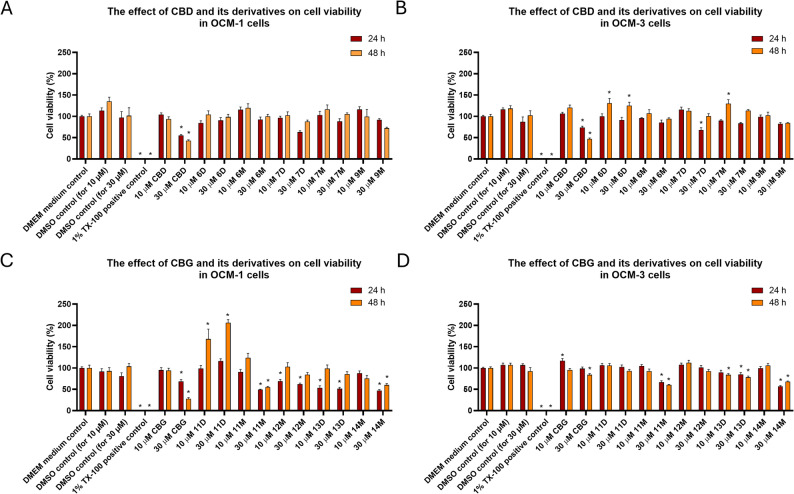 Figure 4
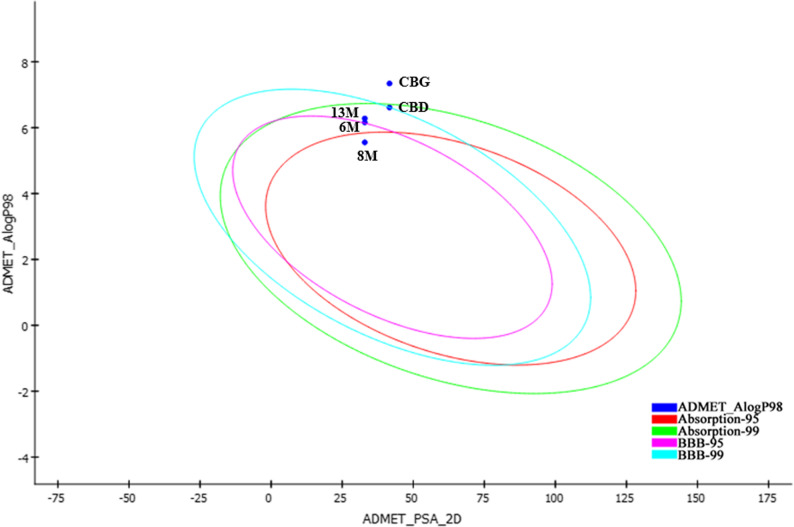 Figure 5
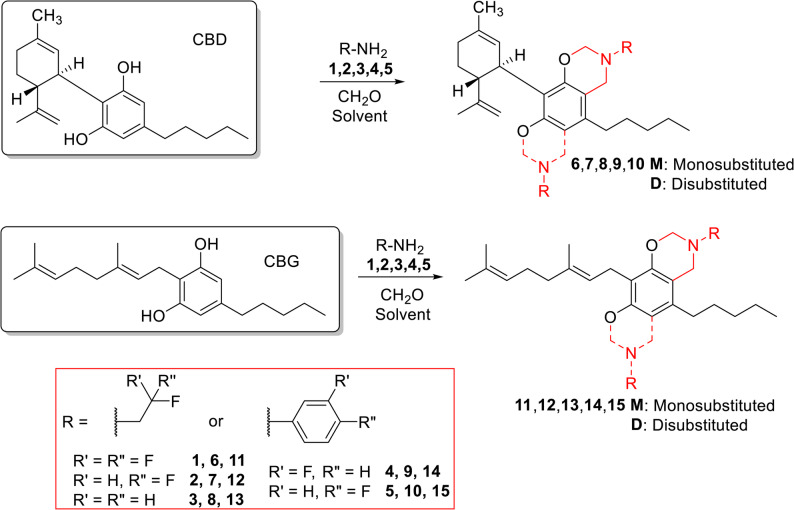 Figure 6
 Figure 7
 Figure 8
Peer Reviews
No public reviews on file for this paper yet. If you reviewed it on a platform where reviews are public (OpenReview, ICLR, NeurIPS, ICML), you can paste yours below so the community can read it here.
Videos
No videos yet. Explain this paper in a talk, walkthrough, or lecture? Add one.
Taxonomy
TopicsCannabis and Cannabinoid Research · Psychedelics and Drug Studies · Pharmacological Receptor Mechanisms and Effects