Artemether as a modulator of EMT in colorectal cancer: enhancing radiosensitivity and reversing chemo-radiation resistance
Lv Ge, Shan Liu, Shenglan Yu, Ming Li, Wanni Zhang, Chunmao Xie, Zhuo Gao, Sijia Tang, Minqi Xiao, Tao Zou, Yongxin Jiang, Hu Lu

TL;DR
Artemether enhances the effectiveness of radiotherapy in colorectal cancer by reversing resistance and regulating EMT processes.
Contribution
Artemether is shown to reverse chemo-radiation resistance and enhance radiosensitivity in colorectal cancer via EMT modulation.
Findings
Artemether combined with radiotherapy suppressed tumor growth and induced cell death in xenograft models.
Artemether reversed EMT by upregulating E-cadherin and β-Catenin while downregulating N-Cadherin, Vimentin, Snail, Slug, and Twist.
Artemether significantly enhanced radiosensitivity in chemo-radiation-resistant colorectal cancer cells.
Abstract
The efficacy of conventional chemoradiotherapy for colorectal cancer is often limited by resistance, with epithelial-mesenchymal transition being a key mechanism. Although the artemisinin derivative artemether (ARE) has shown antitumor potential, it remains unclear whether it can enhance radiosensitivity and reverse chemo-radiation resistance in colorectal cancer by regulating EMT. This study aimed to investigate the radiosensitizing and resistance-reversing effects of ARE on human colorectal cancer xenografts in nude mice and to elucidate the underlying mechanism related to EMT regulation. A nude mouse xenograft model using human colorectal cancer HCT116 and HCT116-chemo-radiation resistant (HCT116-CRR) cells was established. ARE combined with radiotherapy suppressed tumor growth in nude mice and induced cell death via necrosis and apoptosis. After ARE combined with radiotherapy,…
Genes, proteins, chemicals, diseases, species, mutations and cell lines named across the full text — each resolved to its canonical identifier and authoritative record.
Click any figure to enlarge with its caption.
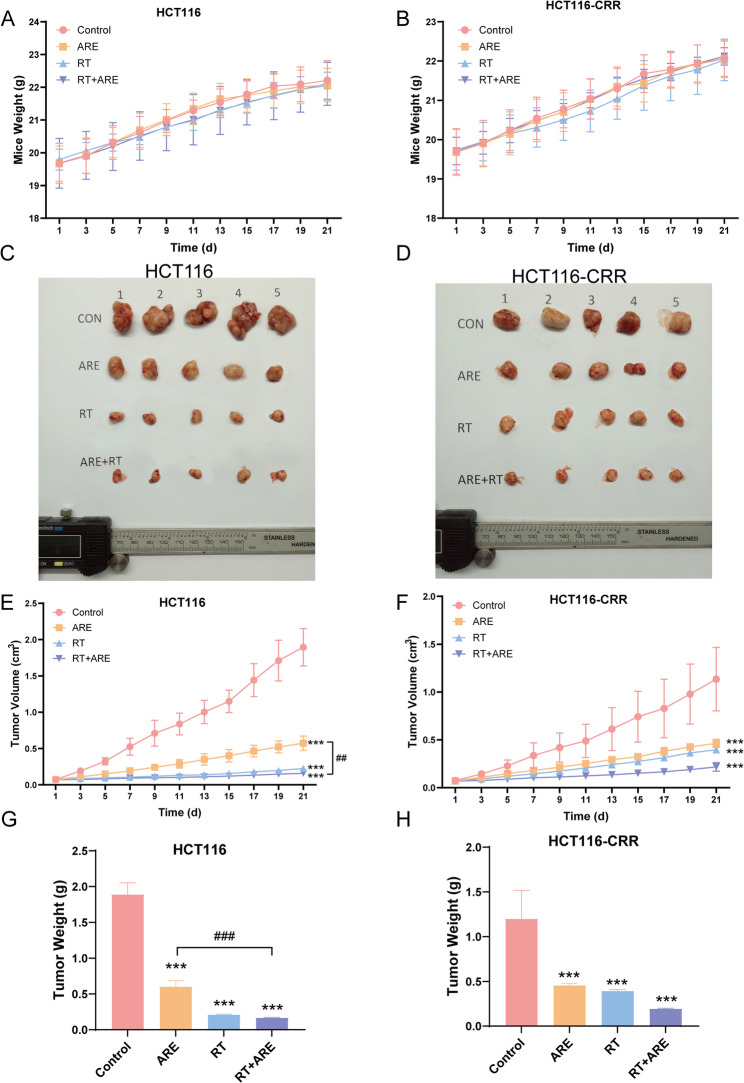 Figure 1
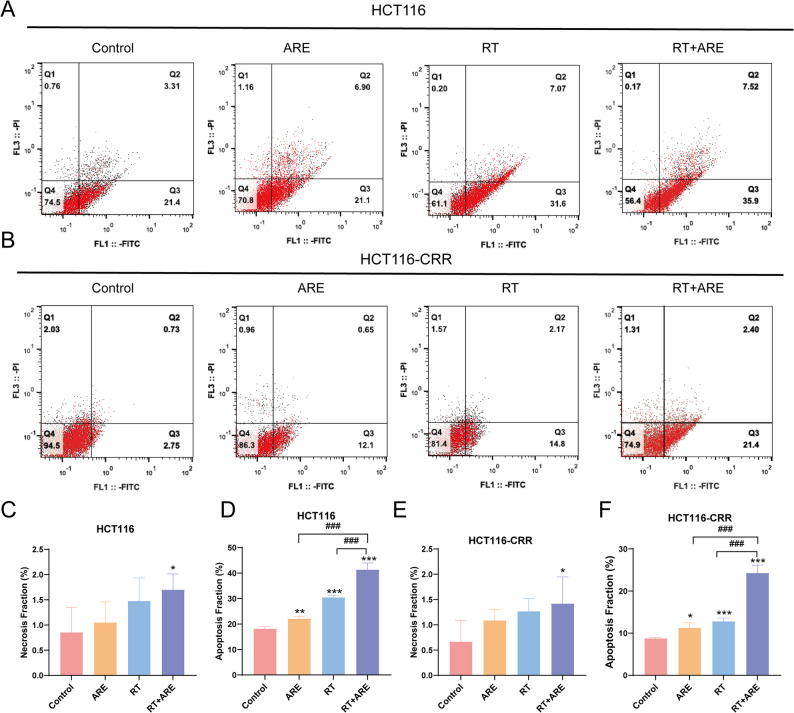 Figure 2
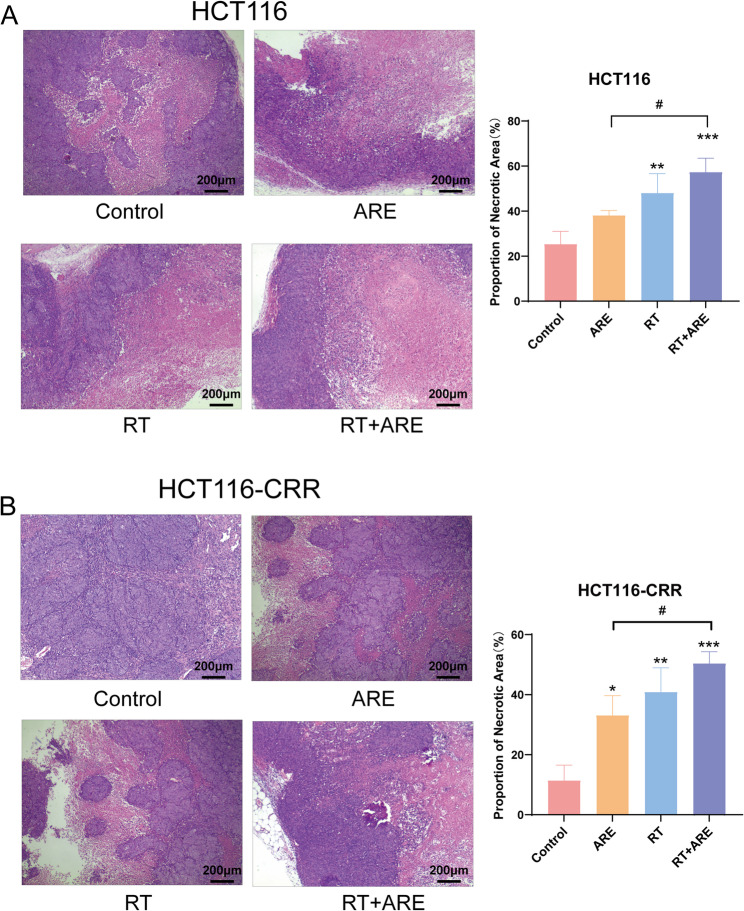 Figure 3
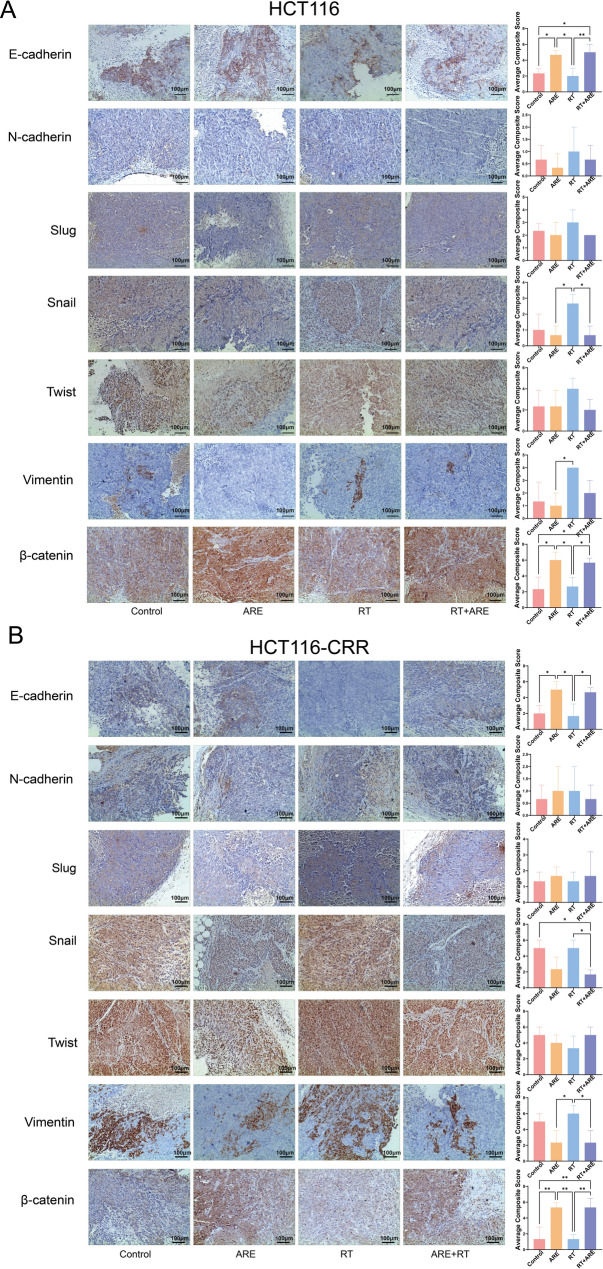 Figure 4
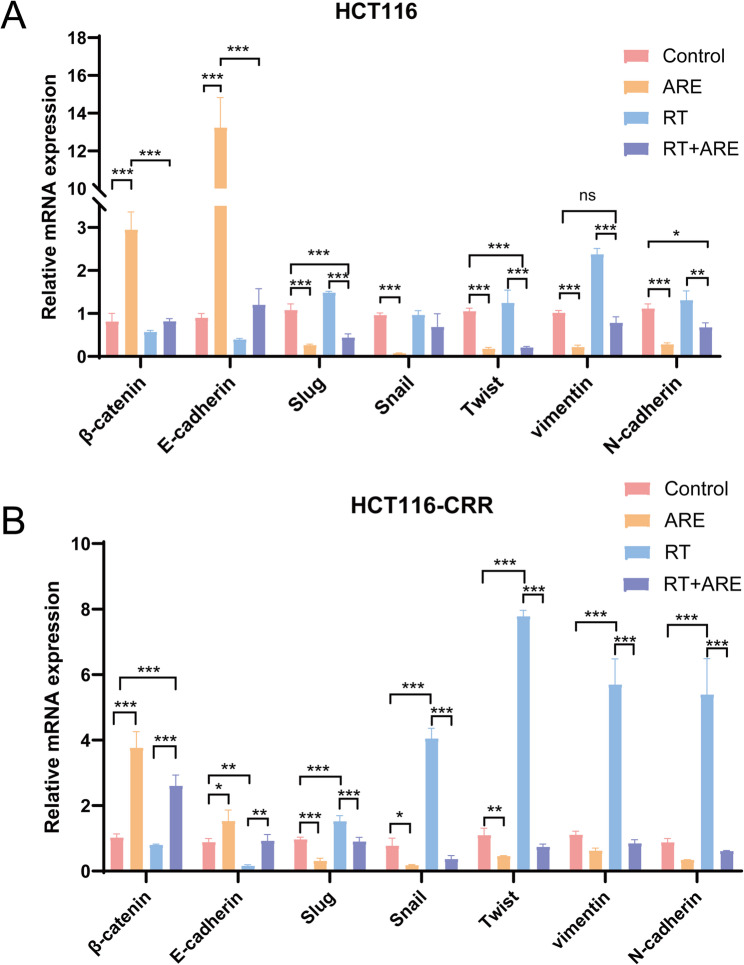 Figure 5
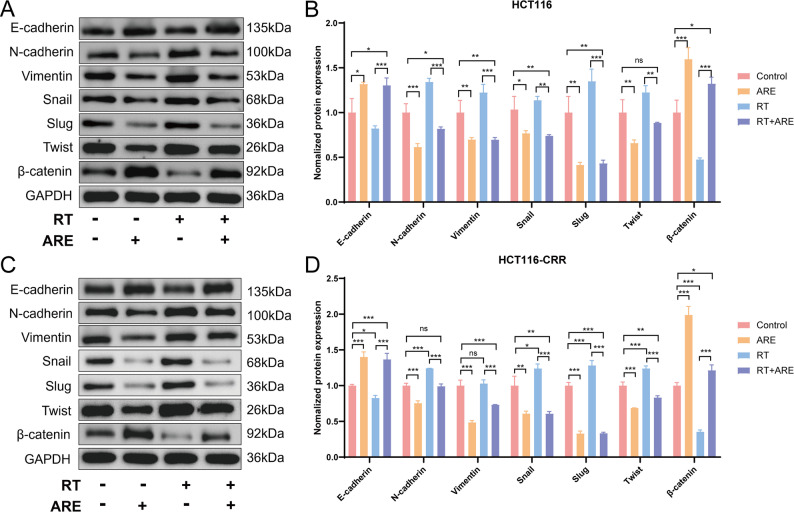 Figure 6
Peer Reviews
No public reviews on file for this paper yet. If you reviewed it on a platform where reviews are public (OpenReview, ICLR, NeurIPS, ICML), you can paste yours below so the community can read it here.
Videos
No videos yet. Explain this paper in a talk, walkthrough, or lecture? Add one.
Taxonomy
TopicsCancer Research and Treatments · Heat shock proteins research · Malaria Research and Control