Psychometric evaluation of the Perceived Parental Phubbing Scale (PPPS) among Iranian university students: associations with psychosocial factors and group differences
Mehran Mohammadi, Nikzad Ghanbari

TL;DR
This study validates a Persian version of a scale to measure how Iranian university students feel about their parents being distracted by smartphones, linking it to issues like loneliness and smartphone addiction.
Contribution
The study introduces and validates the first Persian-language Perceived Parental Phubbing Scale (PPPS) for use with Iranian university students.
Findings
The PPPS showed strong reliability and a unidimensional structure in Iranian university students.
Higher PPPS scores were associated with greater smartphone addiction, loneliness, and fear of missing out.
Students with psychological disorders and those in romantic relationships reported higher perceived parental phubbing.
Abstract
Parental phubbing, the experience of children perceiving parental inattentiveness due to smartphone use, can signal emotional unavailability, perceived rejection, and model maladaptive behaviors. Theoretically, Risky Families Model highlights how emotionally unavailable parenting disrupts children’s emotional and social development, PAR theory explains children’s psychological responses to perceived parental neglect, and Social Learning Theory describes how children may adopt parents’ smartphone habits. Despite these theoretical foundations, most research has been conducted in Chinese populations, limiting cross-cultural generalizability, and no validated Persian-language instrument exists. This study aimed to translate, culturally adapt, and validate the Persian Perceived Parental Phubbing Scale (PPPS) among Iranian university students, and to examine its psychosocial and…
Genes, proteins, chemicals, diseases, species, mutations and cell lines named across the full text — each resolved to its canonical identifier and authoritative record.
Click any figure to enlarge with its caption.
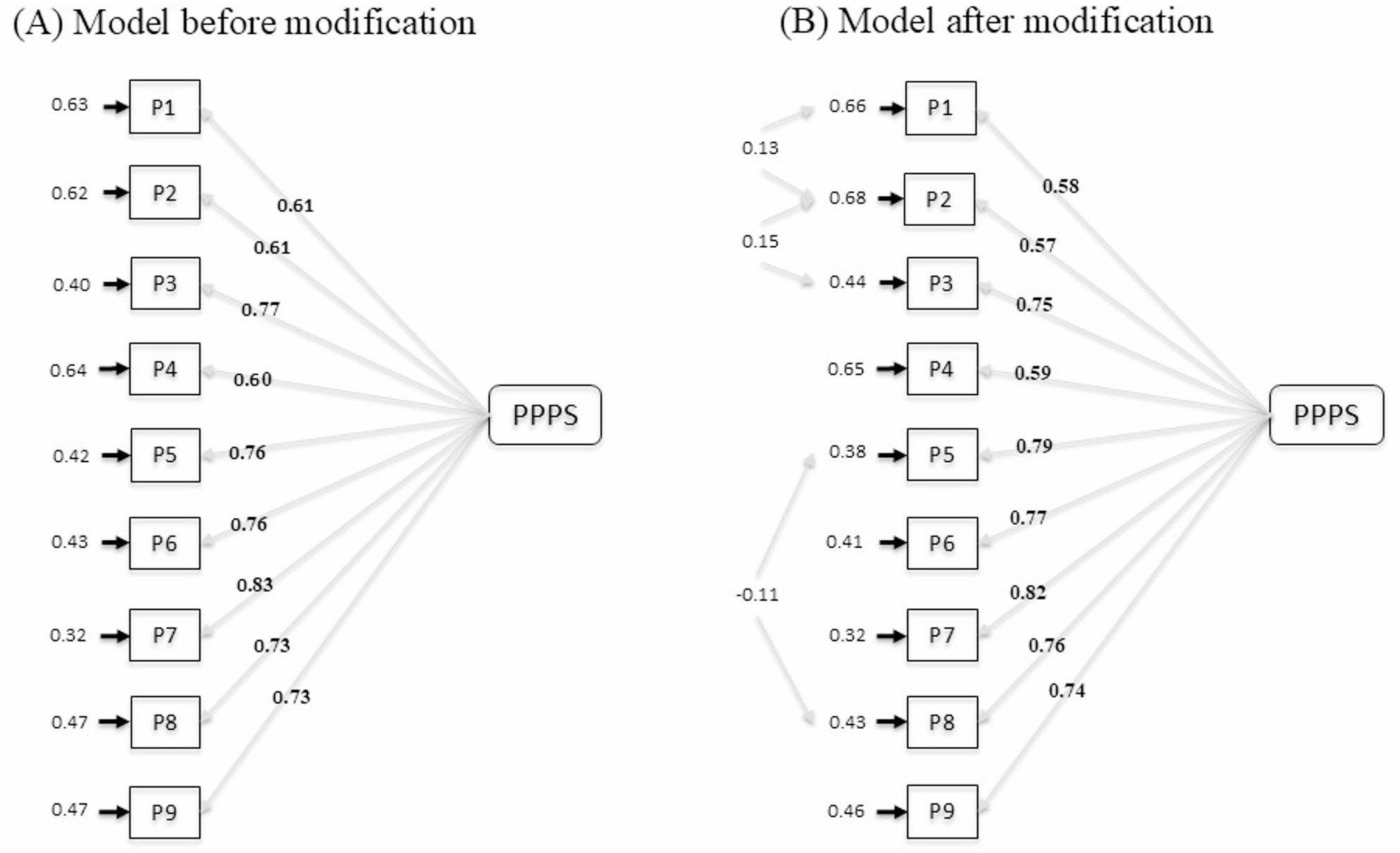 Figure 1
Peer Reviews
No public reviews on file for this paper yet. If you reviewed it on a platform where reviews are public (OpenReview, ICLR, NeurIPS, ICML), you can paste yours below so the community can read it here.
Videos
No videos yet. Explain this paper in a talk, walkthrough, or lecture? Add one.
Taxonomy
TopicsChild Development and Digital Technology · Impact of Technology on Adolescents · Family Support in Illness