Propensity score modeling of adolescent e-cigarette use and cognitive performance: One-year follow-up study
Hongying Daisy Dai, Troy B. Puga, Jiani Zhang, Neal L. Benowitz

TL;DR
This study finds that adolescent e-cigarette use is linked to lower cognitive performance in reading recognition after one year.
Contribution
The study uses propensity score modeling to assess cognitive effects of e-cigarette use in adolescents.
Findings
Exclusive e-cigarette use was associated with lower Oral Reading Recognition scores.
Propensity score matching improved covariate balance between users and non-users.
Findings suggest potential neurocognitive risks of e-cigarette use in adolescents.
Abstract
Adolescent e-cigarette use remains an important public health challenge, and evidence on its neurocognitive effects at an early age is limited. This study examined associations between exclusive e-cigarette use and cognitive performance in adolescents. This study is a propensity score modeling cohort study. This study performed a secondary data analysis on data collected from 21 US sites in the Adolescent Brain Cognitive Development (ABCD) Study between 1 October 2016 and 31 October 2018, with one year of follow-up data. Adolescents reported substance use at ages 12–13 years and completed National Institute of Health (NIH) Toolbox Cognition Batteries one year later, which consists of the following scores: Picture Vocabulary, Flanker Inhibitory Control and Attention, List Sorting Working Memory, Dimensional Change Card Sort, Pattern Comparison Processing Speed, Picture Sequence Memory,…
Genes, proteins, chemicals, diseases, species, mutations and cell lines named across the full text — each resolved to its canonical identifier and authoritative record.
Click any figure to enlarge with its caption.
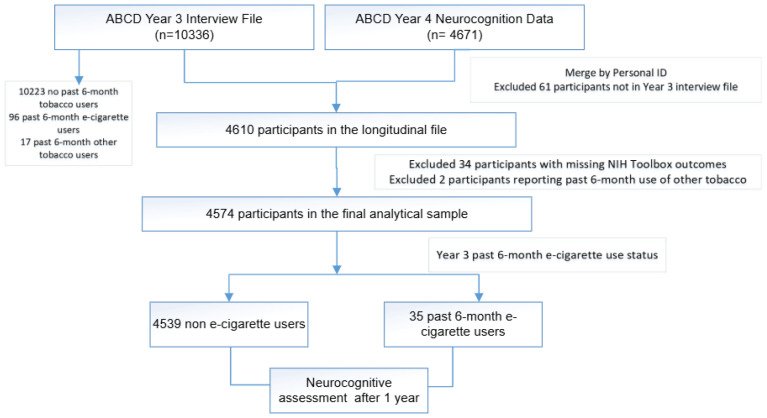 Figure 1
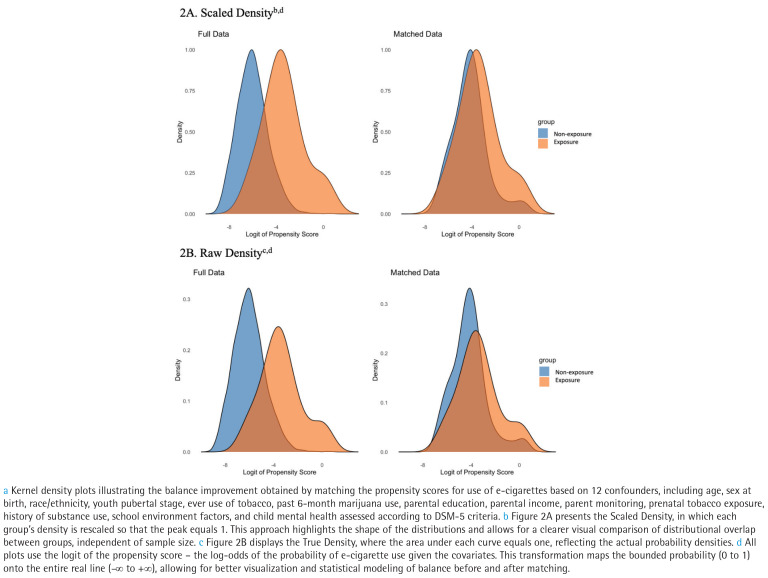 Figure 2
Peer Reviews
No public reviews on file for this paper yet. If you reviewed it on a platform where reviews are public (OpenReview, ICLR, NeurIPS, ICML), you can paste yours below so the community can read it here.
Videos
No videos yet. Explain this paper in a talk, walkthrough, or lecture? Add one.
Taxonomy
TopicsSmoking Behavior and Cessation · Substance Abuse Treatment and Outcomes · Survey Methodology and Nonresponse