Natural Strategies to Preserve Alcohol-Free Beer: Phenolamide Dimers with Anti-Yeast Potential
Annemiek van Zadelhoff, Denise Dozio, Francesca Annunziata, Aziza Caccia, Sabrina Dallavalle, Yingyu Zhou, Sarah van Dinteren, Jean-Paul Vincken, Andrea Pinto, Wouter J. C. de Bruijn

TL;DR
Researchers found that certain natural compounds, called phenolamide dimers, can inhibit yeast growth in alcohol-free beer, offering a natural preservative solution.
Contribution
The study demonstrates that amidation and oxidative coupling enhance anti-yeast activity of hydroxycinnamic acid derivatives.
Findings
Hydroxycinnamic acid dimers and HCAgms did not inhibit yeast, but HCAgm dimers did.
Specific HCAgm dimers like CouAgm-4-O-7′/3-8′-DCouAgm and FerAgm-4-O-7′/3-8′-DFerAgm showed anti-yeast activity in beer.
A new agmatine amide of poacic acid had increased antiyeast activity compared to its monomeric precursors.
Abstract
Trends in clean label food and the growing popularity of alcohol-free beers have led to a demand for natural compounds to prevent microbial spoilage. Oxidative coupling products of hydroxycinnamic acids and their amides, i.e. phenolamides, obtained via chemo-enzymatic synthesis and from barley rootlets, a beer brewing byproduct, were tested for their inhibitory activity against the beer spoilage yeast Saccharomyces cerevisiae subsp. diastaticus. Hydroxycinnamic acids, their dimers, and hydroxycinnamoylagmatines (HCAgms) did not inhibit the yeast. However, inhibitory activity was observed with HCAgm dimers. In particular, CouAgm-4-O-7′/3-8′-DCouAgm and FerAgm-4-O-7′/3-8′-DFerAgm were active at 46–255 μg/mL in beer. Notably, the newly synthesized agmatine amide of poacic acid, a stilbenoid dimer of ferulic acid, showed increased antiyeast activity compared to its monomeric precursors.…
Genes, proteins, chemicals, diseases, species, mutations and cell lines named across the full text — each resolved to its canonical identifier and authoritative record.
Click any figure to enlarge with its caption.
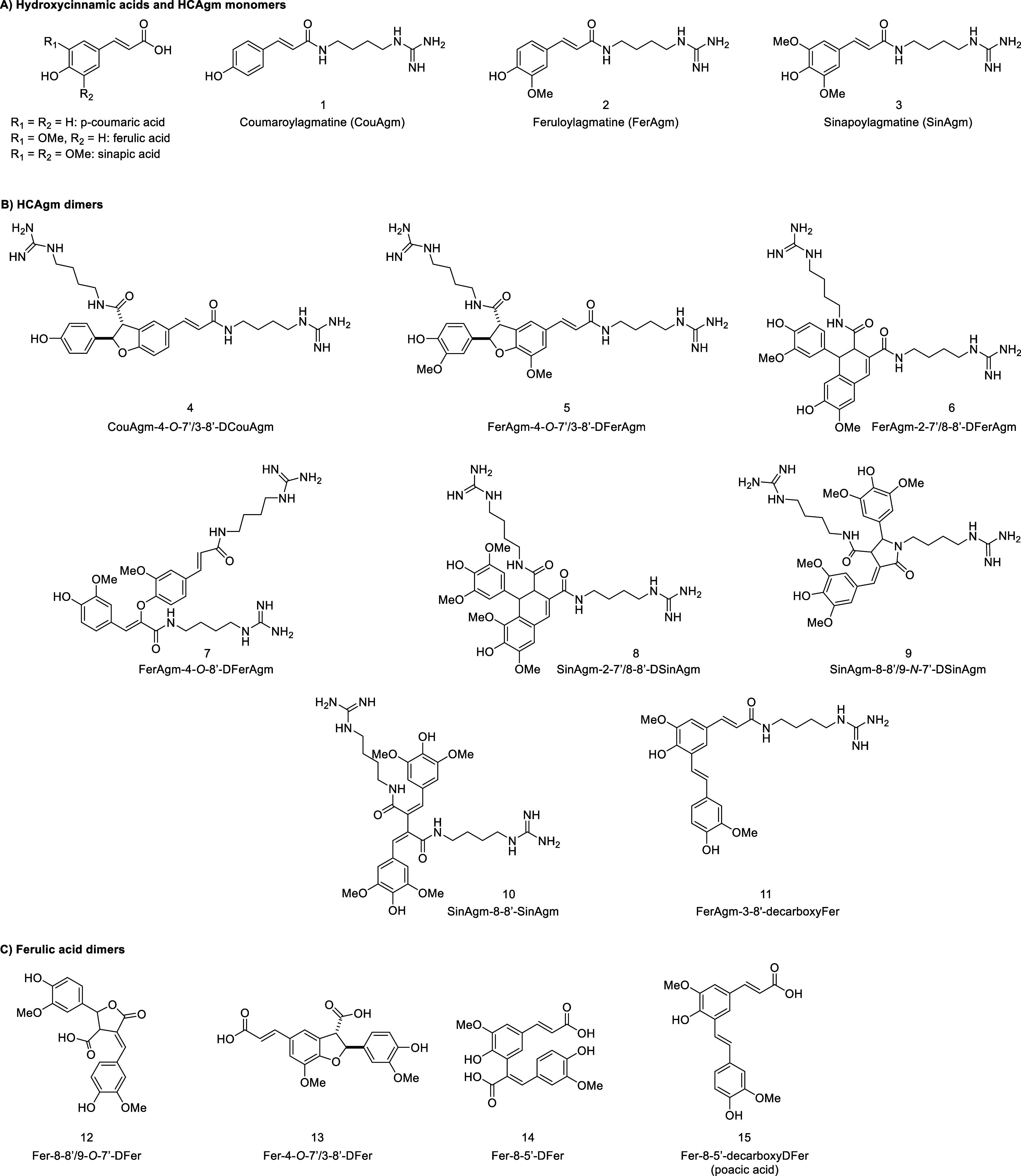 Figure 1
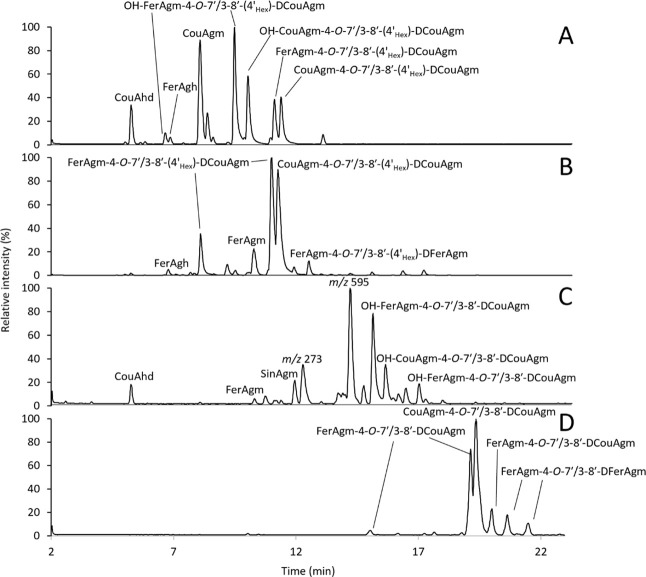 Figure 2
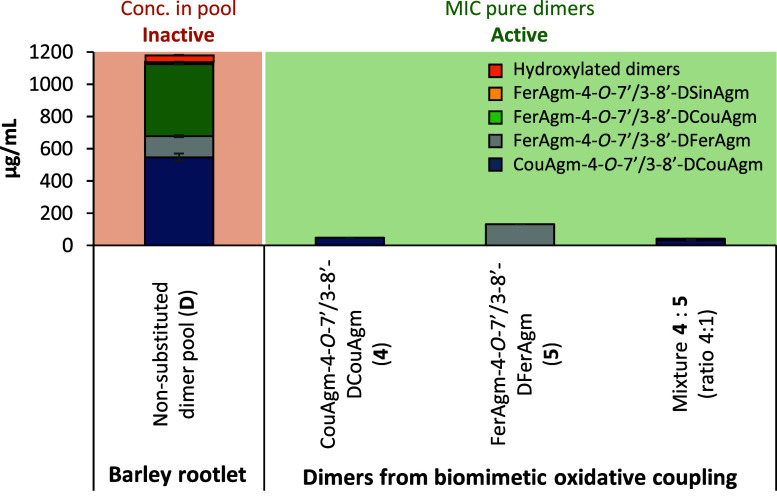 Figure 3
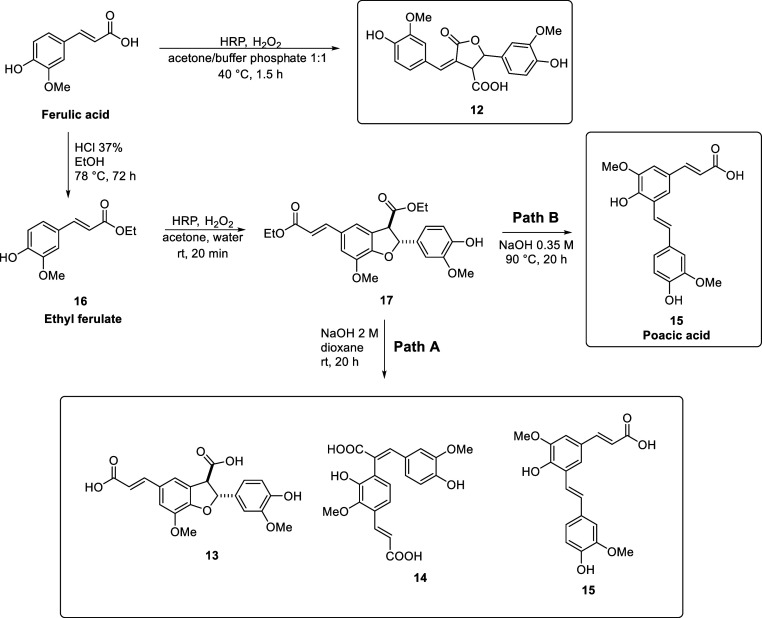 Figure 4
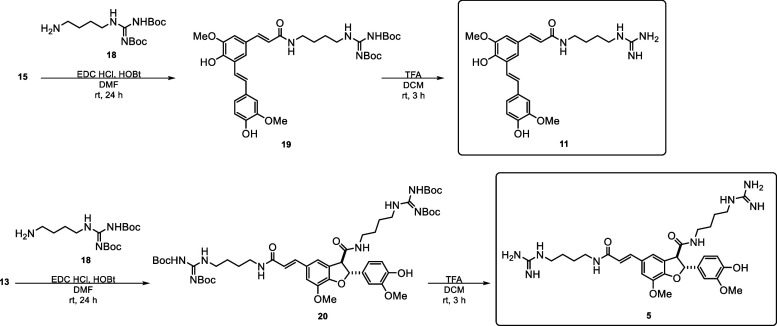 Figure 5
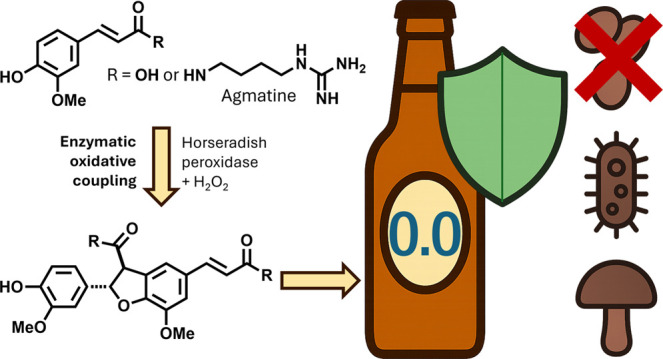 Figure 6
Peer Reviews
No public reviews on file for this paper yet. If you reviewed it on a platform where reviews are public (OpenReview, ICLR, NeurIPS, ICML), you can paste yours below so the community can read it here.
Videos
No videos yet. Explain this paper in a talk, walkthrough, or lecture? Add one.
Taxonomy
TopicsFermentation and Sensory Analysis · Plant-Microbe Interactions and Immunity · Fungal and yeast genetics research