Potential of Quantitative α‑Amylase or Trypsin Inhibition by Refined and Whole Wheat and Einkorn Using High-Performance Thin-Layer Chromatography–NanoGIT versus Conventional Spectrophotometry
Isabel Müller, Ilka Scheibelhut, Gertrud E. Morlock

TL;DR
This study compares the inhibition of enzymes by different wheat types using a new method that combines chromatography and nanoGIT assays.
Contribution
The novel HPTLC–nanoGIT workflows provide detailed insights into enzyme inhibition and metabolite profiles.
Findings
Einkorn showed lower α-amylase inhibition compared to refined and whole wheat.
High extract concentrations of all cereals showed 100% trypsin inhibition.
The new method revealed specific interactions and metabolite profiles not detectable by conventional methods.
Abstract
The current analysis of α-amylase/trypsin inhibitors (ATIs) is complicated due to the missing link between inhibition potential and inhibitors. Two on-surface assays (nanoGIT) were developed to quantify the inhibition of α-amylase and trypsin by flour extracts of refined wheat, whole wheat, and einkorn, followed by direct analysis (on the same surface) of the metabolisation products via high-performance thin-layer chromatography (HPTLC). The HPTLC–nanoGIT (amylolysis inhibition)–FLD/Vis revealed a lower α-amylase inhibition of einkorn than refined or whole wheat, whereby both latter wheat types showed no differences. The HPTLC–nanoGIT (proteolysis inhibition)–Vis confirmed only partially the 100% inhibition at high extract concentrations of the three cereal types obtained by the spectrophotometric trypsin inhibition assay. The HPTLC–nanoGIT workflows not only confirmed the inhibitory…
Genes, proteins, chemicals, diseases, species, mutations and cell lines named across the full text — each resolved to its canonical identifier and authoritative record.
Click any figure to enlarge with its caption.
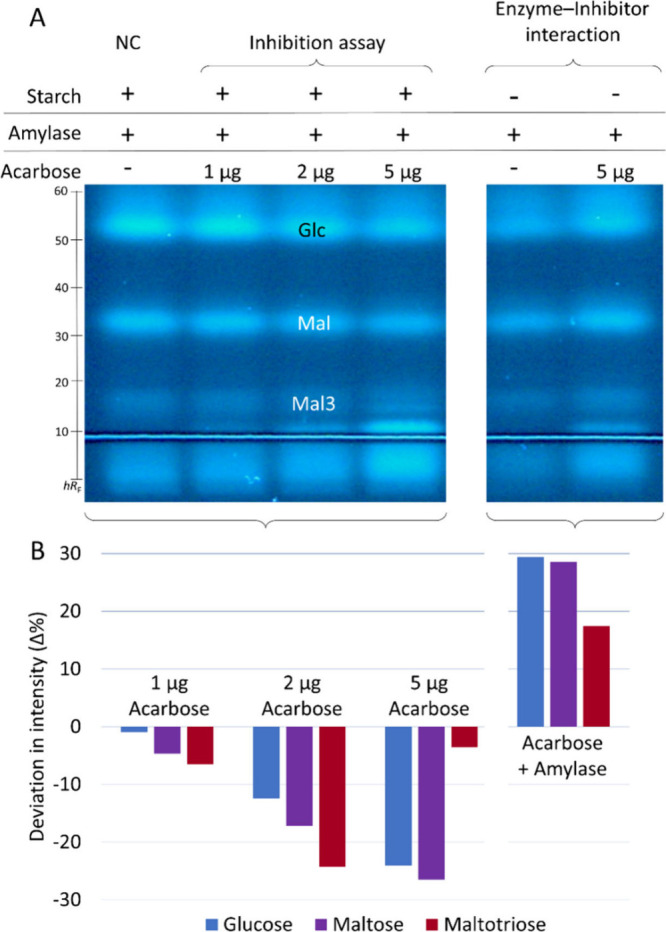 Figure 1
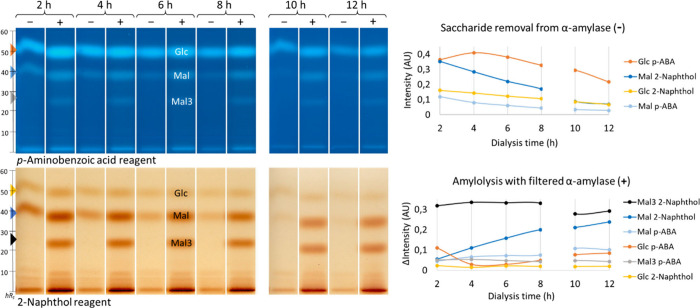 Figure 2
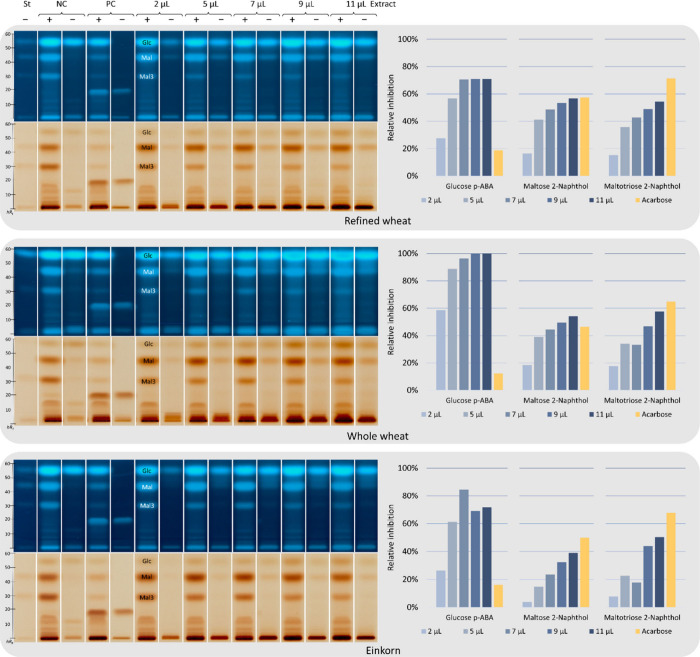 Figure 3
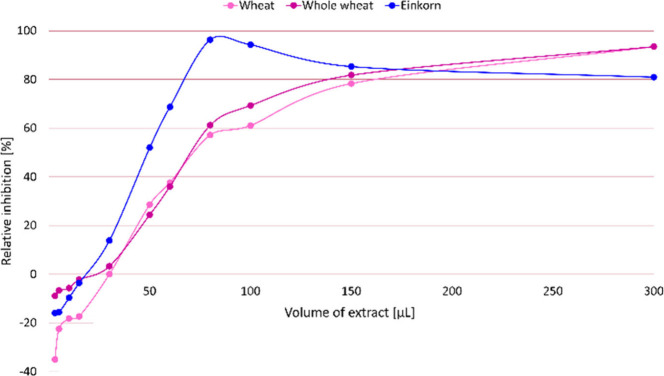 Figure 4
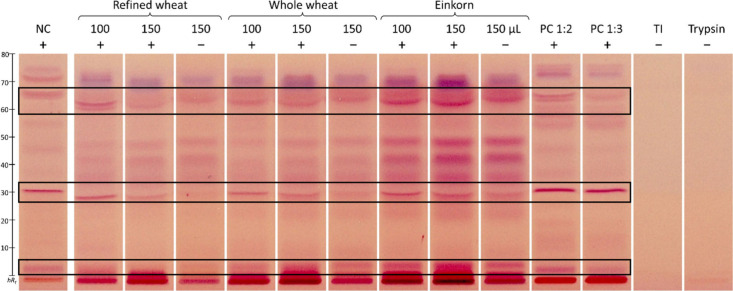 Figure 5
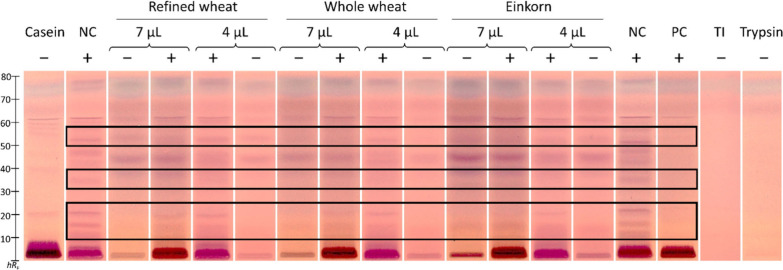 Figure 6
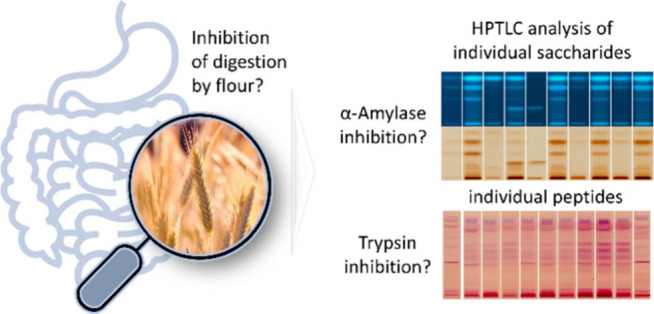 Figure 7
 Figure 8
 Figure 9
 Figure 10
Peer Reviews
No public reviews on file for this paper yet. If you reviewed it on a platform where reviews are public (OpenReview, ICLR, NeurIPS, ICML), you can paste yours below so the community can read it here.
Videos
No videos yet. Explain this paper in a talk, walkthrough, or lecture? Add one.
Taxonomy
TopicsEnzyme Production and Characterization · Protein Interaction Studies and Fluorescence Analysis · Food composition and properties