Innovative Immobilization of Aspergillus aculeatus OI4C2 Fructosyltransferase on MANAE-Agarose Cross-Linked with Genipin for Enhanced Production of Fructooligosaccharides
Tatiane Sayuri Inagaki, Diandra de Andrades, Gabriela Souza Alves Picciarelli, Maria de Lourdes Teixeira de Moraes Polizeli, Douglas Poleto de Oliveira, Valdemiro Pereira de Carvalho Junior, Paula Daniela Helfenstein Rother, Mariana Fensterseifer Fabricio

TL;DR
This study shows that immobilizing an enzyme from Aspergillus aculeatus on a genipin-cross-linked agarose matrix improves its efficiency and stability for producing fructooligosaccharides.
Contribution
The novel use of genipin-cross-linked MANAE-agarose for immobilizing A. aculeatus FTase enhances FOS production and enzyme stability.
Findings
Immobilized FTase achieved 97.37 g L–1 FOS, higher than 73.44 g L–1 from the free enzyme.
The immobilized enzyme retained 50% activity after 12 reuse cycles.
It showed improved thermal and acidic pH stability compared to the free enzyme.
Abstract
This study evaluated the use of genipin in monoamino-N-aminoethyl (MANAE)-agarose in the immobilization of fructosyltransferase (FTase) from Aspergillus aculeatus OI4C2, focusing on the stability and catalytic efficiency for the production of fructooligosaccharides (FOS) from sucrose. The immobilization of FTase on genipin-cross-linked MANAE-agarose achieved a 98.53% yield, 76.71% activity recovery, and 77.86% efficiency, and it resulted in the synthesis of predominantly short-chain fructooligosaccharides. Comparatively, the maximum amounts of FOS obtained were 73.44 g L–1 for the free enzyme and 97.37 g L–1 for the immobilized enzyme. Immobilization improved the thermal stability at 40–60 °C and increased the enzyme stability under acidic pH conditions (4.5–6.5) for up to 72 h. The operational stability of the immobilized enzyme retained 50% of its initial activity after 12 reuse…
Genes, proteins, chemicals, diseases, species, mutations and cell lines named across the full text — each resolved to its canonical identifier and authoritative record.
Click any figure to enlarge with its caption.
 Figure 1
 Figure 2
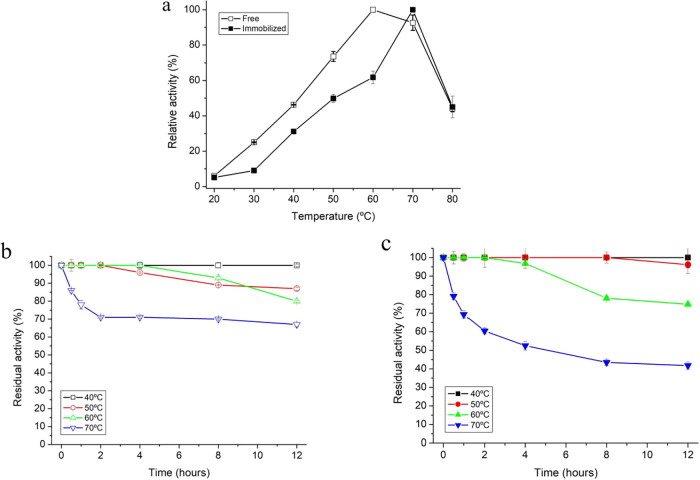 Figure 3
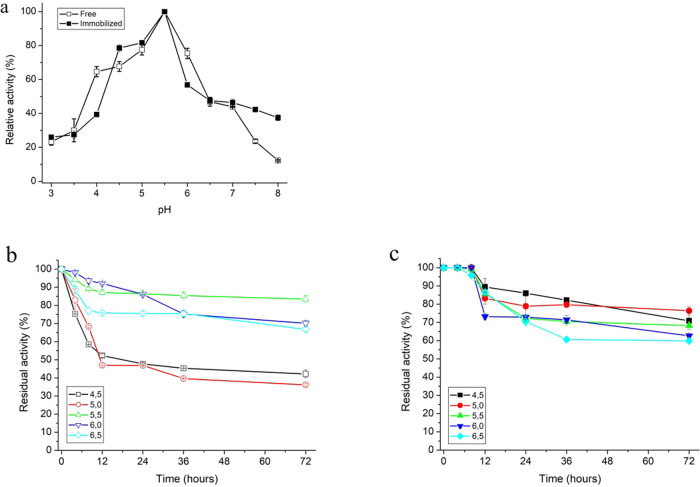 Figure 4
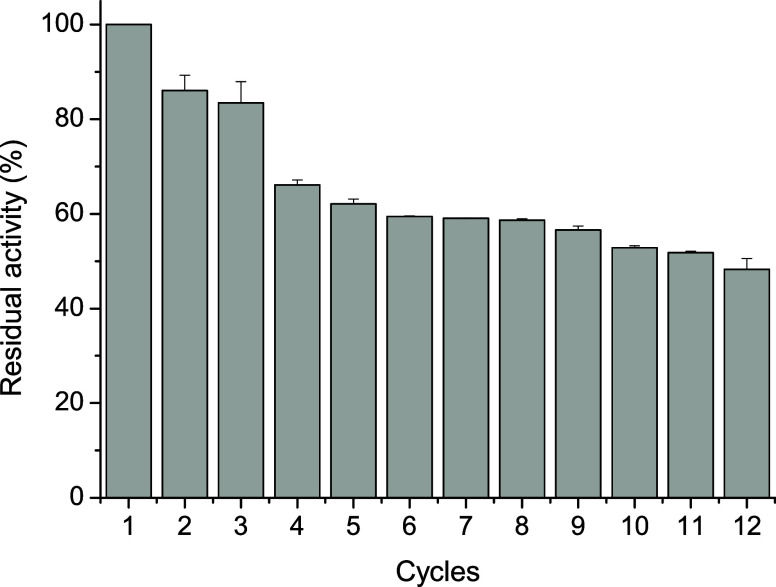 Figure 5
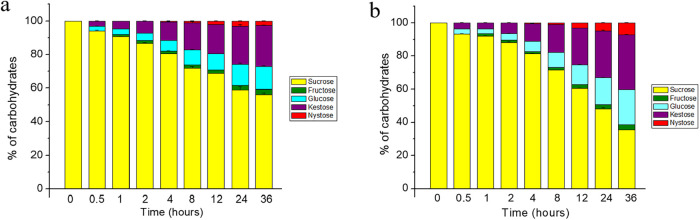 Figure 6
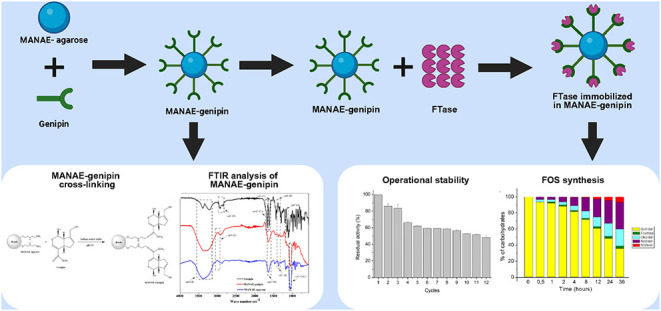 Figure 7
Peer Reviews
No public reviews on file for this paper yet. If you reviewed it on a platform where reviews are public (OpenReview, ICLR, NeurIPS, ICML), you can paste yours below so the community can read it here.
Videos
No videos yet. Explain this paper in a talk, walkthrough, or lecture? Add one.
Taxonomy
TopicsMicrobial Metabolites in Food Biotechnology · Polysaccharides and Plant Cell Walls · Seaweed-derived Bioactive Compounds