Heteroatomic Andreev Molecule in a Superconducting Island–Double Quantum Dot Hybrid
Olivér Kürtössy, Mihály Bodócs, Cătălin Paşcu Moca, Zoltán Scherübl, Ella Nikodem, Thomas Kanne, Jesper Nygård, Gergely Zaránd, Péter Makk, Szabolcs Csonka

TL;DR
Researchers created a new type of superconducting molecule that could help in building fault-tolerant quantum hardware.
Contribution
The novel contribution is the demonstration of a tunable heteroatomic Andreev molecule using a superconducting island and quantum dots.
Findings
A three-electron-based molecular state is formed by coupling two quantum dots through a superconducting island.
DMRG calculations confirm the robust binding of electrons in the system.
Electrical gating enables a quantum phase transition between antiferromagnetic and ferromagnetic coupling states.
Abstract
Topological superconductors (SCs) hold great promise for fault-tolerant quantum hardware; however, their experimental realization is very challenging. Recently, superconducting artificial molecules (Andreev molecules) have opened new avenues to engineer topological superconducting materials. In this work, we demonstrate a heteroatomic Andreev molecule, where two normal artificial atoms realized by quantum dots (QDs) are coupled by a superconducting island (SCI). We show that the two normal atoms hybridize and form a three-electron-based molecular state. Our density matrix renormalization group (DMRG) calculations explain quantitatively the robust binding of electrons. The tunability of the structure allows us to drive a quantum phase transition from an antiferromagnetic Andreev molecular state to a heteroatomic Andreev molecule with ferromagnetically coupled QDs using simple electrical…
Genes, proteins, chemicals, diseases, species, mutations and cell lines named across the full text — each resolved to its canonical identifier and authoritative record.
Click any figure to enlarge with its caption.
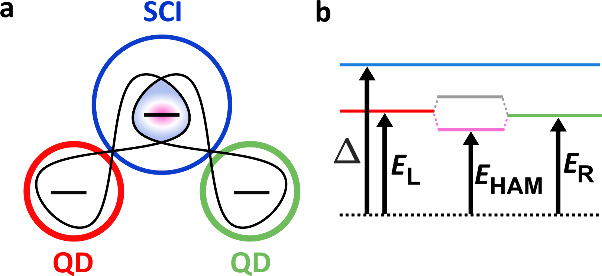 Figure 1
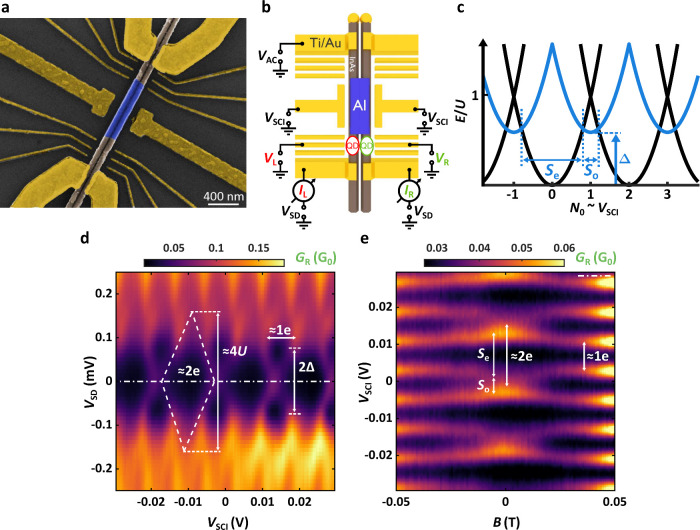 Figure 2
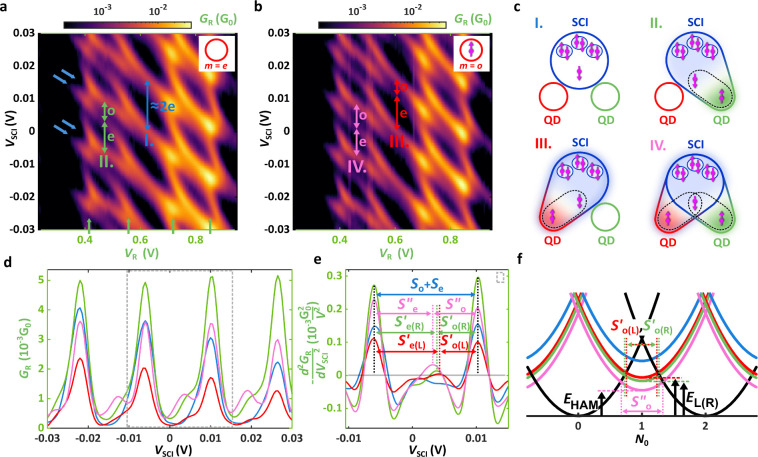 Figure 3
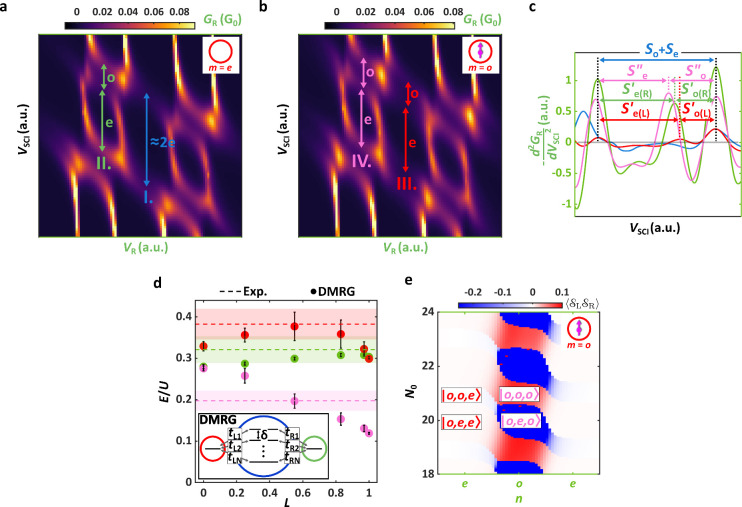 Figure 4
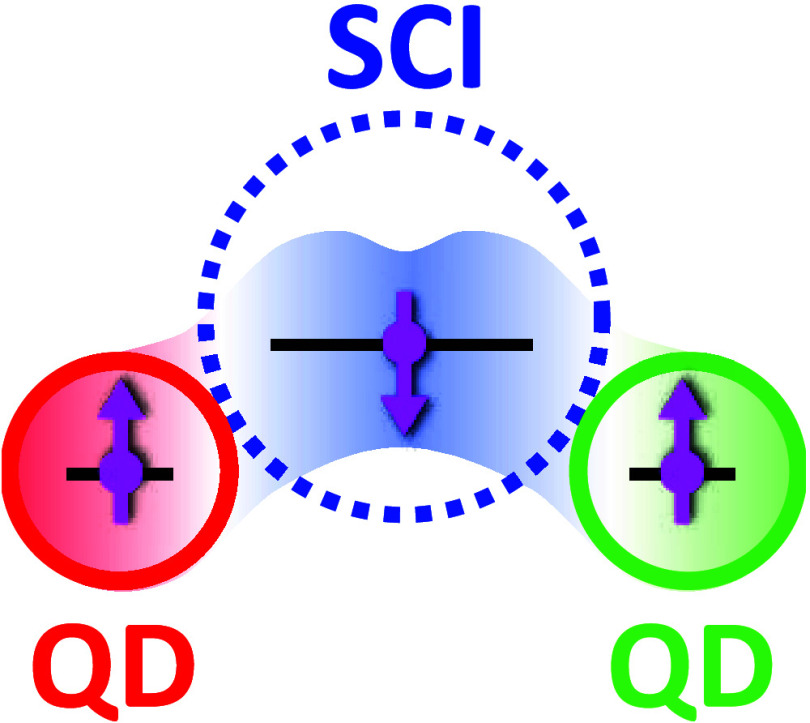 Figure 5
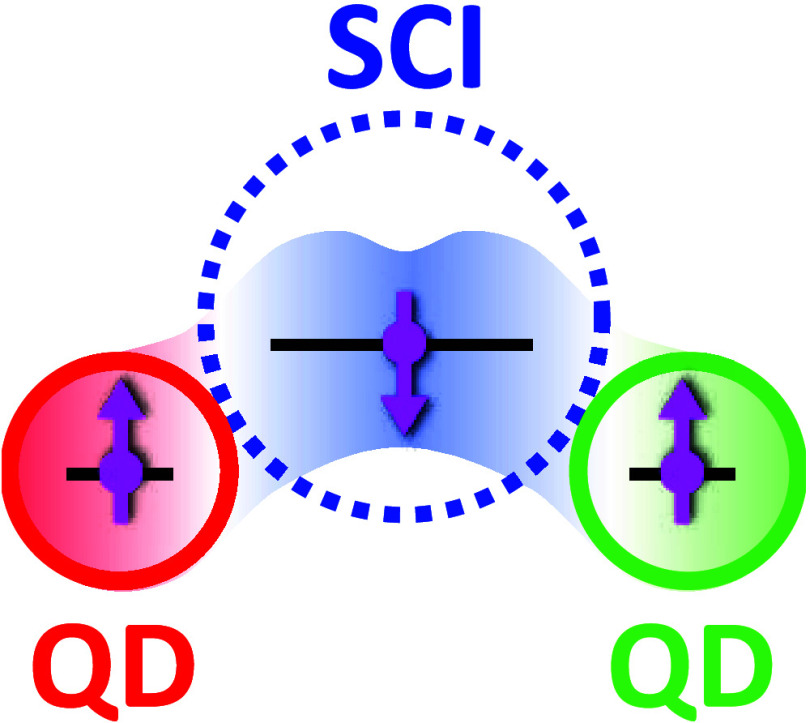 Figure 6
 Figure 7
 Figure 8
 Figure 9
 Figure 10
 Figure 11
 Figure 12
 Figure 13
 Figure 14
 Figure 15
 Figure 16
 Figure 17
 Figure 18
 Figure 19
 Figure 20
 Figure 21
 Figure 22
 Figure 23
 Figure 24
 Figure 25
 Figure 26
 Figure 27
 Figure 28
 Figure 29
 Figure 30
 Figure 31
 Figure 32
 Figure 33
Peer Reviews
No public reviews on file for this paper yet. If you reviewed it on a platform where reviews are public (OpenReview, ICLR, NeurIPS, ICML), you can paste yours below so the community can read it here.
Videos
No videos yet. Explain this paper in a talk, walkthrough, or lecture? Add one.
Taxonomy
TopicsTopological Materials and Phenomena · Quantum and electron transport phenomena · Graphene research and applications