The Entomotoxic Fungal Lectin Marasmius oreades Agglutinin Disrupts the Midgut Epithelium of Colorado Potato Beetle Larvae
Primož Žigon, Urban Bogataj, Sergej Praček, Tjaša Peternel, Polona Mrak, Maja Ivana Smodiš Škerl, Márta Ladányi, Katarina Karničar, Marko Fonović, Anastasija Panevska, Matej Skočaj, Dušan Turk, Nada Žnidaršič, Jaka Razinger, Jerica Sabotič

TL;DR
A fungal lectin called MOA disrupts the gut of Colorado potato beetle larvae, showing potential as a selective bioinsecticide with minimal harm to bees.
Contribution
MOA is identified as a novel bioinsecticide candidate with selective toxicity against CPB larvae.
Findings
MOA caused higher mortality in CPB larvae compared to other lectins.
MOA disrupts midgut epithelium by binding to glycoproteins and causing structural damage.
MOA showed no acute toxicity to honeybees but affected larval development.
Abstract
Fungal lectins, with their specific glycan-binding activity, represent promising biopesticide candidates. This study investigates the potential of six fungal lectins to control Colorado potato beetle (CPB) larvae (Leptinotarsa decemlineata). In vitro feeding trials with recombinant lectins were performed to evaluate their individual toxicity. Marasmius oreades agglutinin (MOA) caused significantly higher mortality than the other lectins, whereas Coprinopsis cinerea lectin 2 (CCL2) and Aleuria aurantia lectin (AAL) completely inhibited weight gain. Functional analysis of MOA mutants revealed that both carbohydrate-binding and proteolytic domains are essential for toxicity. MOA binds to midgut glycoproteins in CPB larvae, disrupting midgut epithelium. Histology and ultramicroscopy showed that MOA causes loss of apicobasal polarity and detachment of basal lamina. No acute toxicity of…
Genes, proteins, chemicals, diseases, species, mutations and cell lines named across the full text — each resolved to its canonical identifier and authoritative record.
Click any figure to enlarge with its caption.
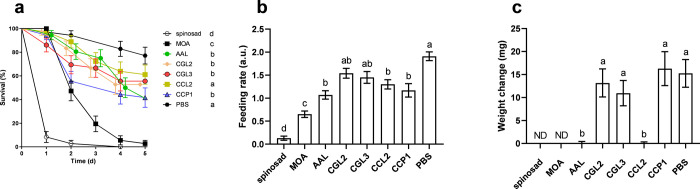 Figure 1
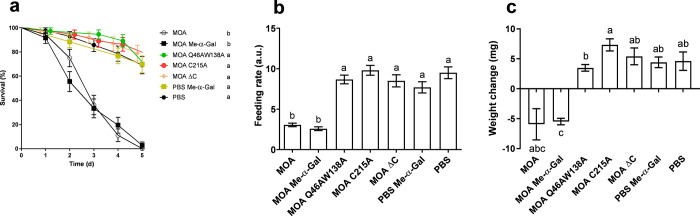 Figure 2
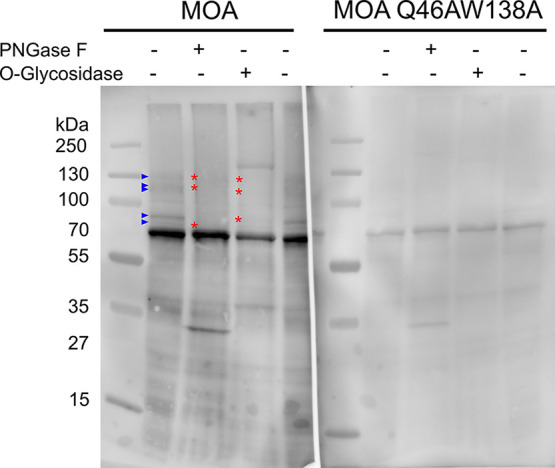 Figure 3
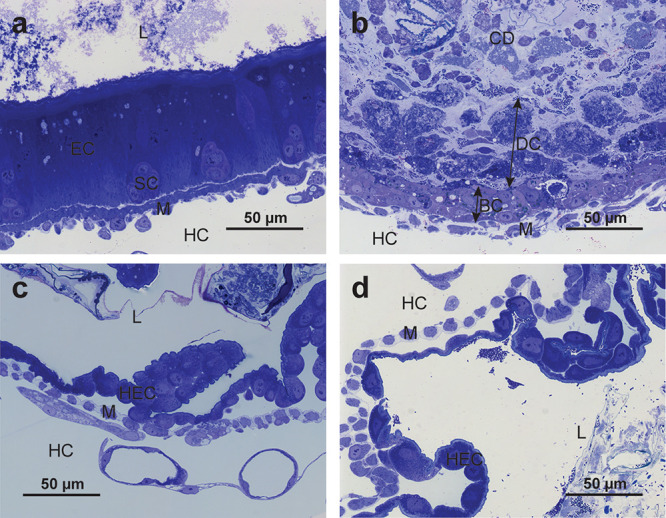 Figure 4
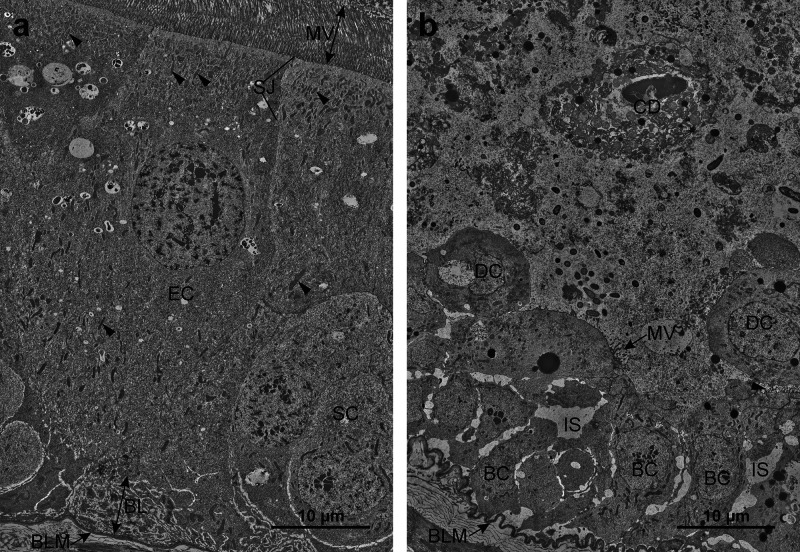 Figure 5
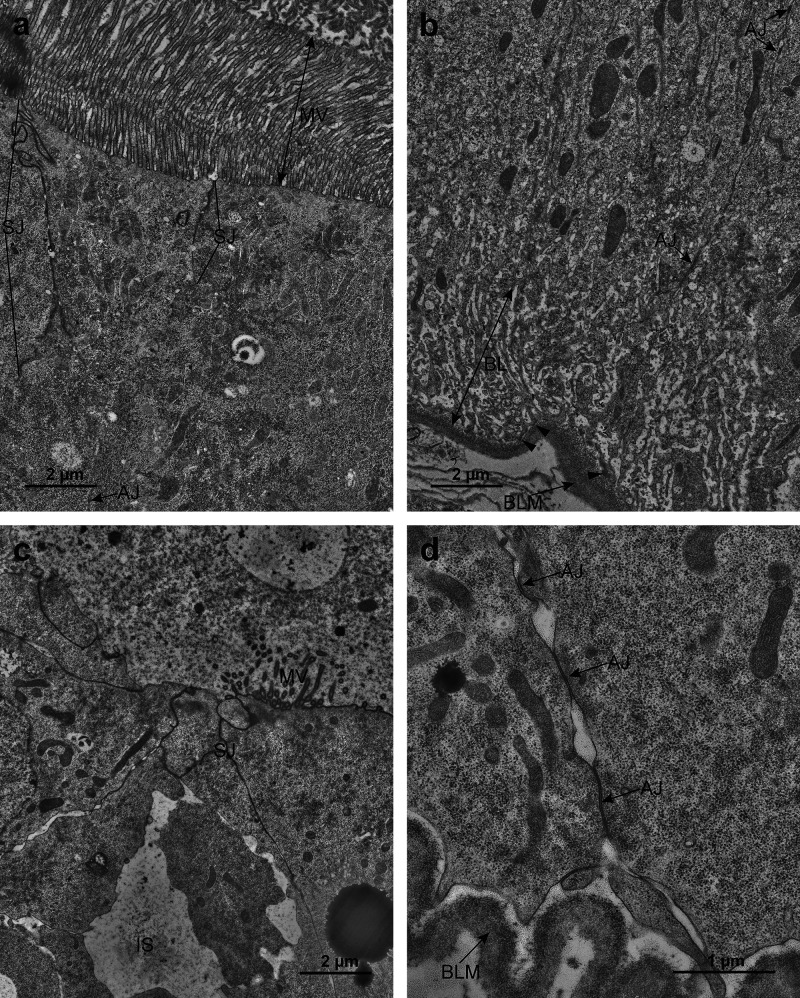 Figure 6
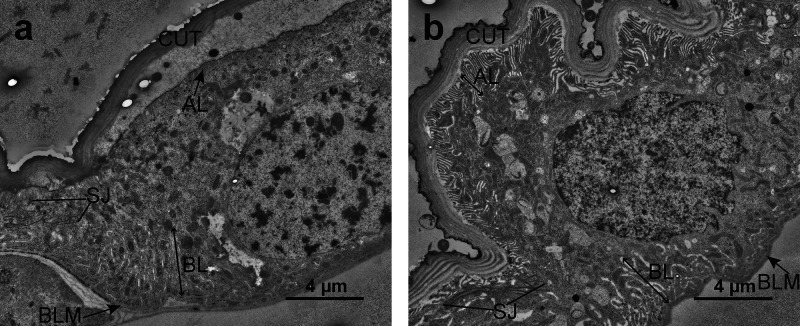 Figure 7
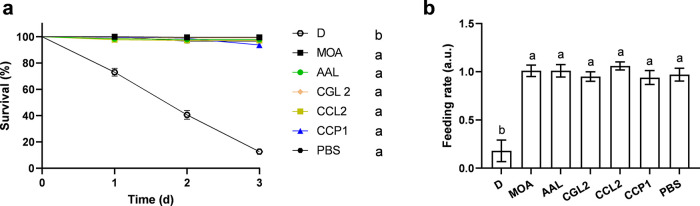 Figure 8
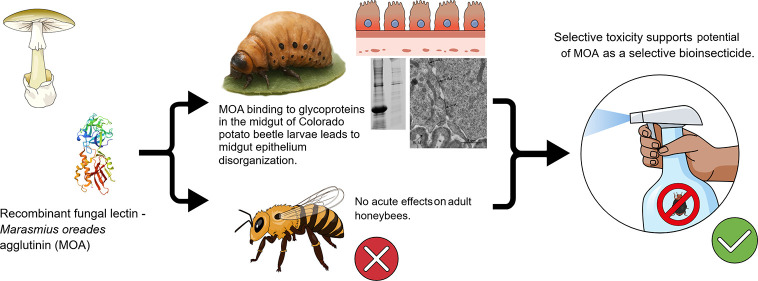 Figure 9
Peer Reviews
No public reviews on file for this paper yet. If you reviewed it on a platform where reviews are public (OpenReview, ICLR, NeurIPS, ICML), you can paste yours below so the community can read it here.
Videos
No videos yet. Explain this paper in a talk, walkthrough, or lecture? Add one.
Taxonomy
TopicsInsect Resistance and Genetics · Entomopathogenic Microorganisms in Pest Control · Viral Infectious Diseases and Gene Expression in Insects