In Situ Imaging Reveals Efficient Charge Separation in Monolayer MoS2–WS2 Type-II Heterojunctions
Qing Huang, Ziyuan Wang, Rujia Liu, Hanyu Yao, Chenwei Ni, Tianyu Bo, Shu Wu, Fusai Sun, Fengtao Fan, Michael V. Mirkin

TL;DR
This study uses imaging techniques to show how charge separates efficiently in a specific 2D material junction, which could improve solar energy and environmental applications.
Contribution
The paper provides direct experimental evidence of type-II charge separation in in-plane MoS2–WS2 heterojunctions.
Findings
Electrons accumulate in MoS2 while holes accumulate in WS2, showing asymmetric interfacial kinetics.
In-plane heterojunctions show the largest photovoltage contrast compared to vertical and monolayer structures.
The interface acts as a recombination center, limiting efficient carrier extraction.
Abstract
Covalently bonded in-plane two-dimensional (2D) transition metal dichalcogenide (TMD) heterojunctions with atomically sharp interfaces hold great promise for photocatalytic applications in solar energy conversion and environmental remediation; however, their spatially resolved charge distribution and transport, particularly under operando conditions, remain poorly understood. Here, we employ photoscanning electrochemical microscopy (photo-SECM) to directly visualize photoinduced charge separation in monolayer MoS2–WS2 in-plane heterojunctions. Spatial separation of photogenerated carriers is observed, with electrons accumulating in MoS2 and holes in WS2, leading to strongly asymmetric interfacial kinetics: Fc+ reduction proceeds rapidly on MoS2 (0.6 cm s–1), whereas Fc oxidation on WS2 is significantly slower (0.008 cm s–1). High-resolution surface photovoltage microscopy (SPVM) enables…
Genes, proteins, chemicals, diseases, species, mutations and cell lines named across the full text — each resolved to its canonical identifier and authoritative record.
Click any figure to enlarge with its caption.
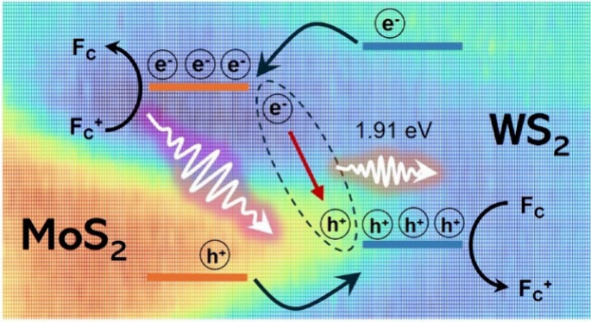 Figure 1
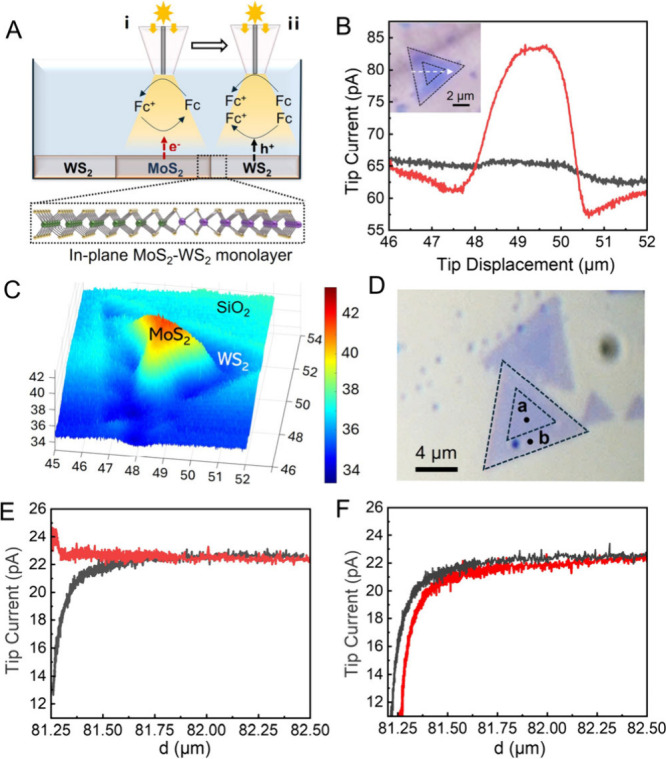 Figure 2
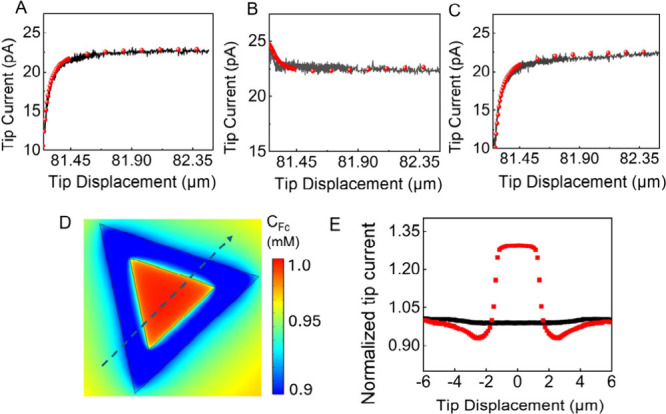 Figure 3
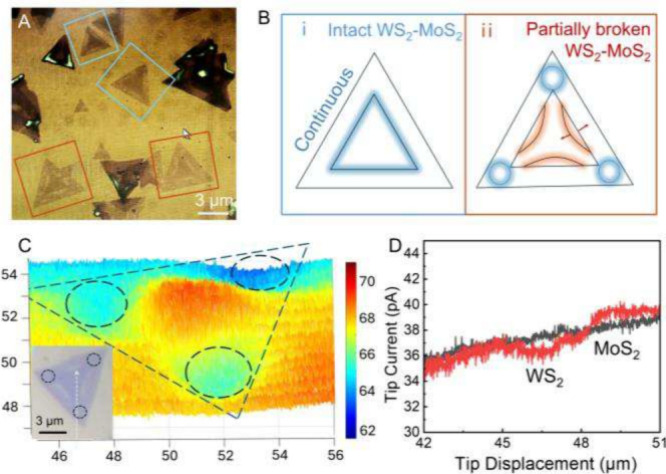 Figure 4
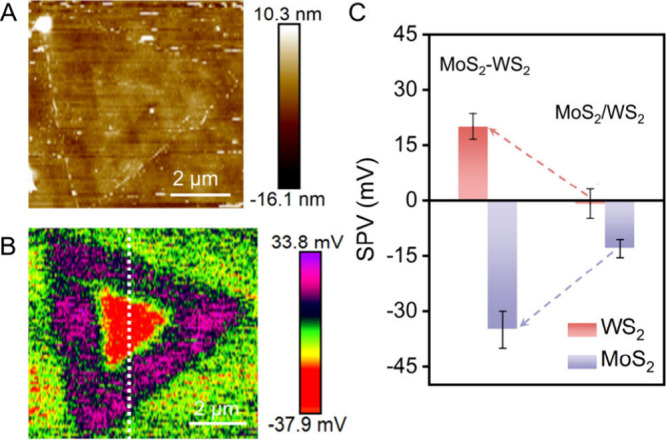 Figure 5
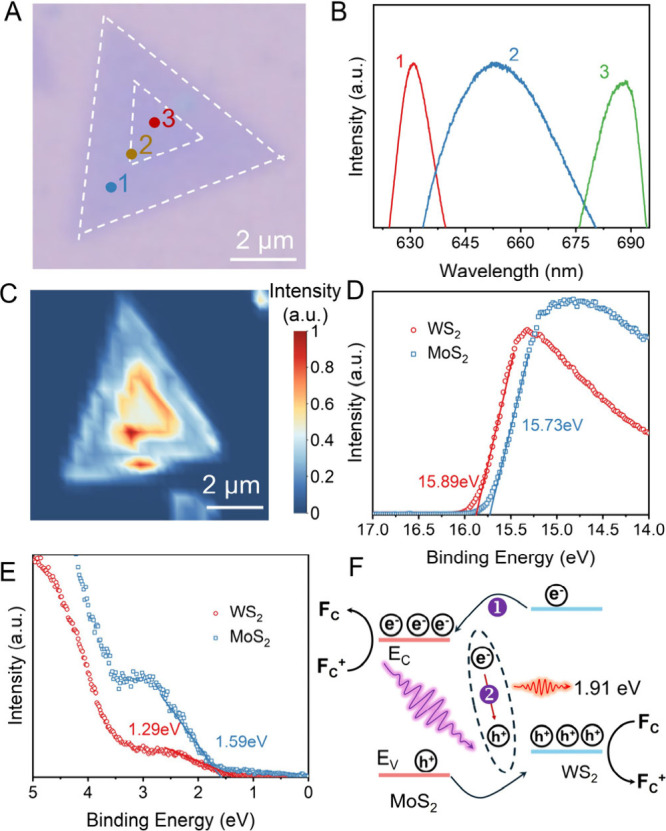 Figure 6
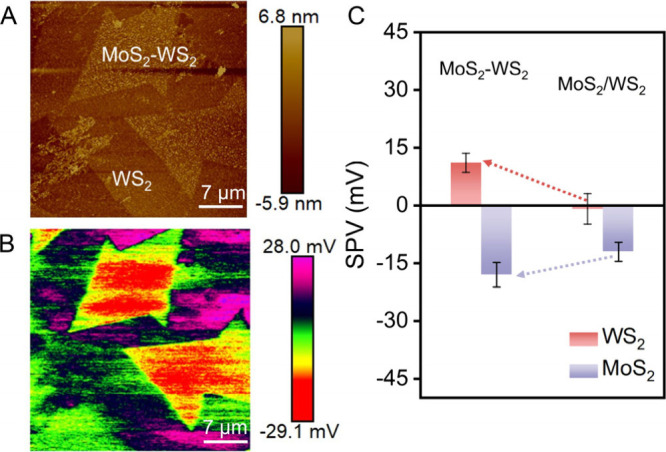 Figure 7
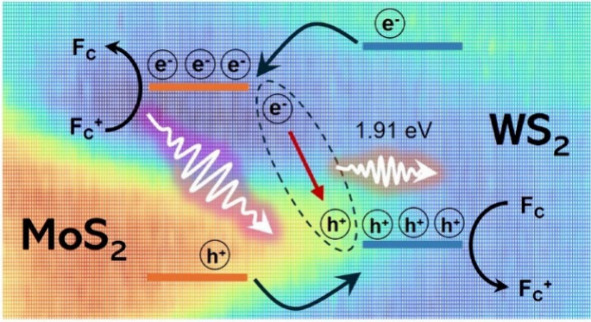 Figure 8
Peer Reviews
No public reviews on file for this paper yet. If you reviewed it on a platform where reviews are public (OpenReview, ICLR, NeurIPS, ICML), you can paste yours below so the community can read it here.
Videos
No videos yet. Explain this paper in a talk, walkthrough, or lecture? Add one.
Taxonomy
Topics2D Materials and Applications · Nanowire Synthesis and Applications · Graphene research and applications