Triplet Energy Transfer as a Handle to Tune 1,2-Dialkyldiazene Fragmentation in Radical C(sp3)–C(sp2) Cross-Coupling
Joffrey Scriven, Deepta Chattapadhyay, Felix Glaser, Benjamin Elias, Quentin Michaudel, Ludovic Troian-Gautier

TL;DR
This paper explores how light-induced energy transfer can control the fragmentation of 1,2-dialkyldiazenes in a chemical reaction, improving the efficiency of cross-coupling processes.
Contribution
The study introduces a tunable energy-transfer mechanism for activating 1,2-dialkyldiazenes in radical cross-coupling reactions.
Findings
Triplet energy transfer from photocatalysts to 1,2-dialkyldiazenes was confirmed as the activation pathway.
The triplet energy levels of two model 1,2-dialkyldiazenes were determined to be around 2.3 eV.
Energy-transfer-based catalytic systems improved cross-coupling efficiency with electron-rich aryl bromides.
Abstract
Mechanistic investigation of light-induced processes is paramount as it not only offers an overall mechanistic picture but also provides information about the efficiency and associated rate constants of the different reaction steps. In some cases, study of systematic series of photosensitizers or quenchers also allows to determine ground-state redox potentials or triplet energy levels of unknown species. Herein, through a combination of steady-state and time-resolved spectroscopic techniques, we elucidate the mechanism of geminate triplet radical pair formation from 1,2-dialkyldiazenes operating via energy transfer from excited photocatalysts. Stern–Volmer and Rehm–Weller analyses confirmed the energy-transfer pathway and provided access to the triplet energy level of two model 1,2-dialkyldiazenes, which were found to be around 2.3 eV. Further evidence was gained by mediator-enhanced…
Genes, proteins, chemicals, diseases, species, mutations and cell lines named across the full text — each resolved to its canonical identifier and authoritative record.
Click any figure to enlarge with its caption.
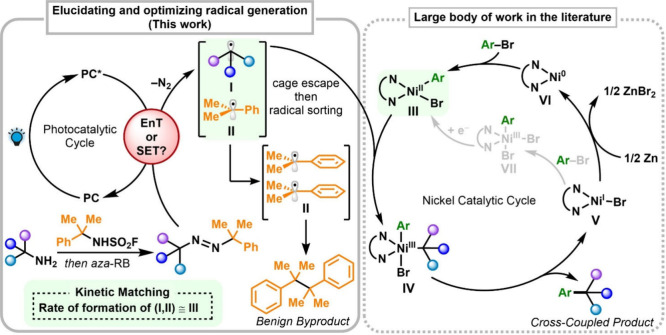 Figure 1
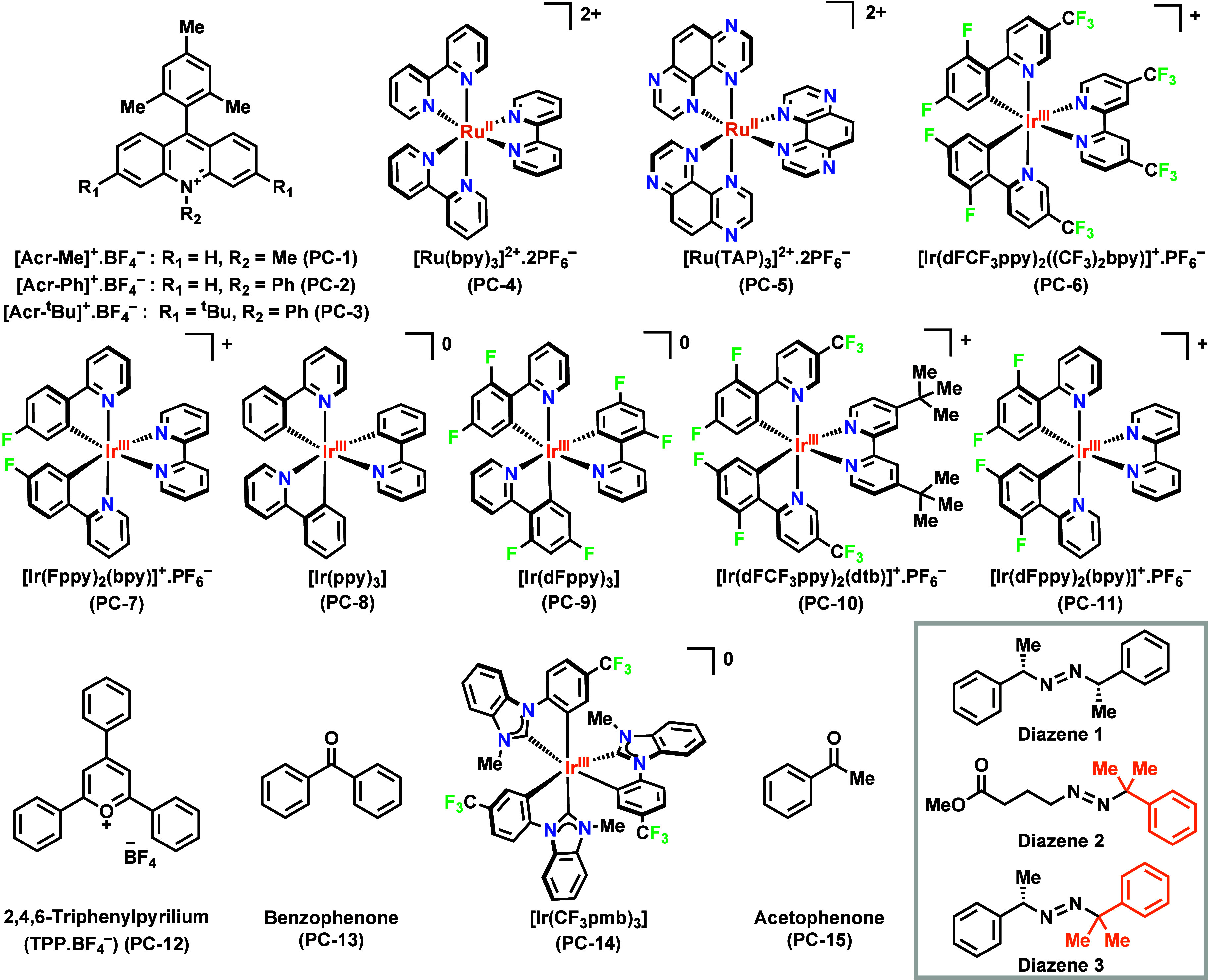 Figure 2
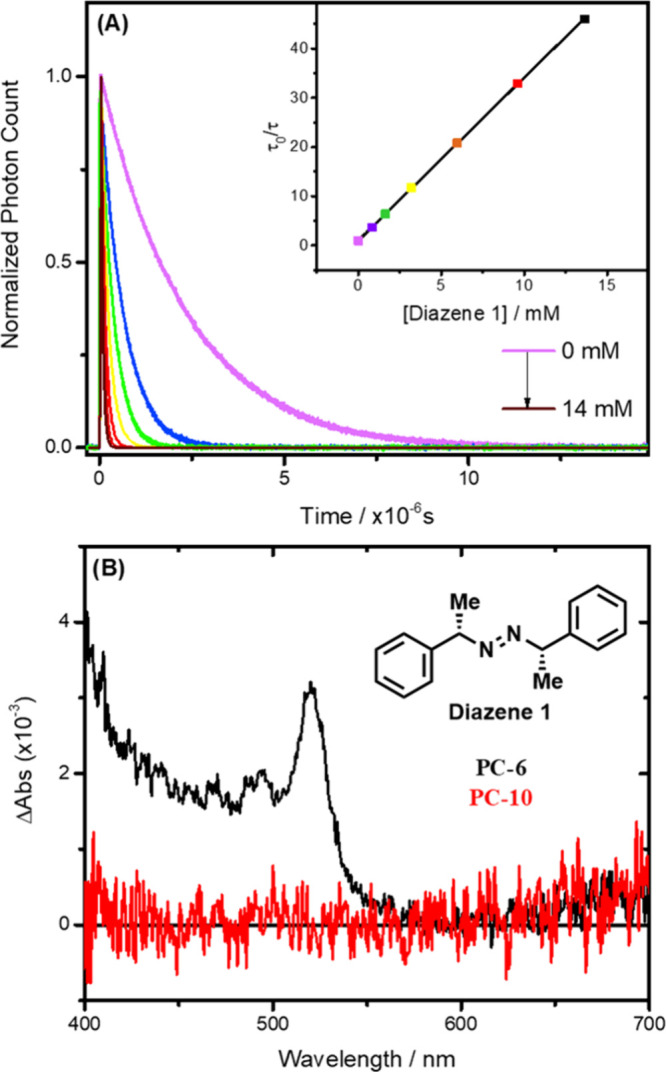 Figure 3
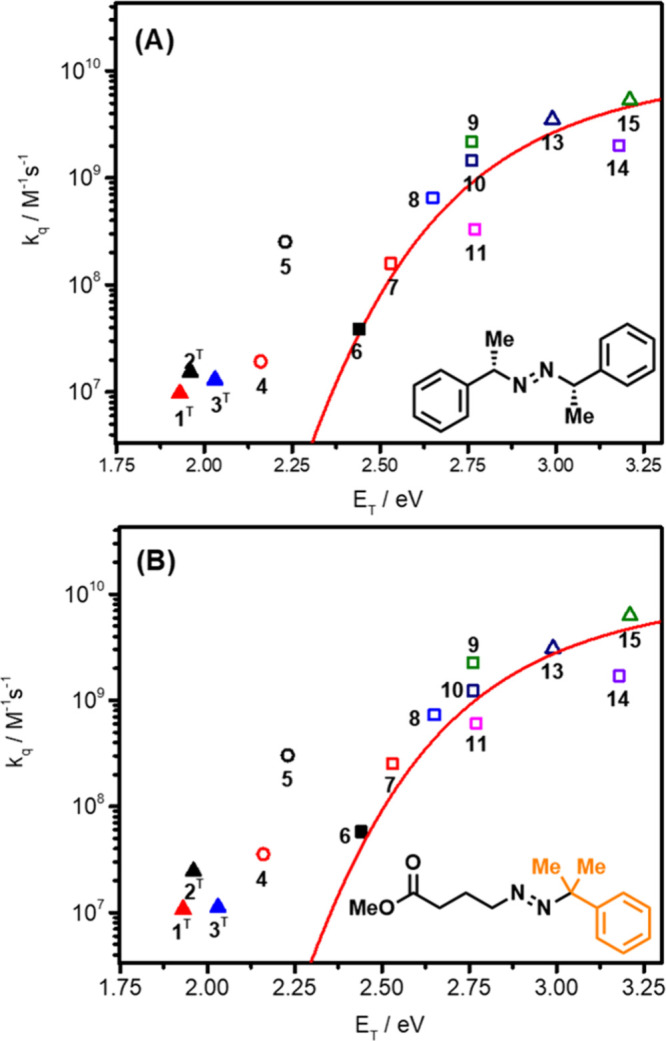 Figure 4
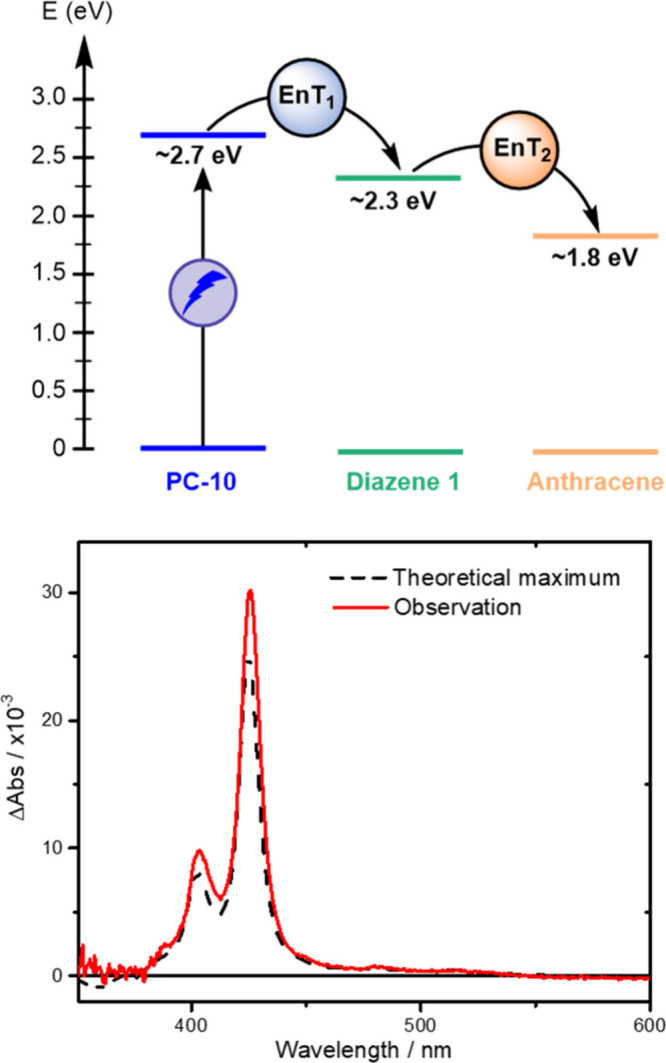 Figure 5
 Figure 6
 Figure 7
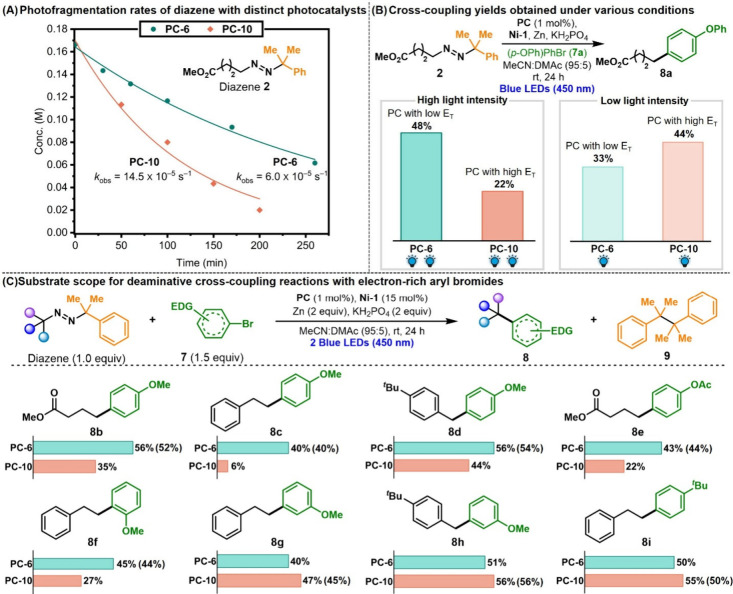 Figure 8
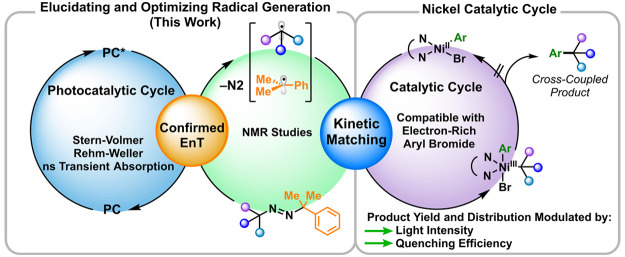 Figure 9
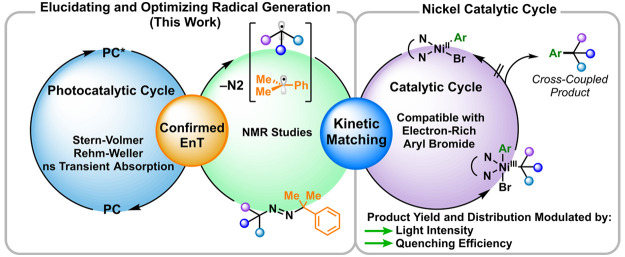 Figure 10
 Figure 11
 Figure 12
 Figure 13
 Figure 14
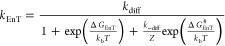 Figure 15
 Figure 16
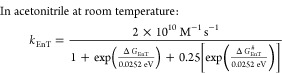 Figure 17
 Figure 18
 Figure 19
Peer Reviews
No public reviews on file for this paper yet. If you reviewed it on a platform where reviews are public (OpenReview, ICLR, NeurIPS, ICML), you can paste yours below so the community can read it here.
Videos
No videos yet. Explain this paper in a talk, walkthrough, or lecture? Add one.
Taxonomy
TopicsRadical Photochemical Reactions · Oxidative Organic Chemistry Reactions · Photochromic and Fluorescence Chemistry