Exploring Size-Controlled Exciton Evolution Using DNA Libraries
Jeffrey Gorman, Sarah Orsborne, Peter Budden, Akshay Sridhar, Jake L. Greenfield, Daniel G. Congrave, Raj Pandya, Yun Liu, Simon Dowland, Seán Ryan, Hugo Bronstein, Jonathan R. Nitschke, Akshay Rao, Rosana Collepardo-Guevara, Eugen Stulz, Florian Auras, Richard H. Friend

TL;DR
This paper explores using DNA to assemble chromophores for studying electronic interactions, enabling rapid screening of multichromophore systems.
Contribution
A DNA-based method for assembling and screening multichromophore systems with controlled stoichiometry and ordering.
Findings
DNA-directed assembly of up to five π-conjugated chromophores shows charge separation and delocalization.
The library enables on-demand production of chromophore dimers and multimers within hours.
Computational prescreening for π-stacking helps optimize charge transfer in assembled systems.
Abstract
To investigate multichromophore phenomena, progress traditionally relies on model covalent dimers for spectroscopic interrogation. Integrating molecular semiconductors into nucleic acid libraries can enable rapid screening of multichromophore phenomena. Here, we report DNA-directed assembly of up to five π-conjugated chromophores that demonstrate charge separation and electronic delocalization phenomena. We integrate a range of porphyrins and perylene diimides (PDIs)molecular semiconducting materials widely used in organic electronic devicesin DNA, encoding nearest-neighbor assembly through base-sequence programmed hybridization. In this way, we can assemble multicomponent stacks with tailored electronic properties from a central chromophore-DNA library. This allows dimer and multimer production on demand, within hours, from presynthesized DNA-chromophores for spectroscopic analysis.…
Genes, proteins, chemicals, diseases, species, mutations and cell lines named across the full text — each resolved to its canonical identifier and authoritative record.
Click any figure to enlarge with its caption.
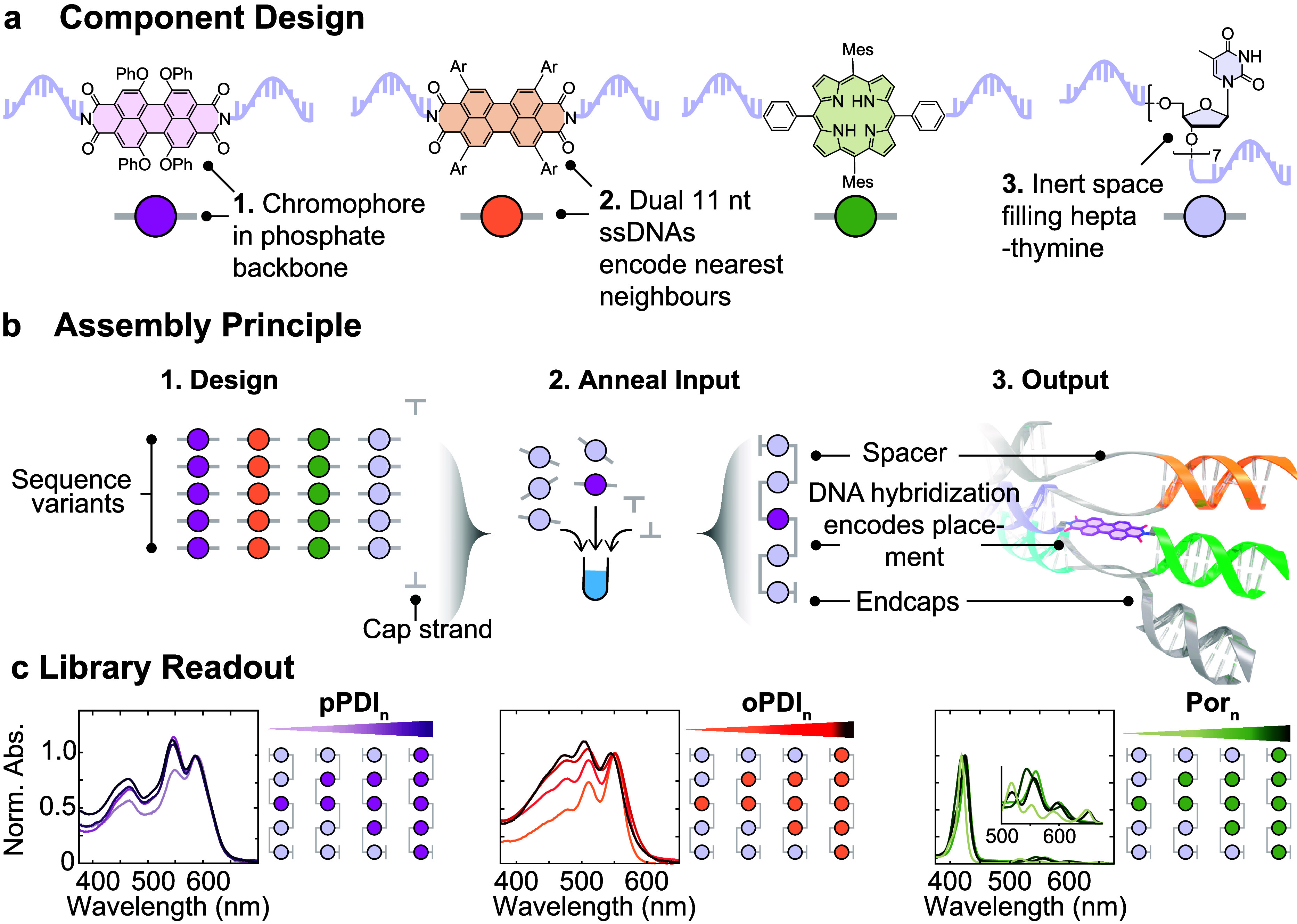 Figure 1
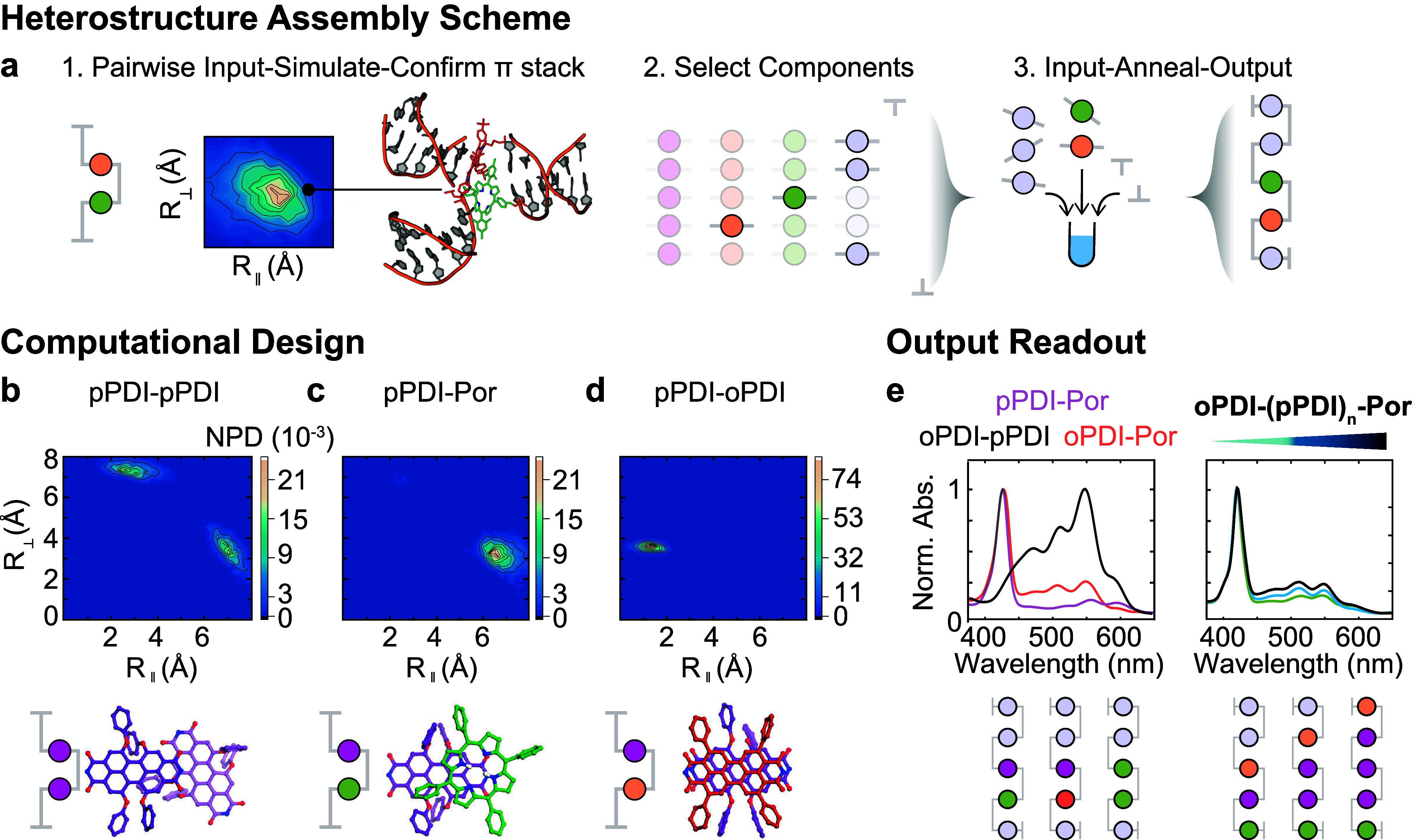 Figure 2
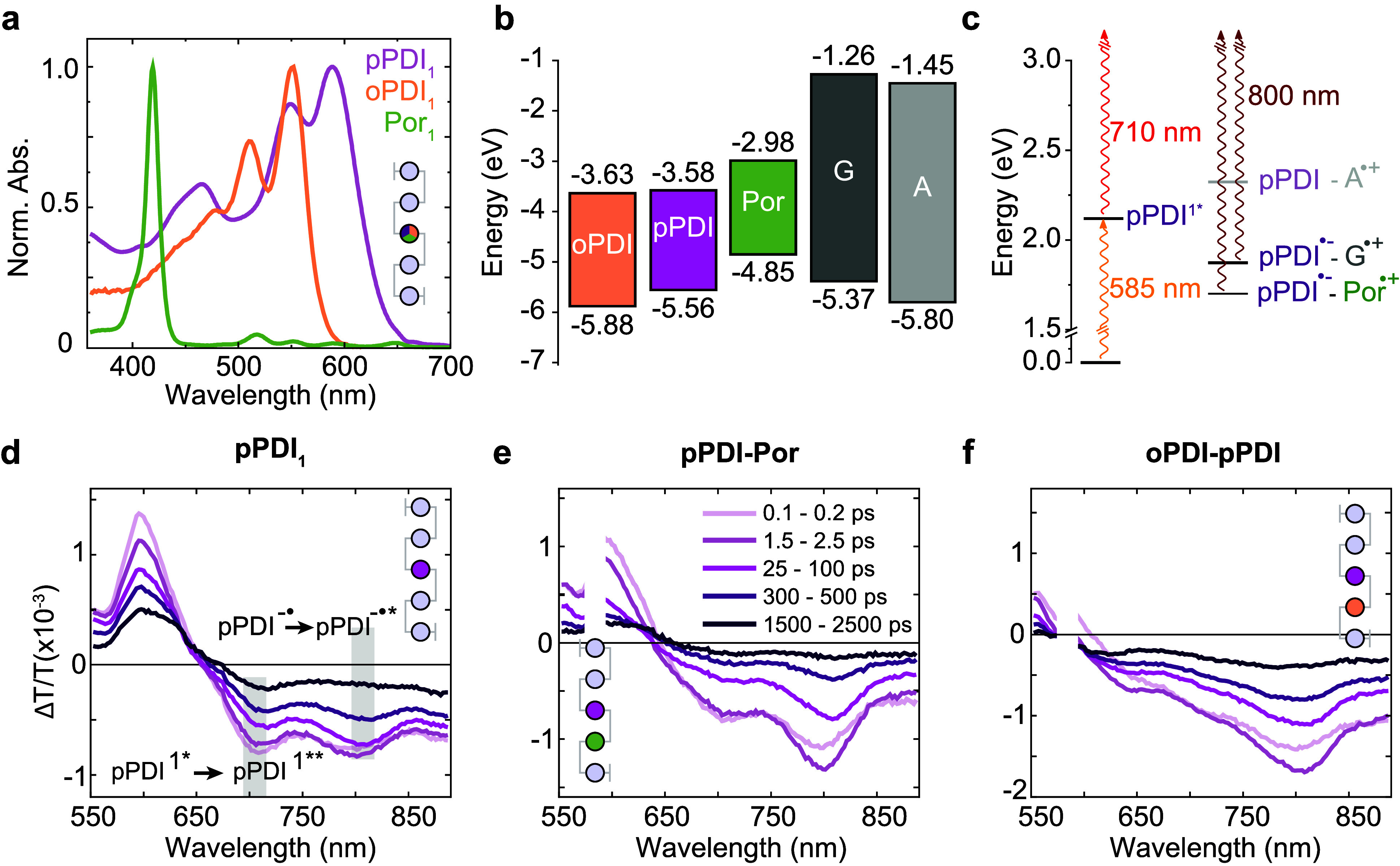 Figure 3
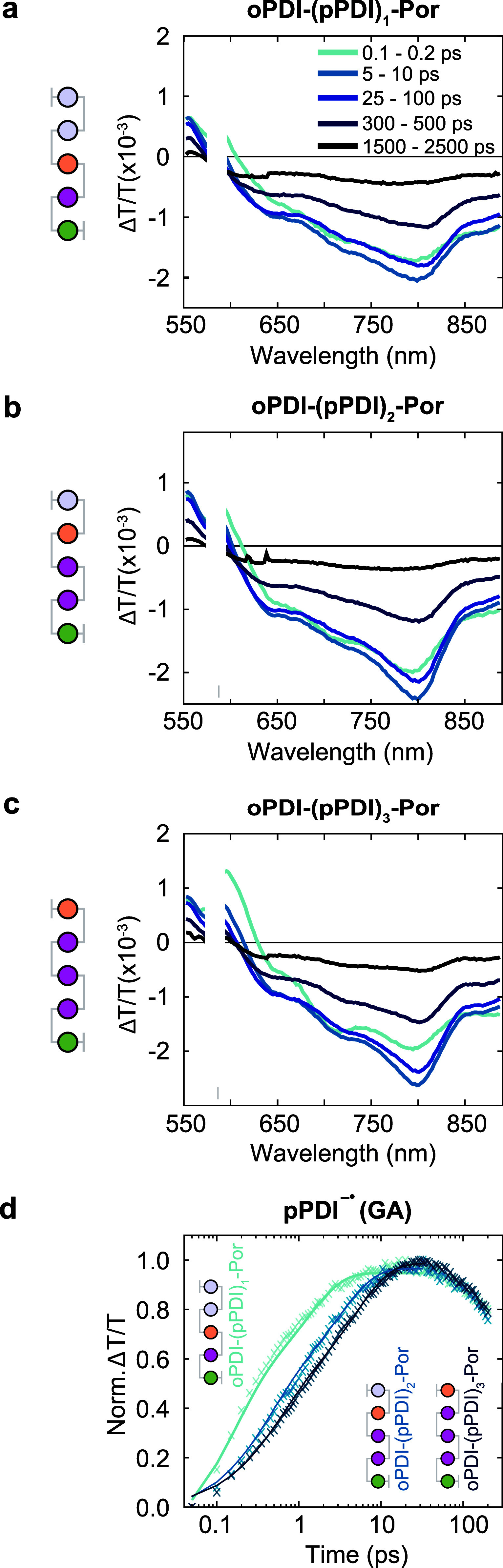 Figure 4
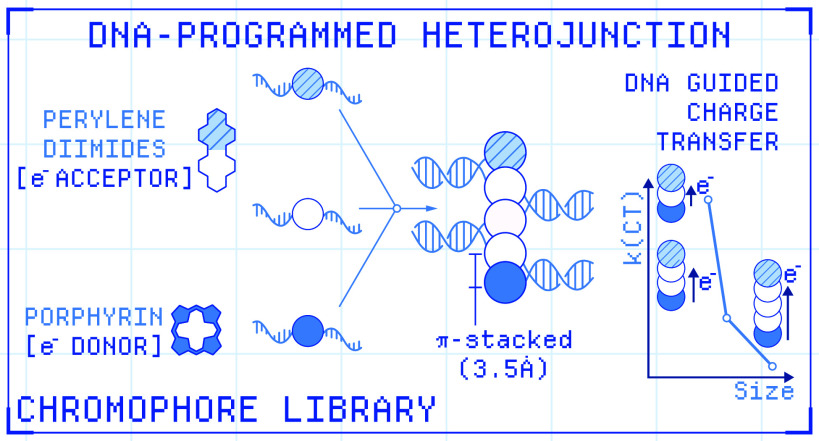 Figure 5
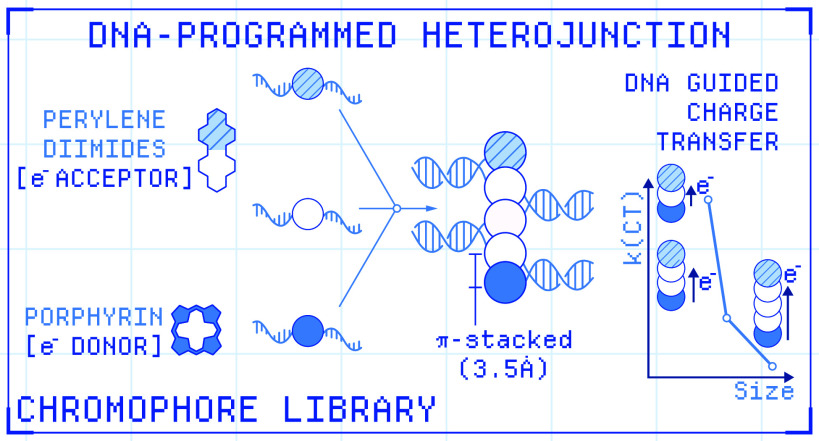 Figure 6
Peer Reviews
No public reviews on file for this paper yet. If you reviewed it on a platform where reviews are public (OpenReview, ICLR, NeurIPS, ICML), you can paste yours below so the community can read it here.
Videos
No videos yet. Explain this paper in a talk, walkthrough, or lecture? Add one.
Taxonomy
TopicsDNA and Nucleic Acid Chemistry · Molecular Junctions and Nanostructures · Advanced biosensing and bioanalysis techniques