Anisosmotic Modulation of Mutant Huntingtin Aggregation vis-a-vis HSP70 InductionImplications for Aging, Hypo-Hydration, and Neurodegeneration
Alice Y. C. Liu, Kelvin Y. Kwan, Clarissa Kwan, Kuang Yu Chen

TL;DR
This study shows how cell hydration affects protein aggregation and stress response, with implications for aging and neurodegenerative diseases.
Contribution
The study reveals how osmotic modulation influences mutant Huntingtin aggregation and HSP70 induction in Huntington disease models.
Findings
Sodium chloride and alkali-metal salts promote mutant Huntingtin aggregation and reduce HSP70 induction.
Hypo-osmotic conditions reduce protein aggregation and increase HSP70 levels.
PEGs also promote mutant Huntingtin aggregation, similar to salt treatments.
Abstract
Suboptimal cell hydration is a significant risk factor for age-related deterioration and disease vulnerability. Herein, we use a Huntington disease cell model to evaluate osmolarity-dependent modulation of (1) aggregation of polyQ-expanded mutant Huntingtin-EGFP reporter protein as a readout for structurally dynamic disease proteins versus (2) induction of HSP70 chaperone to report on stress-induced lability of folded proteins. Cell impermeant alkali-metal salts and polyethylene glycols were added to cell media to osmotically dehydrate cells for crowding, whereas water was added to swell cells for macromolecular dispersion. Cell image and biochemical analyses show that addition of sodium chloride and other alkali-metal salts to cell media promoted aggregation of mHTTExon1-EGFP protein into forming “inclusion bodies” (IBs) in live cells, while concurrently dampened the induction of HSP70…
Genes, proteins, chemicals, diseases, species, mutations and cell lines named across the full text — each resolved to its canonical identifier and authoritative record.
Click any figure to enlarge with its caption.
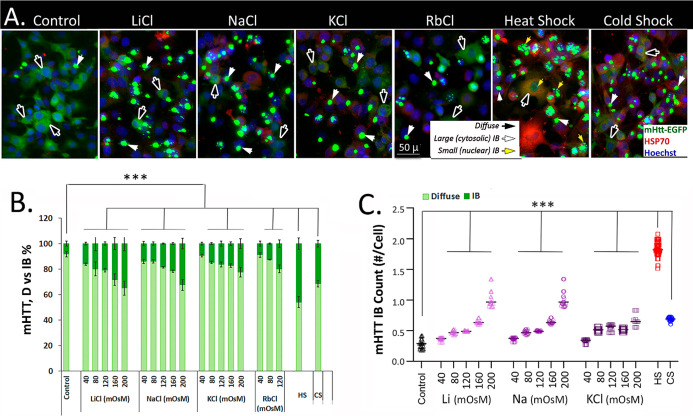 Figure 1
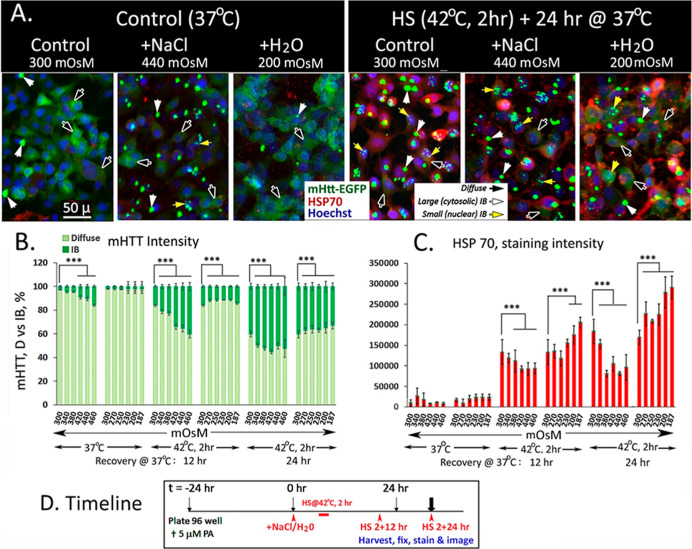 Figure 2
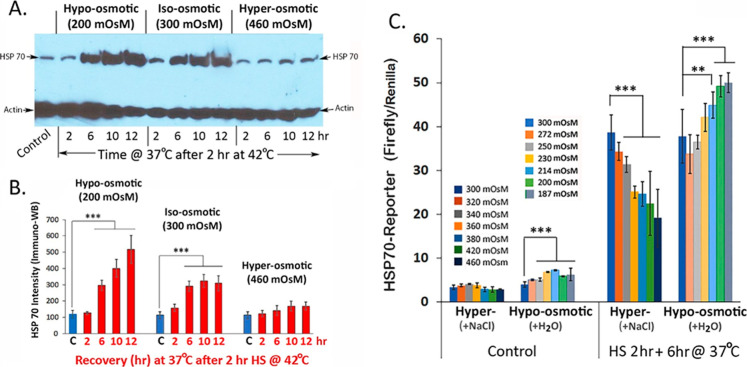 Figure 3
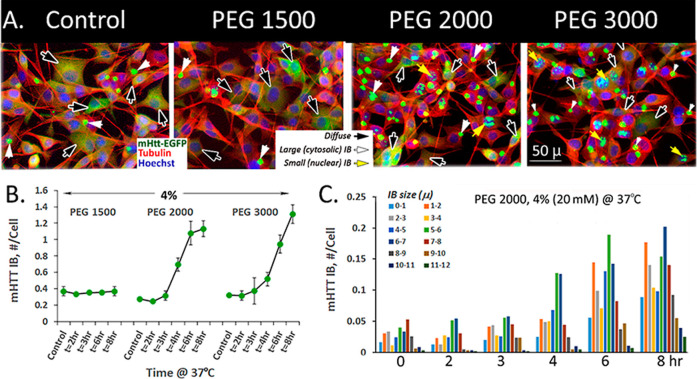 Figure 4
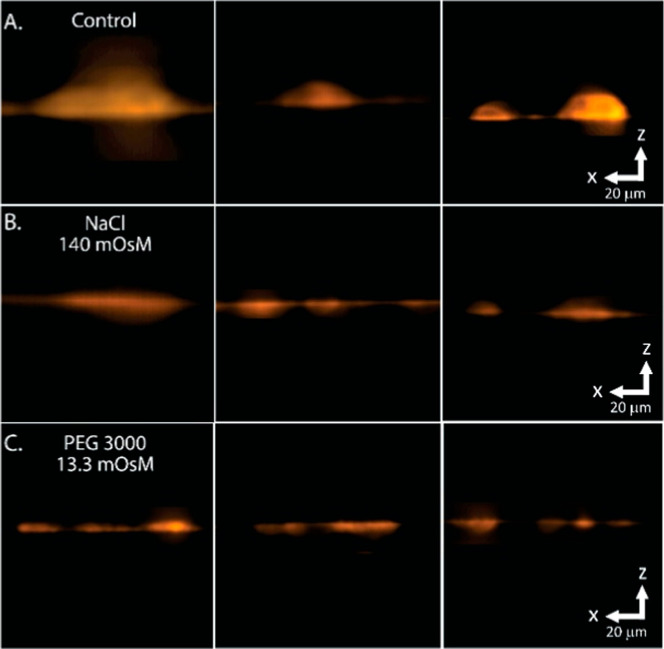 Figure 5
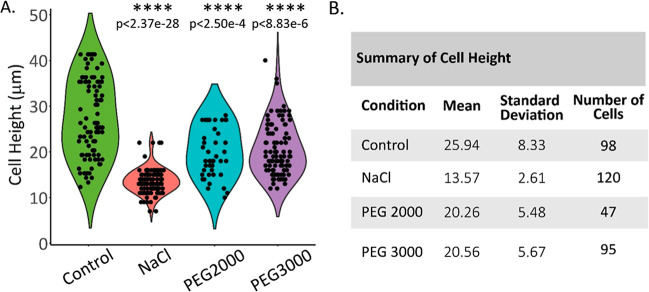 Figure 6
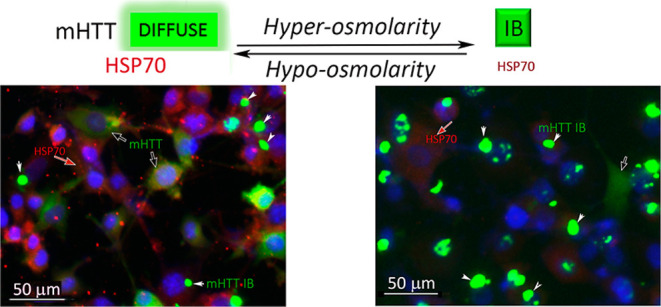 Figure 7
 Figure 8
Peer Reviews
No public reviews on file for this paper yet. If you reviewed it on a platform where reviews are public (OpenReview, ICLR, NeurIPS, ICML), you can paste yours below so the community can read it here.
Videos
No videos yet. Explain this paper in a talk, walkthrough, or lecture? Add one.
Taxonomy
TopicsHeat shock proteins research · Genetic Neurodegenerative Diseases · Endoplasmic Reticulum Stress and Disease