Alkali-Metal Interlocking of 2D V4O10 Sheets Defines Discretized Interlayer Shear Relationships
John Ponis, Kenna Ashen, Sarbajeet Chakraborty, George Agbeworvi, Michelle A. Smeaton, Chengdong Wang, Amanda Jessel, Douglas H. Fabini, Fanni Juranyi, Diana Quintero-Castro, Nick A. Shepelin, Dariusz Jakub Gawryluk, Katherine L. Jungjohann, Shruti Hariyani, Xiaofeng Qian

TL;DR
This paper explores how alkali-metal ions influence the structure and magnetic properties of layered vanadium oxide sheets.
Contribution
The study identifies seven coordination sites and four shear regimes for alkali-metal intercalation in vanadium oxide.
Findings
Alkali-metal intercalation leads to four distinct interlayer shear regimes.
Coordination preferences of cations govern sheet interlocking and shear conformations.
Static and dynamic disorder modulates magnetic structures via electrostatic and spin effects.
Abstract
Low-dimensional materials manifest structural anisotropy, quantum confinement, and tightly bound excitonic states, which make them attractive building blocks that can be assembled within three-dimensional laterally stitched heterostructures, stacked van der Waals solids, and complex moiré superlattices. Ion intercalation in the galleries between layered materials provides a means of modifying interlayer separation and coupling, but it is also known to drive the shearing of the layers. In this article, we explore the distinct ligand coordination environments afforded by vanadyl oxygens of singular [V4O10] sheets and examine how the size, polarizability, and stoichiometry of Group I cations sandwiched between such layers determine the interlocking of the sheets in stacked structures. Based on the topochemical insertion of alkali-metal ions into the layered λ-V2O5, we identify seven types…
Genes, proteins, chemicals, diseases, species, mutations and cell lines named across the full text — each resolved to its canonical identifier and authoritative record.
Click any figure to enlarge with its caption.
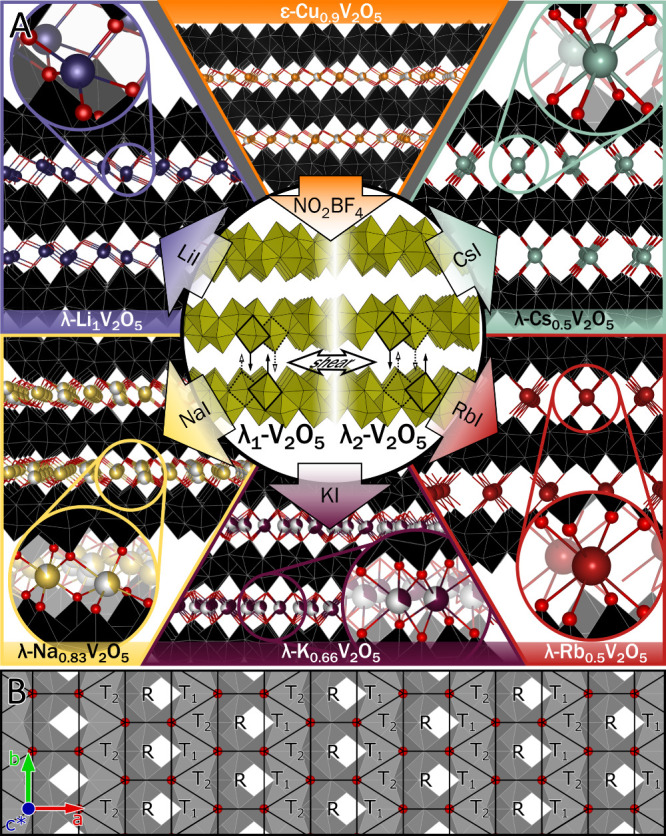 Figure 1
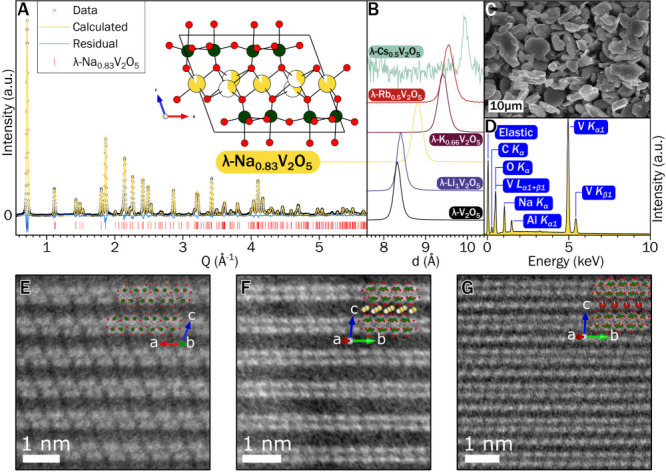 Figure 2
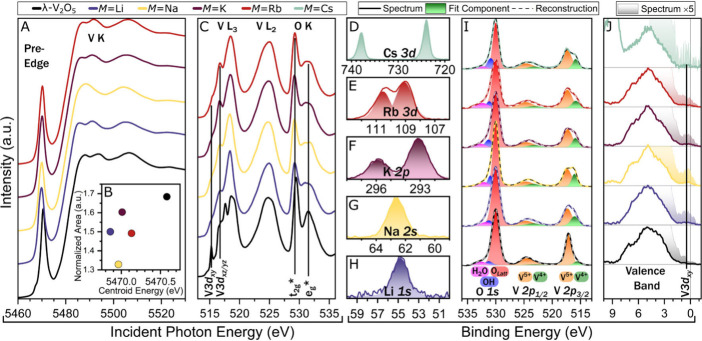 Figure 3
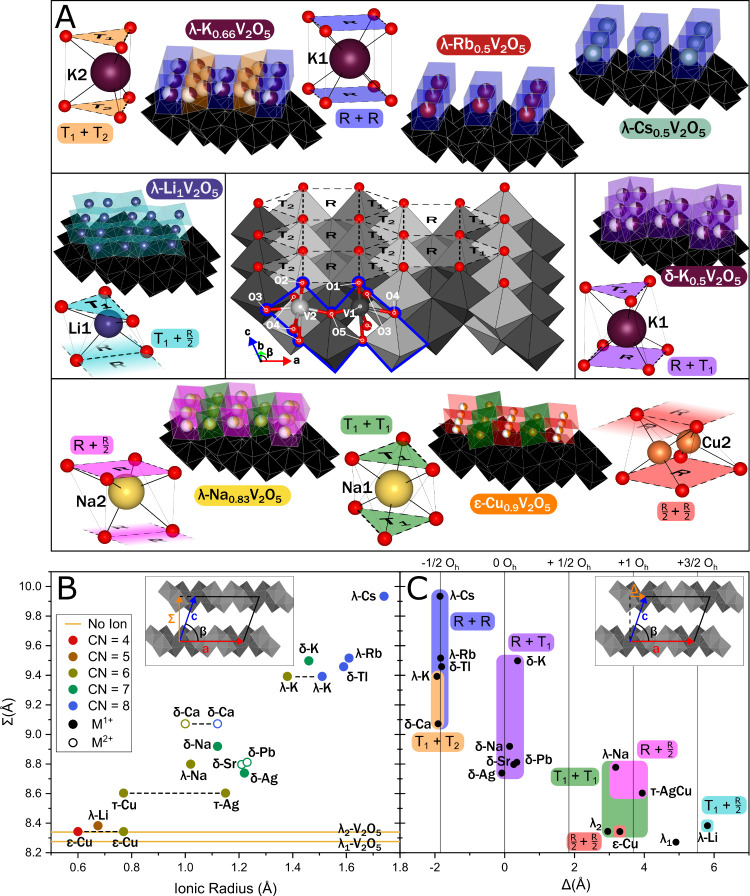 Figure 4
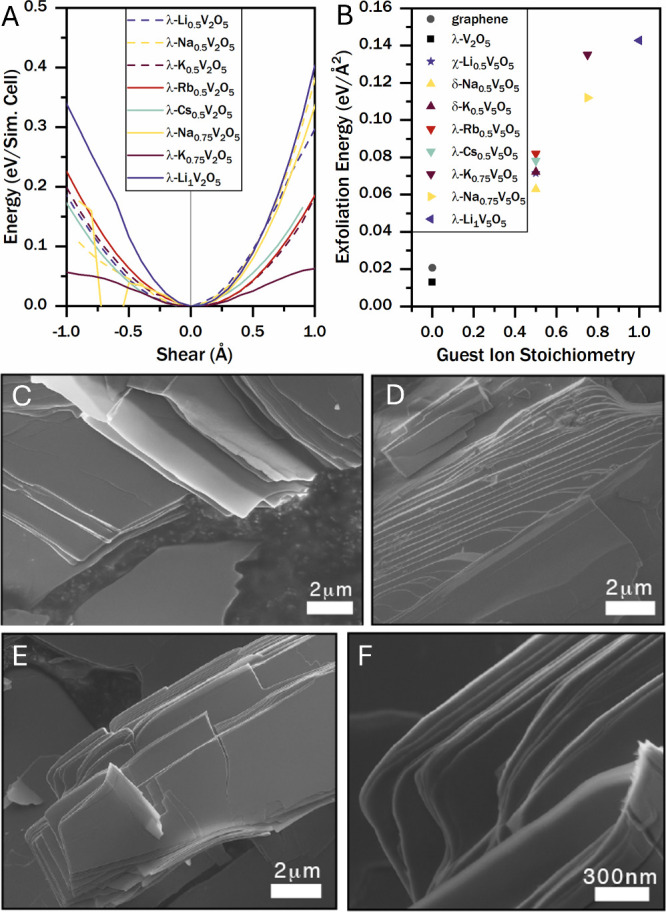 Figure 5
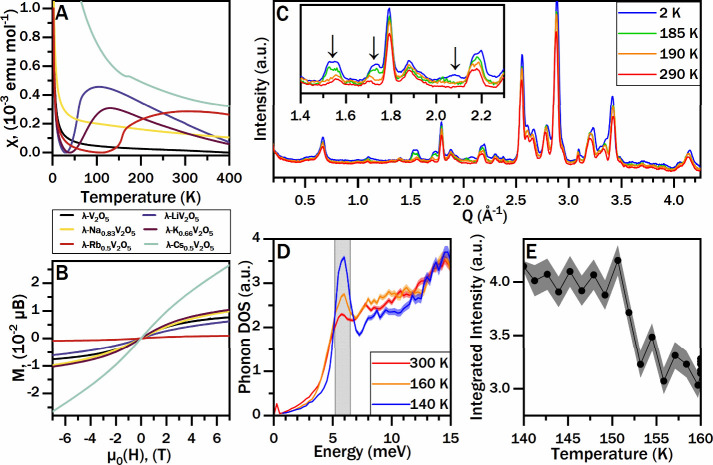 Figure 6
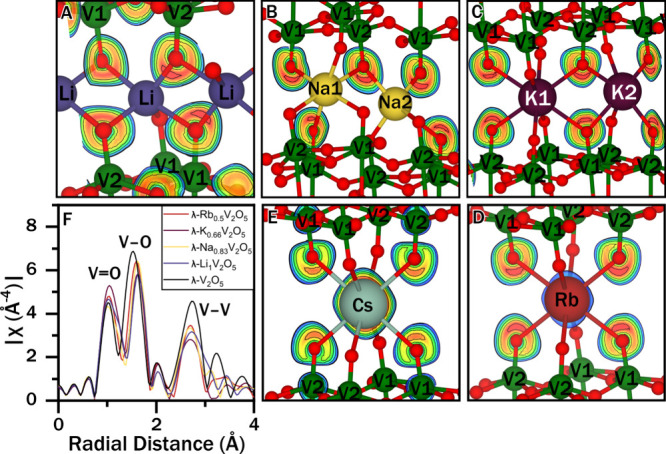 Figure 7
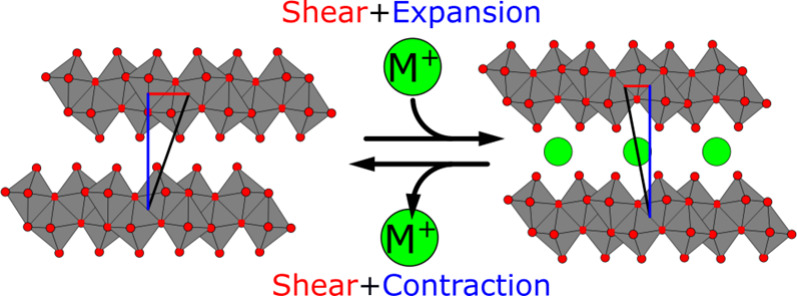 Figure 8
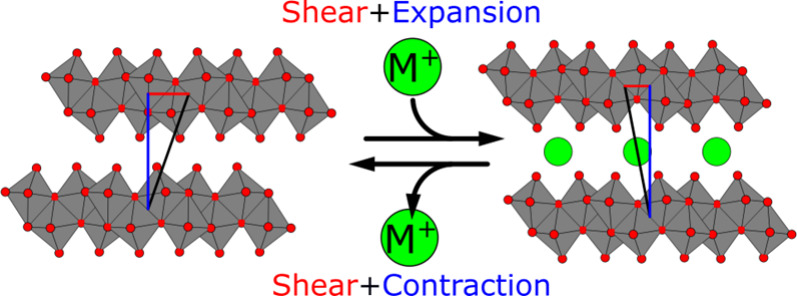 Figure 9
 Figure 10
 Figure 11
 Figure 12
 Figure 13
 Figure 14
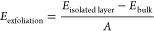 Figure 15
Peer Reviews
No public reviews on file for this paper yet. If you reviewed it on a platform where reviews are public (OpenReview, ICLR, NeurIPS, ICML), you can paste yours below so the community can read it here.
Videos
No videos yet. Explain this paper in a talk, walkthrough, or lecture? Add one.
Taxonomy
TopicsTransition Metal Oxide Nanomaterials · Physics of Superconductivity and Magnetism · Advanced Condensed Matter Physics