Microenvironment Matters: Destabilization of Iridium Anode Catalyst by CO Reduction Products
Attila Kormányos, Mohd Monis Ayyub, Bence Kutus, Monaza Rashid, Tatiana Priamushko, Gergely F. Samu, Serhiy Cherevko, Balázs Endrődi, Csaba Janáky

TL;DR
This study shows that CO2 and CO electrolysis byproducts like ethanol and acetaldehyde can damage iridium anode catalysts, causing instability and faster dissolution.
Contribution
The study reveals that CO electrolysis products, not just pH, destabilize iridium anode catalysts through competitive oxidation reactions.
Findings
Ethanol and acetaldehyde reduce iridium anode stability by competing with the oxygen evolution reaction.
Oxidation of ethanol/acetaldehyde prevents formation of a protective oxide layer on iridium.
Iridium dissolution increases under these conditions, observed via ICP-MS techniques.
Abstract
Iridium is one of the most frequently employed anode electrocatalysts in CO2 and CO electrolysis, thanks to its reasonable overpotential for the oxygen evolution reaction (OER) and high stability under operating conditions. The latter has been challenged recently by a handful of studies where destabilization of iridium was observed, which was explained solely by thermodynamics (iridium is unstable at strong alkaline pH and OER potentials). In this study, we demonstrate that liquid CO and CO2 electrolysis products (such as ethanol and acetate) crossing over to the anode side under long-term operation have a severe effect on the stability of iridium. Its dissolution was studied by both ex-situ inductively coupled plasma mass spectrometry (ICP-MS) and in situ (online ICP-MS) techniques. Based on our electrolysis experiments carried out in a broad pH range (pH = 4–14), ethanol, and its…
Genes, proteins, chemicals, diseases, species, mutations and cell lines named across the full text — each resolved to its canonical identifier and authoritative record.
Click any figure to enlarge with its caption.
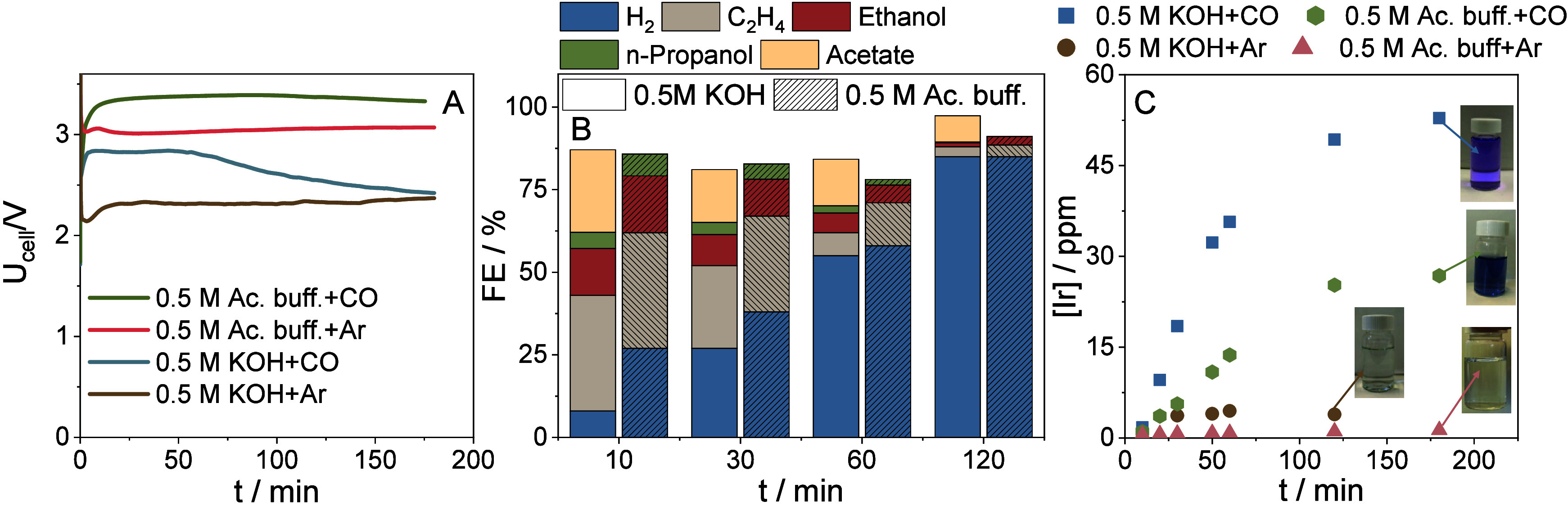 Figure 1
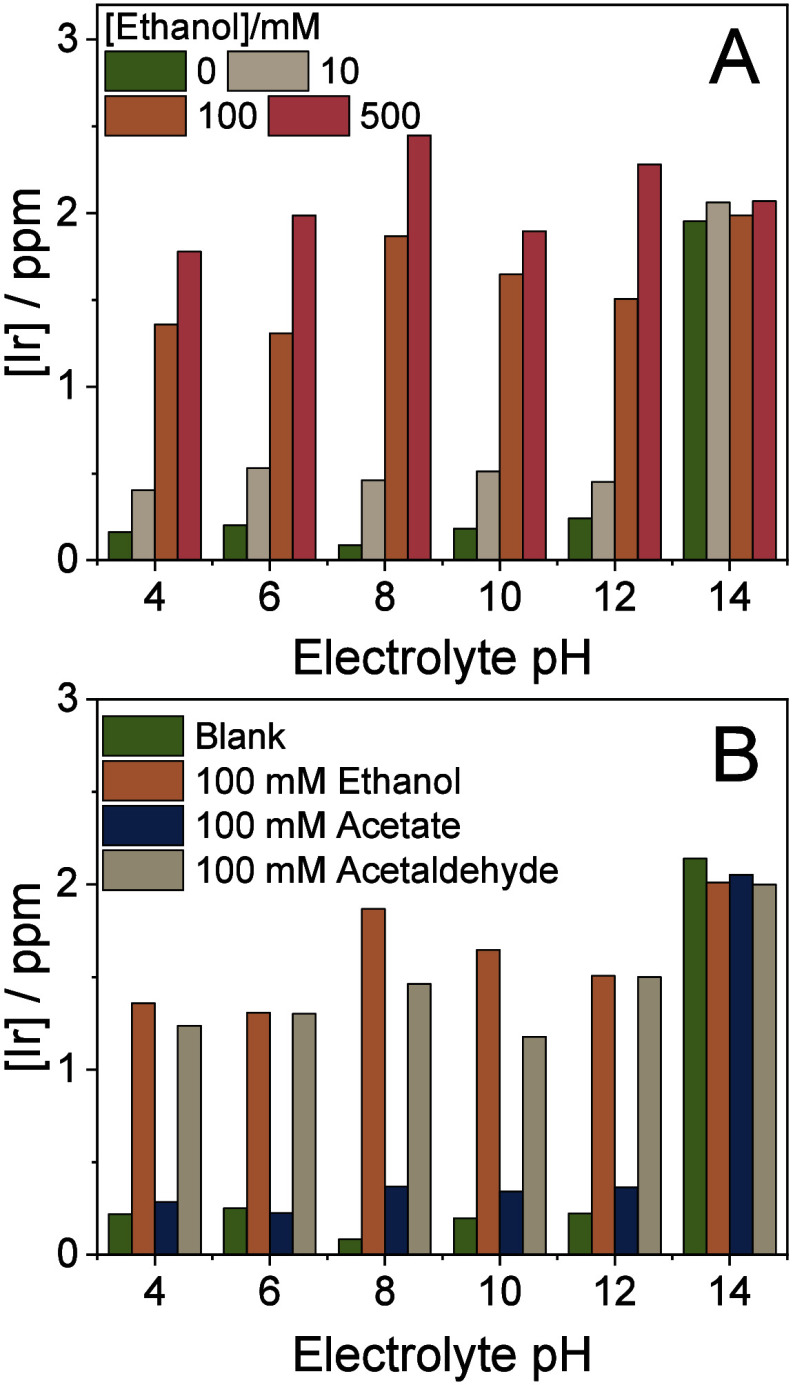 Figure 2
 Figure 3
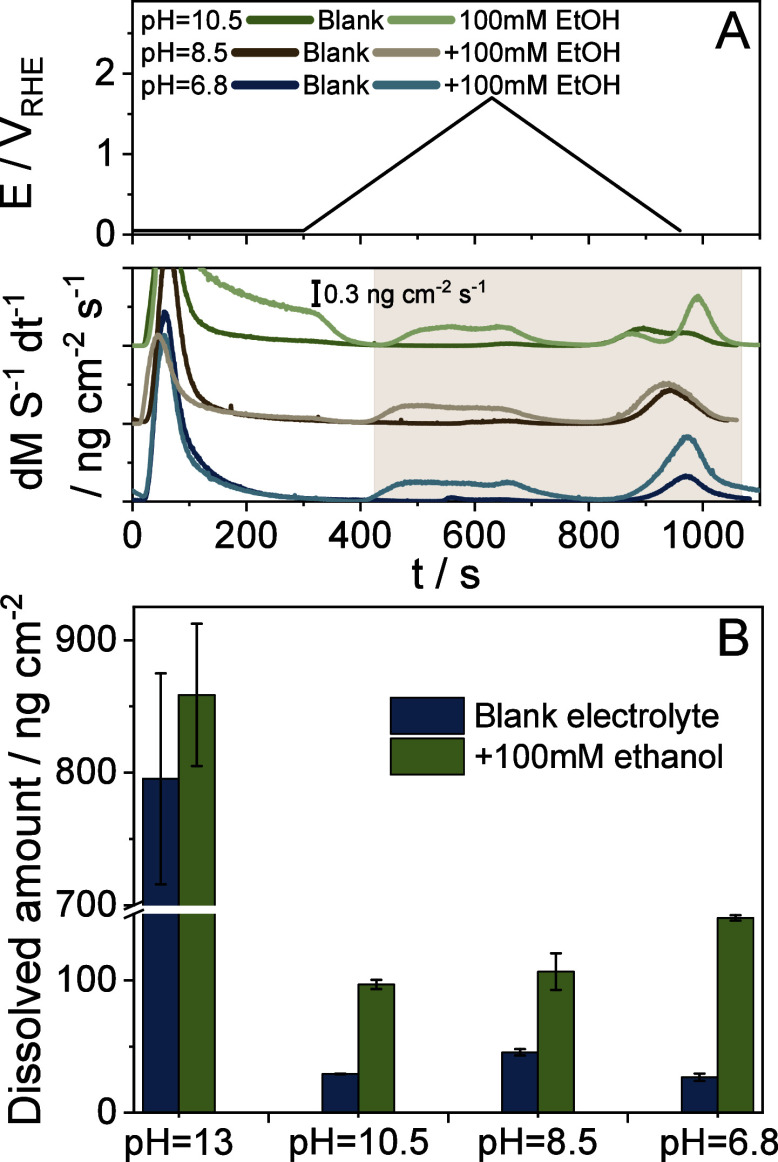 Figure 4
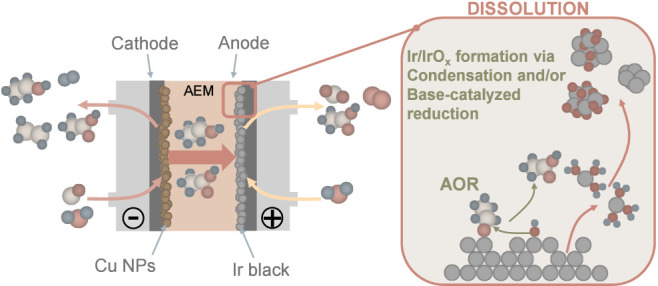 Figure 5
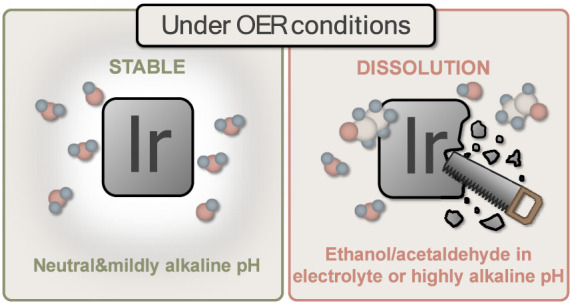 Figure 6
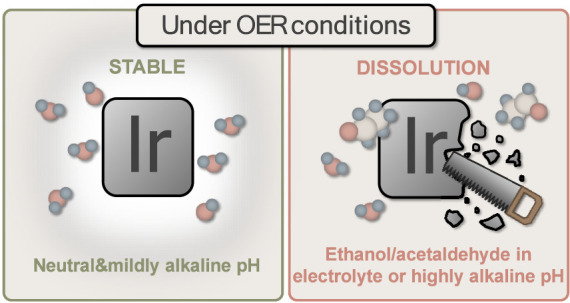 Figure 7
Peer Reviews
No public reviews on file for this paper yet. If you reviewed it on a platform where reviews are public (OpenReview, ICLR, NeurIPS, ICML), you can paste yours below so the community can read it here.
Videos
No videos yet. Explain this paper in a talk, walkthrough, or lecture? Add one.
Taxonomy
TopicsCO2 Reduction Techniques and Catalysts · Electrocatalysts for Energy Conversion · Advancements in Solid Oxide Fuel Cells