Tailored Phosphate Leaving Groups Direct Pathway-Dependent Self-Assembly
Arti Sharma, Kun Dai, Mahesh D. Pol, Anatoli Ioanna Katirtzidi Papadopoulou, Thejus Pramod, Ralf Thomann, Yi Thomann, Charalampos G. Pappas

TL;DR
This paper shows how different phosphate leaving groups influence the self-assembly and reactivity of aminoacyl phosphate esters in water.
Contribution
The study reveals that phosphate leaving groups act as tunable design elements to control reactivity and supramolecular assembly.
Findings
Leaving groups guide preorganization into spherical aggregates and influence coassembly with peptides.
Leaving groups determine supramolecular architectures and mechanical properties of assemblies.
Soluble phosphates undergo phosphoryl exchange, while self-assembling ones resist it and favor oligomerization.
Abstract
Phosphate esters and anhydrides are central to biology, storing and transferring chemical energy to sustain processes from metabolism to translation. Among them, acyl phosphates are highly reactive, yet biology channels their activation chemistry almost exclusively through aminoacyl adenylates. This conserved design leaves unexplored how alternative phosphate leaving groups might influence reactivity and structure. Here we show that aminoacyl phosphate esters with varied leaving groups (ethyl, phenyl, naphthyl, dodecyl) direct peptide bond formation and self-assembly through distinct pathways in water. Structural features of the leaving group guide preorganization into spherical aggregates before acyl transfer and influence coassembly with peptides after bond formation, imprinting outcomes that persist beyond activation. Consequently, the leaving group determines not only peptide…
Genes, proteins, chemicals, diseases, species, mutations and cell lines named across the full text — each resolved to its canonical identifier and authoritative record.
Click any figure to enlarge with its caption.
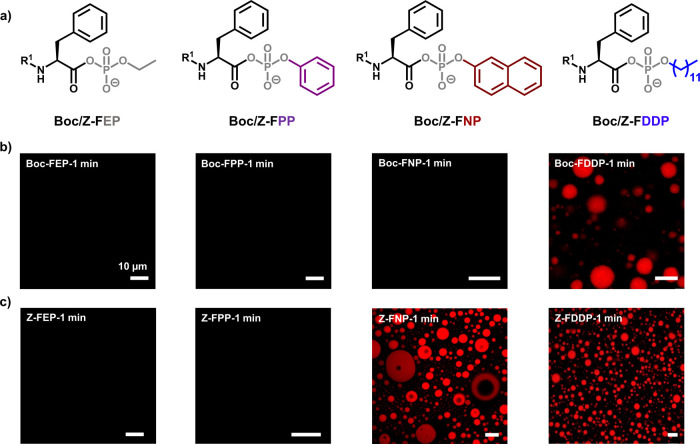 Figure 1
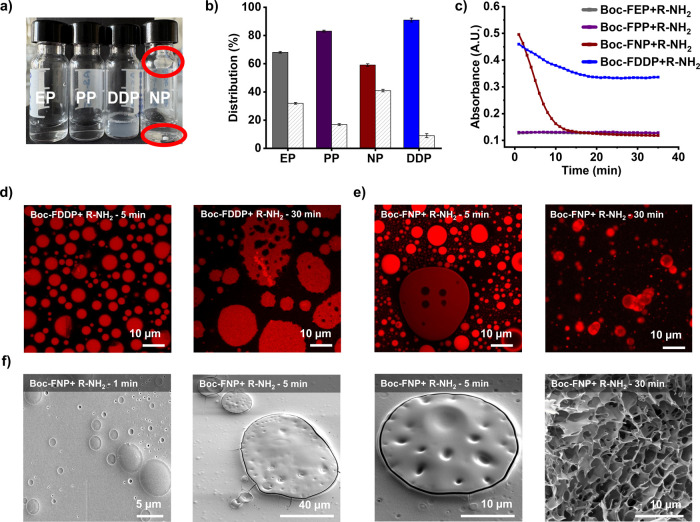 Figure 2
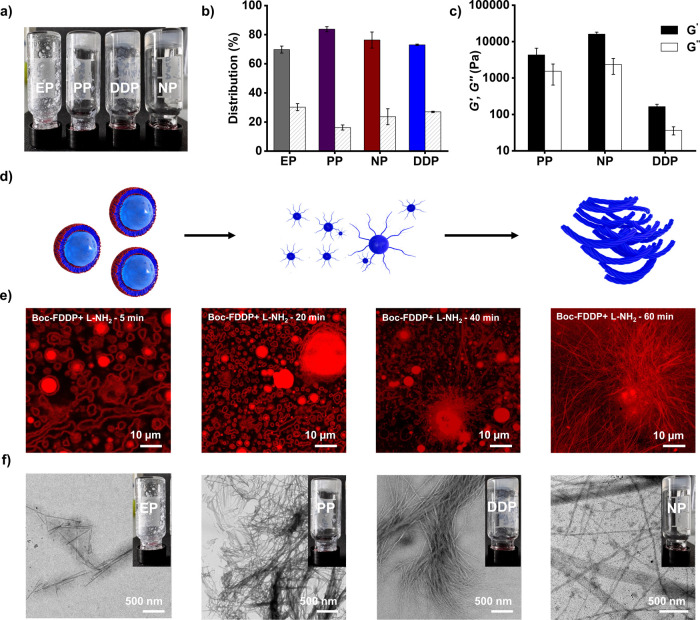 Figure 3
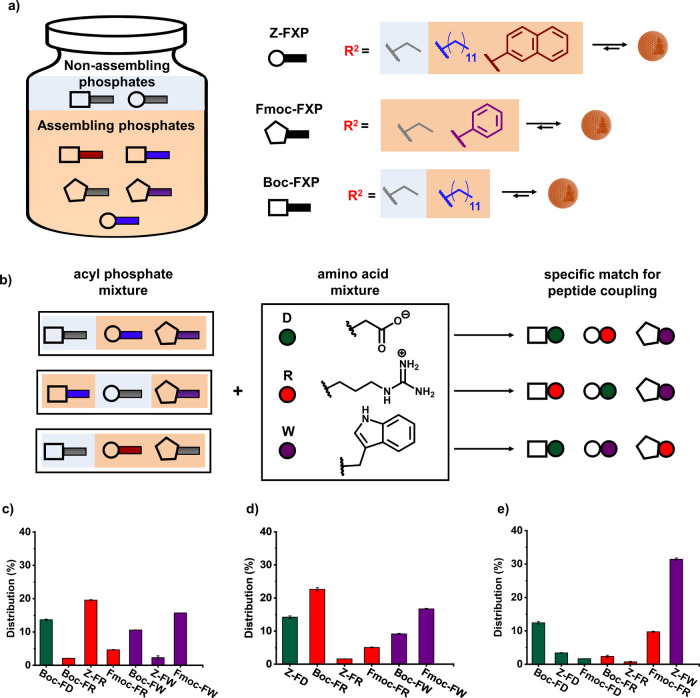 Figure 4
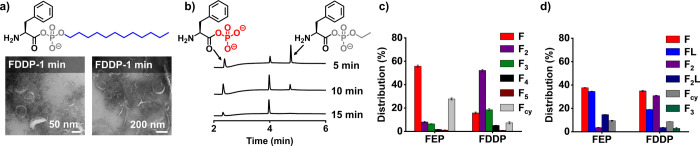 Figure 5
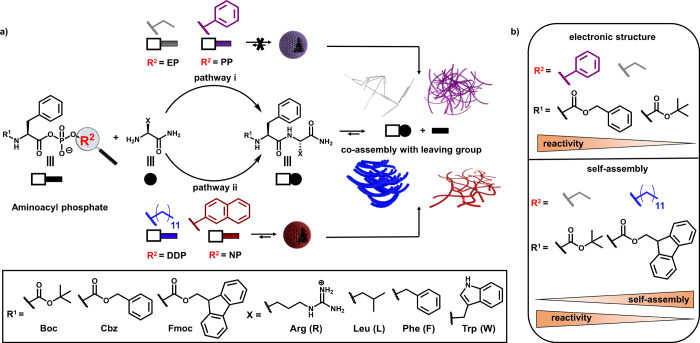 Figure 6
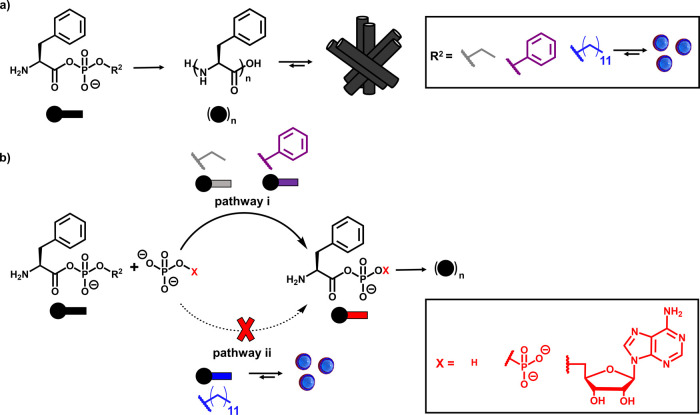 Figure 7
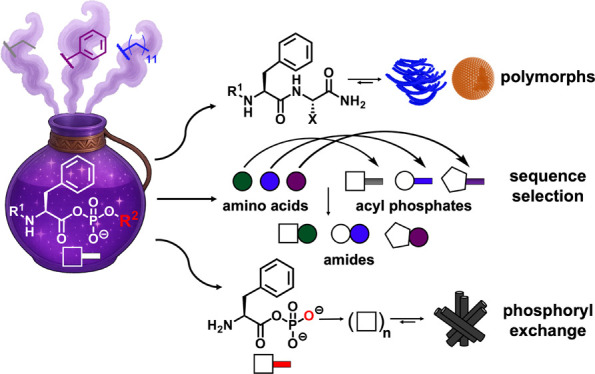 Figure 8
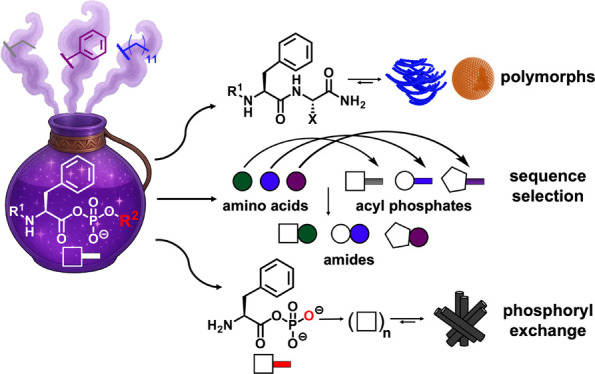 Figure 9
Peer Reviews
No public reviews on file for this paper yet. If you reviewed it on a platform where reviews are public (OpenReview, ICLR, NeurIPS, ICML), you can paste yours below so the community can read it here.
Videos
No videos yet. Explain this paper in a talk, walkthrough, or lecture? Add one.
Taxonomy
TopicsSupramolecular Self-Assembly in Materials · Supramolecular Chemistry and Complexes · Origins and Evolution of Life