Mechanisms of Hydroxyl Radical Chemistry in Aqueous Solution Triggered by Photoexcitation and Probed by Soft X‑rays
Leo Cordsmeier, Wagner Ribeiro da Silva Neto, Mattis Fondell, Rolf Mitzner, Vinícius Vaz da Cruz, Sebastian Eckert, Alexander Föhlisch

TL;DR
This paper investigates how hydroxyl radicals form and are neutralized in water using soft X-ray techniques, revealing new insights into their chemical mechanisms.
Contribution
The study provides a novel understanding of hydroxyl radical scavenging by TEMPO through direct electron transfer, not via a bound intermediate.
Findings
Hydroxyl radicals are generated from nitrite through photoexcitation in aqueous solutions.
TEMPO scavenges hydroxyl radicals via direct electron transfer, not through a bound intermediate state.
Soft X-ray absorption spectroscopy reveals detailed mechanisms at oxygen and nitrogen K-edges.
Abstract
Hydroxyl radicals are among the most important radicals on earth, being present in the human body, the atmosphere, rivers, and oceans, contributing to mechanisms like oxidative stress in cells and the photochemistry of the troposphere, and posing a threat to aquatic life. Extensive use of fertilizers in agriculture has led to increased levels of nitrogen oxides in many rivers around the world, which are a major source of hydroxyl radicals in water. In this paper, we explore the photoinduced generation of hydroxyl radicals from nitrite and their scavenging by the radical scavenger 2,2,6,6-tetramethylpiperidinyloxyl (TEMPO) in aqueous solutions using transient soft X-ray absorption spectroscopy (XAS) at the oxygen and nitrogen K-edges. We show the photoinduced generation of hydroxyl radicals from nitrite and determine its mechanism. For the scavenging of hydroxyl radicals by TEMPO, we…
Genes, proteins, chemicals, diseases, species, mutations and cell lines named across the full text — each resolved to its canonical identifier and authoritative record.
Click any figure to enlarge with its caption.
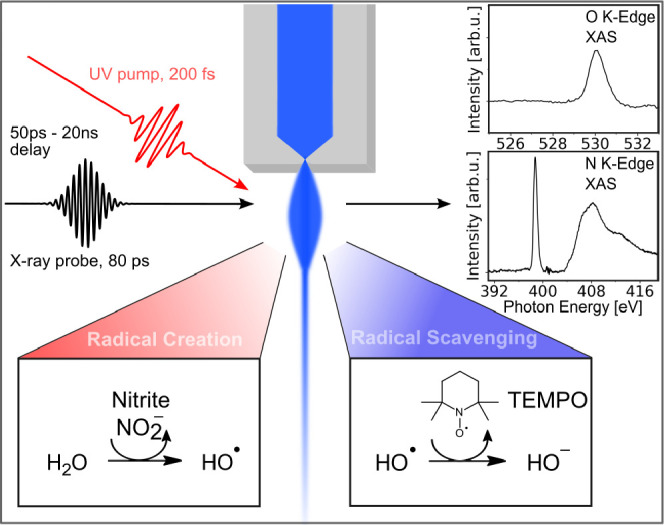 Figure 1
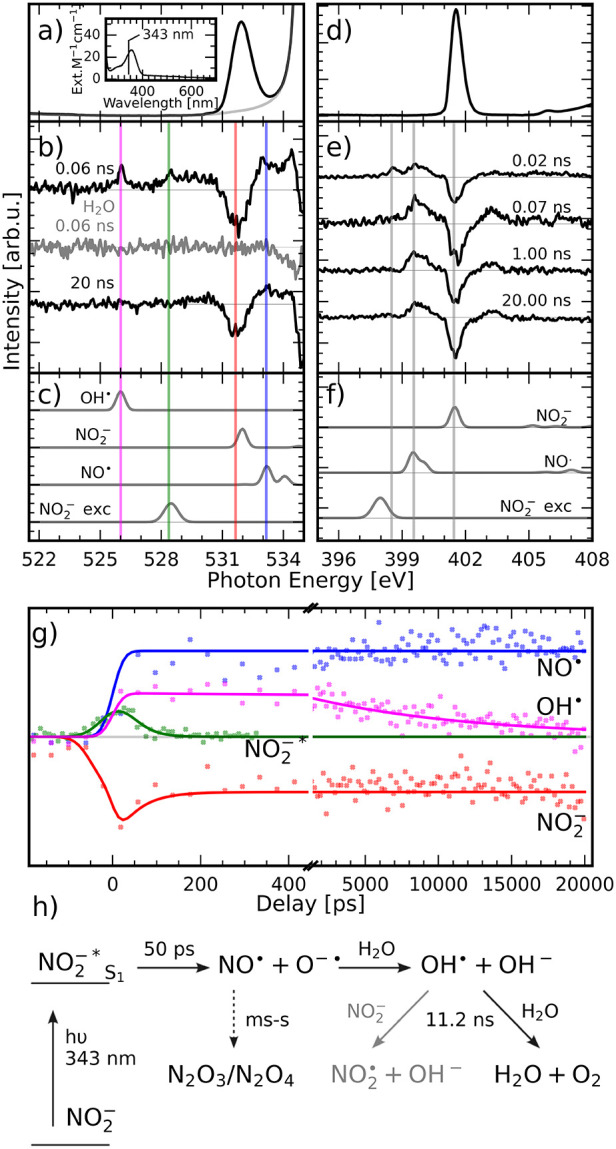 Figure 2
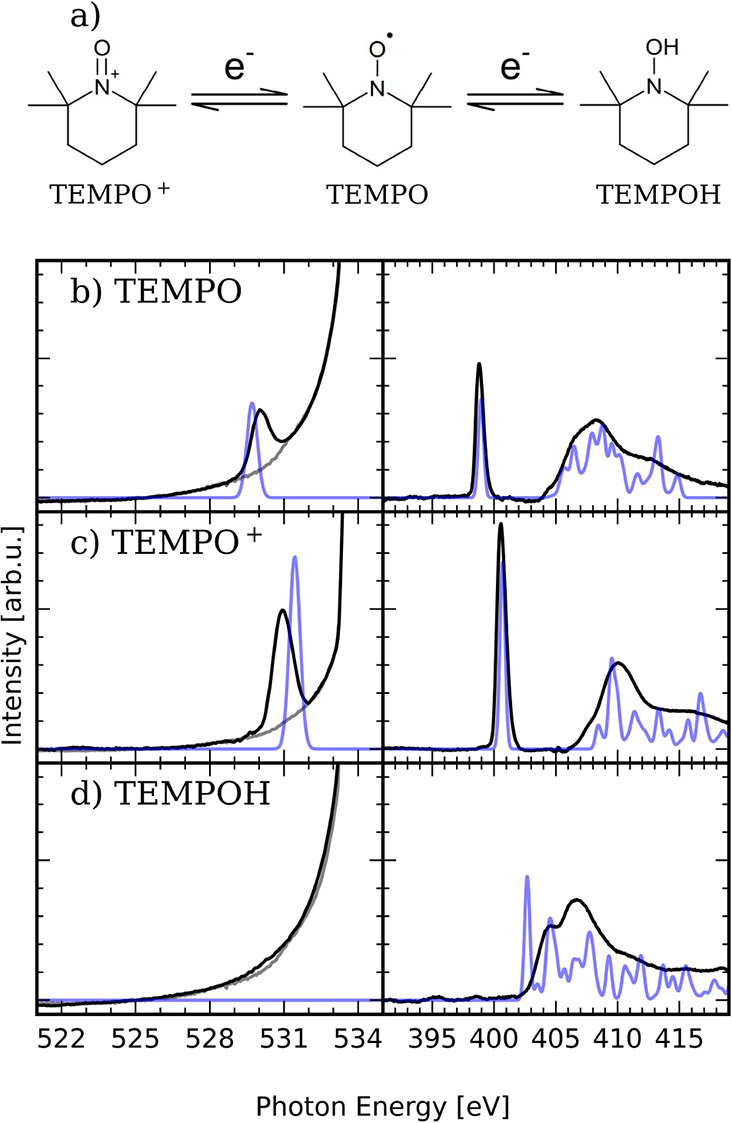 Figure 3
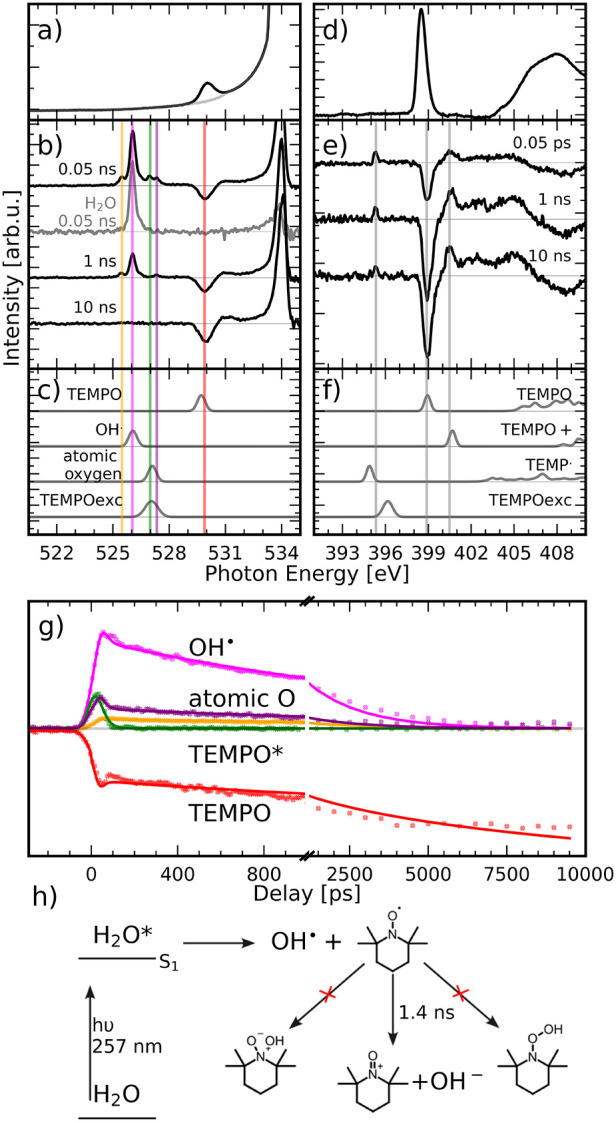 Figure 4
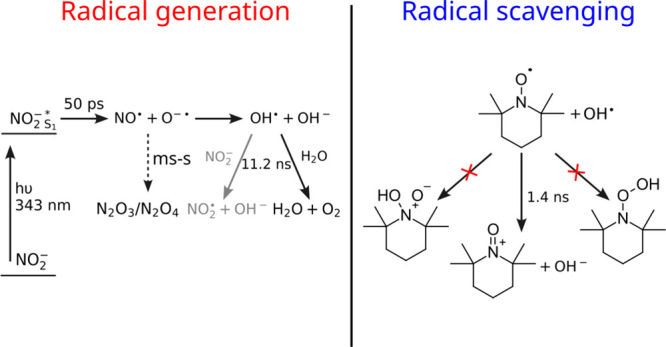 Figure 5
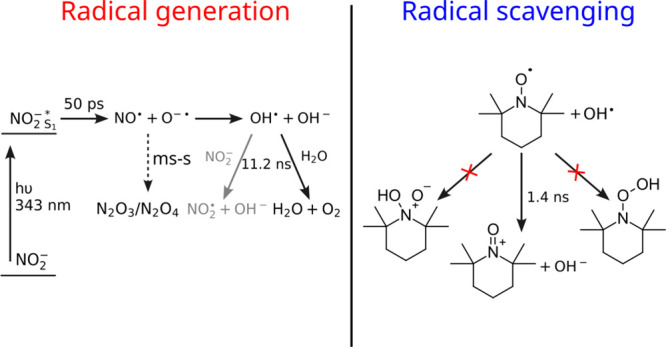 Figure 6
Peer Reviews
No public reviews on file for this paper yet. If you reviewed it on a platform where reviews are public (OpenReview, ICLR, NeurIPS, ICML), you can paste yours below so the community can read it here.
Videos
No videos yet. Explain this paper in a talk, walkthrough, or lecture? Add one.
Taxonomy
TopicsElectron Spin Resonance Studies · Spectroscopy and Quantum Chemical Studies · Marine and coastal ecosystems