PROTAC-Mediated Degradation of mHTT Aggregates Attenuates Neurotoxicity in Cellular and R6/2 Mouse Models of Huntington’s Disease
Po-Chao Lu, Yung-An Huang, Niaz Wali, Mei-Chun Tseng, Ruei-Yu He, Yijuang Chern, Tzu-Tang Wei, Jiun-Jie Shie, Joseph Jen-Tse Huang

TL;DR
This study shows that a new drug called PROTAC 2′ can selectively break down harmful mHTT protein clumps in Huntington’s disease, improving symptoms in both cells and mice.
Contribution
The development of a PROTAC that selectively degrades mHTT aggregates without affecting wild-type HTT represents a novel therapeutic approach for Huntington’s disease.
Findings
PROTAC 2′ reduced mHTT-induced cytotoxicity in cell models without affecting wild-type huntingtin.
In R6/2 mice, PROTAC 2′ improved motor function, body weight, and survival while reducing mHTT aggregation and neuroinflammation.
LC–MS/MS confirmed that PROTAC 2′ can cross the blood–brain barrier after subcutaneous administration.
Abstract
Huntington’s disease (HD) is a fatal neurodegenerative disorder caused by an expanded CAG repeat in the HTT gene, producing mutant huntingtin (mHTT) that misfolds into β-sheet-rich aggregates and drives neuronal loss. Current HTT-lowering strategies face challenges, including invasive delivery and nonselective suppression of wild-type HTT. Here, we report the development and synthesis of proteolysis-targeting chimeras (PROTACs) to selectively degrade aggregated mHTT. The lead compound, PROTAC 2′, consists of a (pyridylvinyl)aniline aggregate-binding ligand linked via polyethylene glycol spacers to pomalidomide, an E3 ligase recruiter for cereblon. PROTAC 2′ selectively degraded mHTT aggregates without affecting wild-type huntingtin and significantly reduced mHTT-induced cytotoxicity in the cell model. LC–MS/MS analysis confirmed the blood–brain barrier (BBB) penetration ability of…
Genes, proteins, chemicals, diseases, species, mutations and cell lines named across the full text — each resolved to its canonical identifier and authoritative record.
Click any figure to enlarge with its caption.
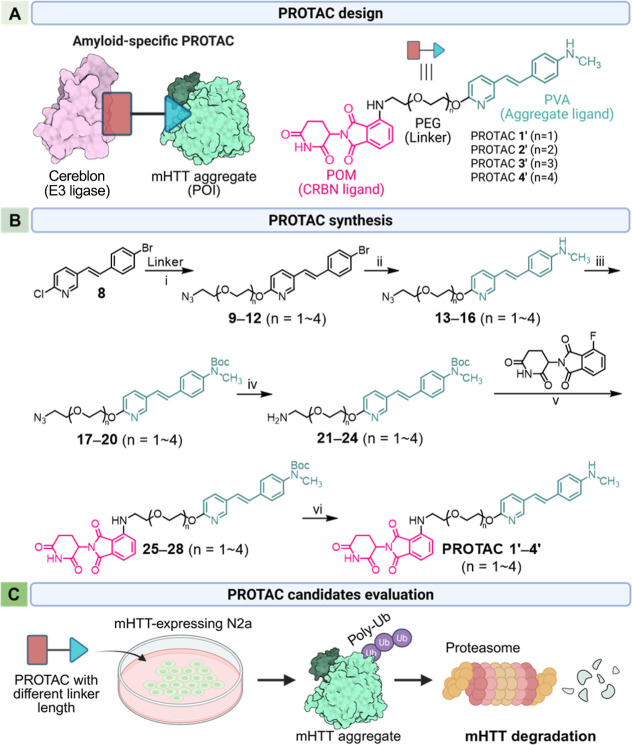 Figure 1
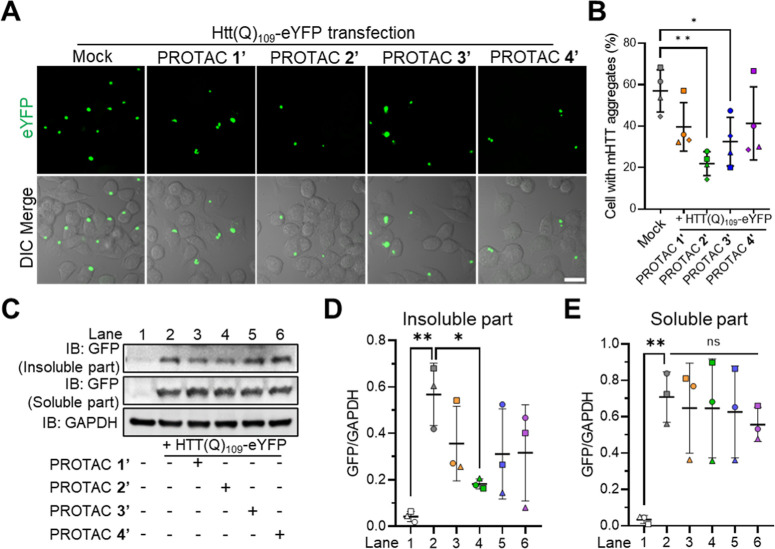 Figure 2
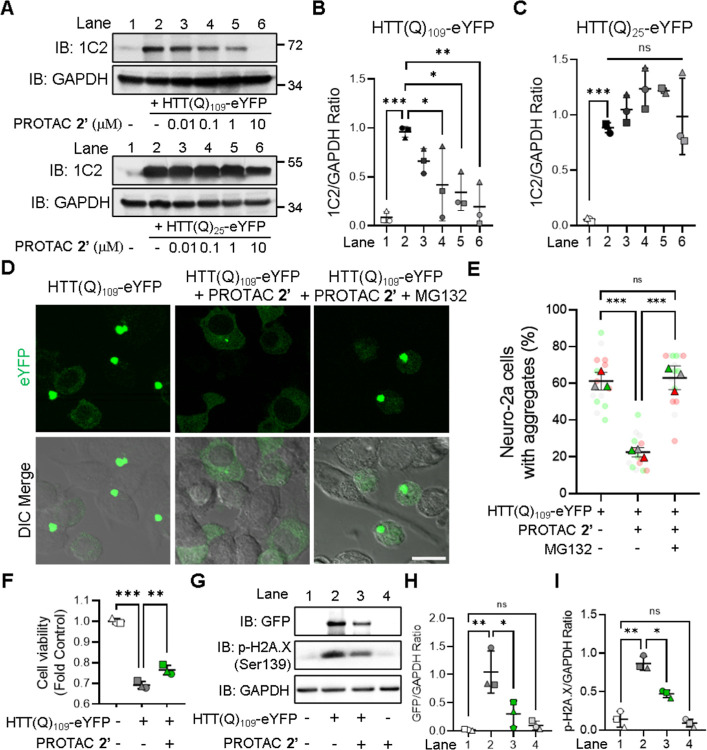 Figure 3
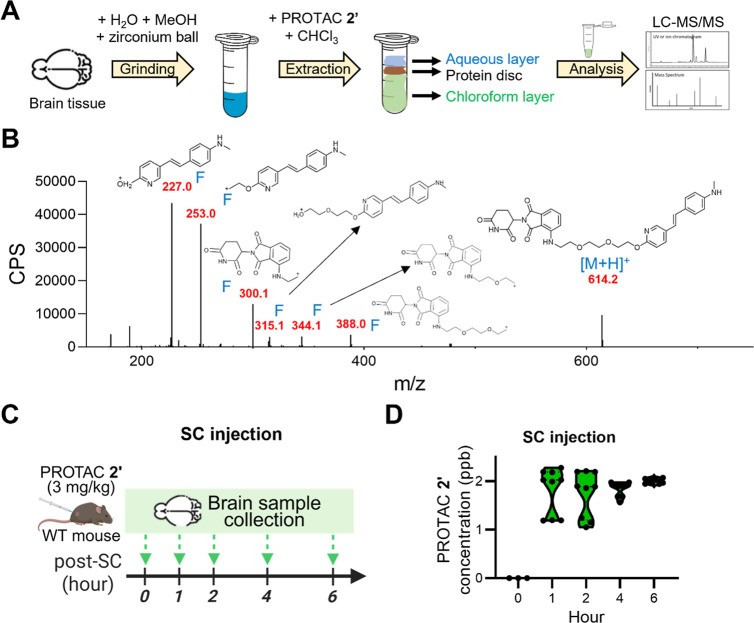 Figure 4
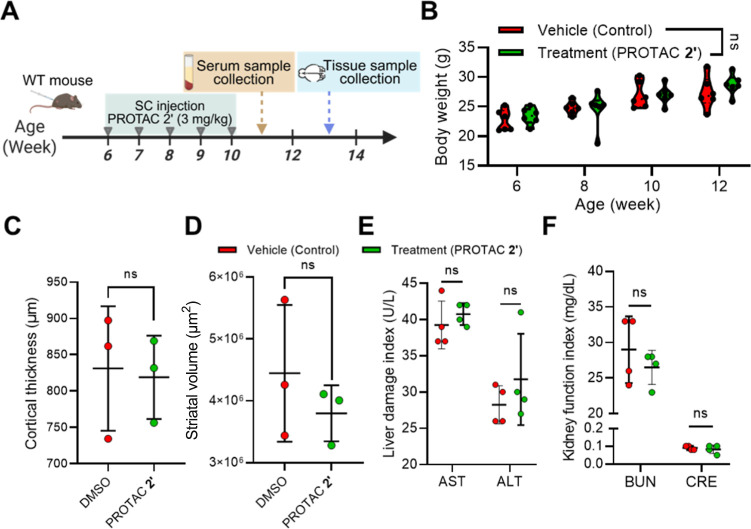 Figure 5
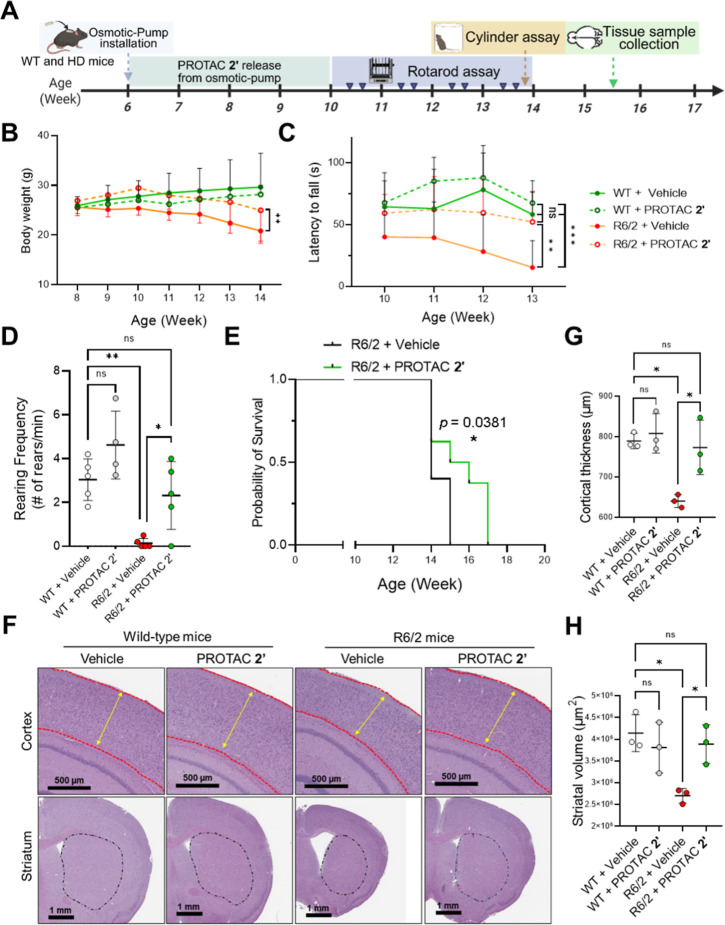 Figure 6
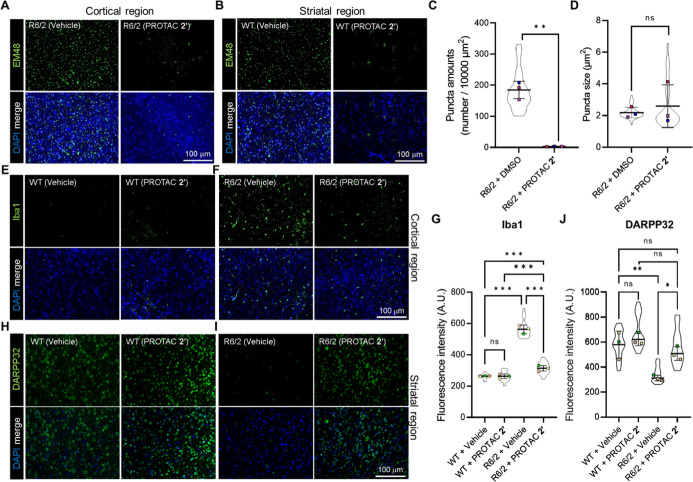 Figure 7
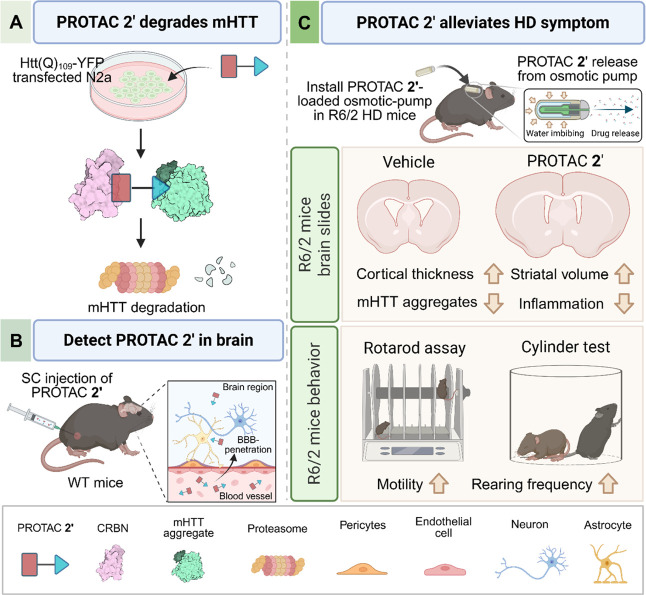 Figure 8
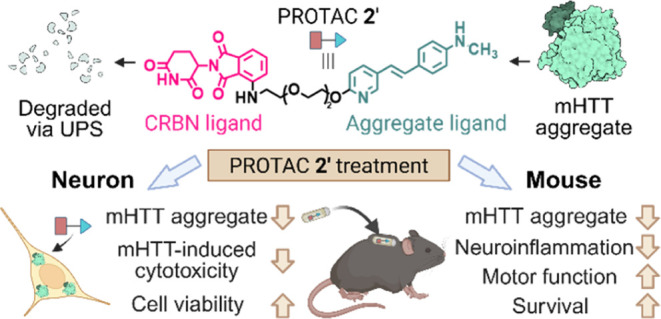 Figure 9
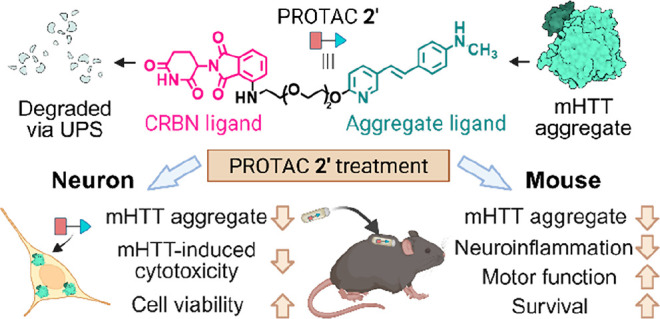 Figure 10
Peer Reviews
No public reviews on file for this paper yet. If you reviewed it on a platform where reviews are public (OpenReview, ICLR, NeurIPS, ICML), you can paste yours below so the community can read it here.
Videos
No videos yet. Explain this paper in a talk, walkthrough, or lecture? Add one.
Taxonomy
TopicsProtein Degradation and Inhibitors · Ubiquitin and proteasome pathways · 14-3-3 protein interactions