Beyond bacteria: large agents with analogies to Mimiviruses detected in canine cancers: reexamining Gram staining in cancer diagnostics
Elena Angela Lusi, Federico Caicci, Viola Zappone, Marco Quartuccio, Ilaria Dragà, Antonio Ieni, Cornelia Mannarino, Giuseppe Mazzullo, Claudia Rifici

TL;DR
This study finds Mimivirus-like agents in canine cancers using Gram staining, suggesting a possible link to cancer development similar to findings in humans.
Contribution
First study to detect Mimivirus-like agents in canine malignancies using Gram staining, bridging human and veterinary cancer research.
Findings
Gram-positive granulations were found in canine tumors, distinct from traditional bacteria.
Granulations showed intracytoplasmic, intra-nuclear, and perinuclear patterns in malignant tissues.
Findings align with human studies, suggesting a cross-species relevance in cancer pathophysiology.
Abstract
While Gram staining is traditionally used for classifying bacteria based on their cell wall properties, Mimiviruses and large mammalian agents can also retain the Gram stain, despite not being typical bacteria. In fact, Mimivirus-like agents that exhibit Gram-positive staining were first found in human tissues, particularly in malignant samples, suggesting that these agents may be involved in a unique carcinogenic process. In order to translate the findings published in human medicine to animal models, we evaluated for the first time the presence of analogous Gram-positive agents in canine malignancies and differentiate them from traditional bacteria. Using Gram staining, we analyzed 35 canine tumors across various malignancy types, including 7 sarcomas, 15 carcinomas, and 13 round cell tumors such as mast cell tumors, transmissible venereal tumors and melanomas. Normal tissues and…
Genes, proteins, chemicals, diseases, species, mutations and cell lines named across the full text — each resolved to its canonical identifier and authoritative record.
Click any figure to enlarge with its caption.
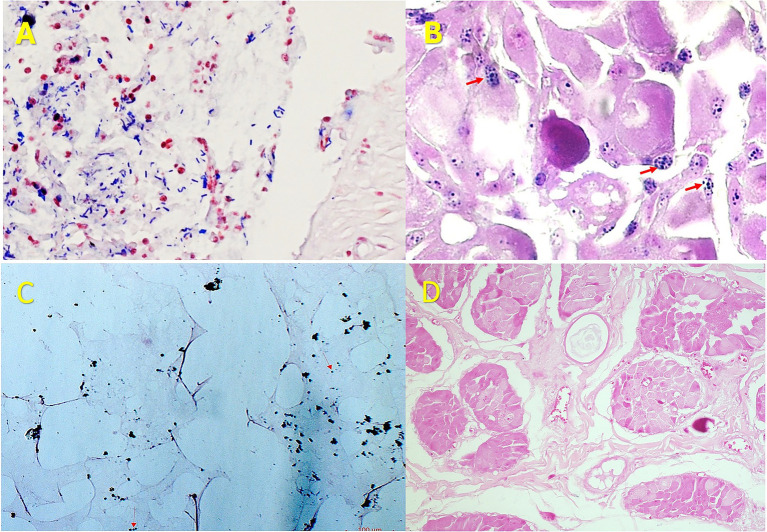 Figure 1
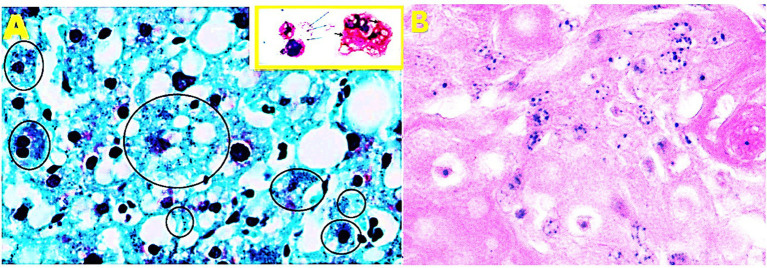 Figure 2
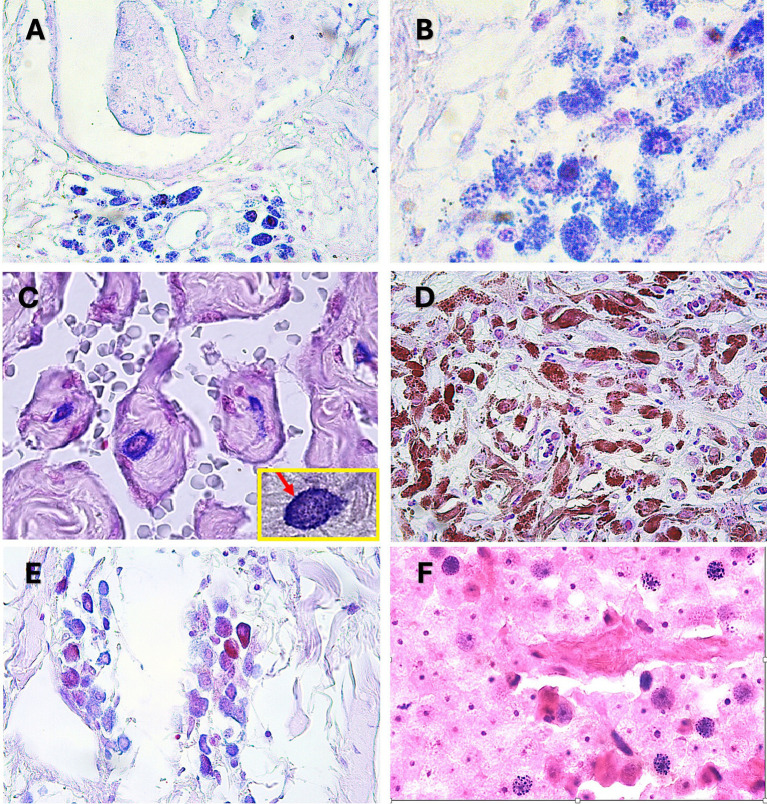 Figure 3
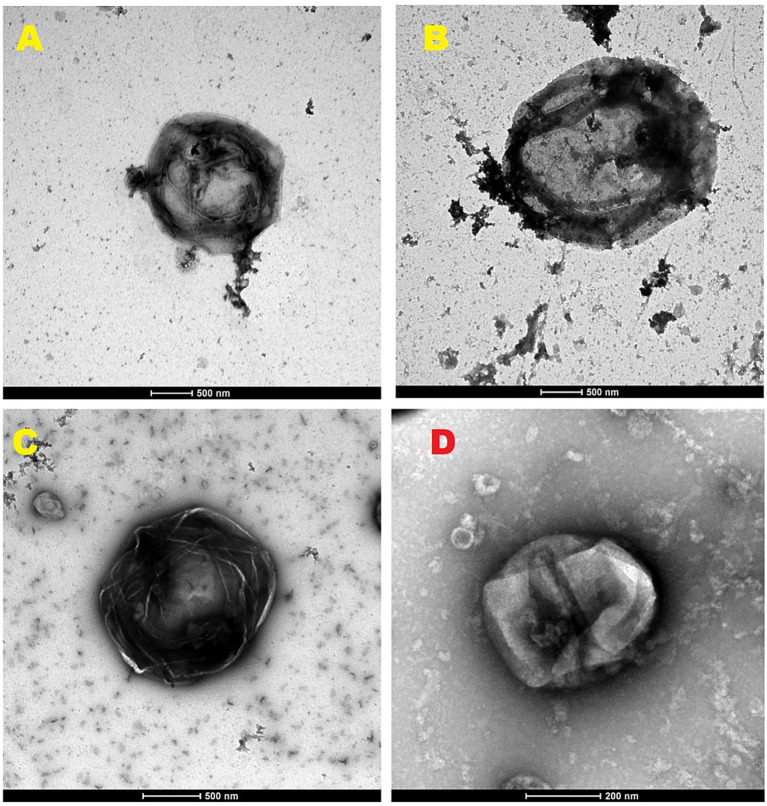 Figure 4
Peer Reviews
No public reviews on file for this paper yet. If you reviewed it on a platform where reviews are public (OpenReview, ICLR, NeurIPS, ICML), you can paste yours below so the community can read it here.
Videos
No videos yet. Explain this paper in a talk, walkthrough, or lecture? Add one.
Taxonomy
TopicsPoxvirus research and outbreaks · Animal Virus Infections Studies · Veterinary Oncology Research