Shortest pulmonary vein atrial fibrillation cycle length identifies pulmonary vein isolation responders beyond clinical atrial fibrillation pattern: the FARS-AF II study
Lorenzo Marcon, Marco Bergonti, Francesco Spera, Johan Saenen, Wim Huybrechts, Hielko Miljoen, Olivier Van Leuven, Lien Vandaele, Anouk Wittock, Hein Heidbuchel, Andrea Sarkozy

TL;DR
A new method to measure heart rhythm in the pulmonary veins can predict which patients will benefit from a specific treatment for atrial fibrillation.
Contribution
A novel method (PV-FARS10) identifies PVI responders in atrial fibrillation patients with a 155 ms cut-off for recurrence prediction.
Findings
Patients with PV-FARS10 ≤ 155 ms had significantly lower AF recurrence rates after PVI.
The 155 ms cut-off was effective in both paroxysmal and persistent AF patients.
Paroxysmal AF patients were more likely to have PV-FARS10 ≤ 155 ms than persistent AF patients.
Abstract
Atrial fibrillation cycle length (AF-CL) measured in the pulmonary veins (PVs) with a novel simple method [the average of the 10 consecutive Fastest Atrial Repetitive Similar signal interval (FARS10)] accurately identified pulmonary vein isolation (PVI) responders in a preliminary study. This study aims to evaluate differences in PV-FARS10 between paroxysmal and persistent AF and to define the optimal cut-off to predict PVI-only approach success in a large population. We prospectively enrolled consecutive patients with persistent or paroxysmal AF undergoing first PVI in a single-centre study. The primary endpoint was atrial arrhythmia recurrence. A total of 219 patients (61.8 ± 11.2 years, 25.1% female) were included, with 70 patients (32%) having paroxysmal AF and 149 patients (68%) persistent AF. After a median follow-up of 18.0 [interquartile range (IQR) 10.2–42.3] months, 72…
Genes, proteins, chemicals, diseases, species, mutations and cell lines named across the full text — each resolved to its canonical identifier and authoritative record.
Click any figure to enlarge with its caption.
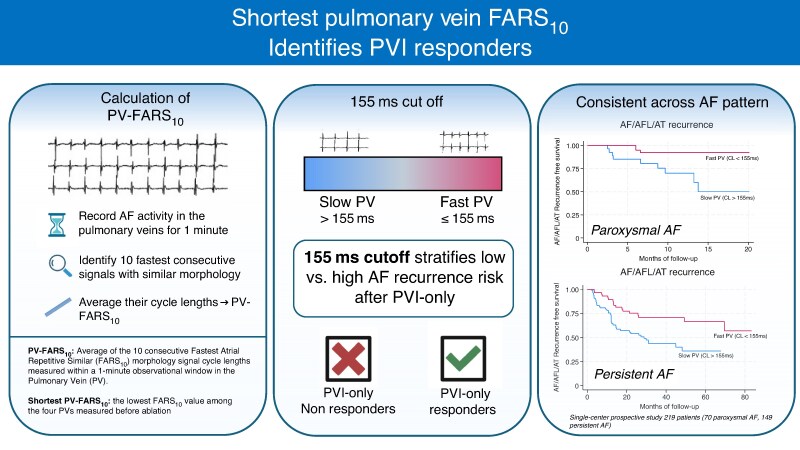 Figure 1
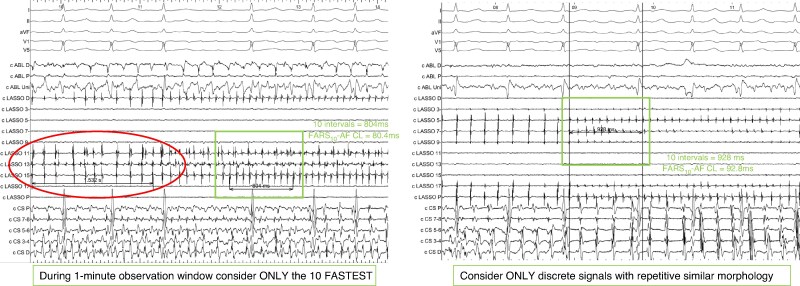 Figure 2
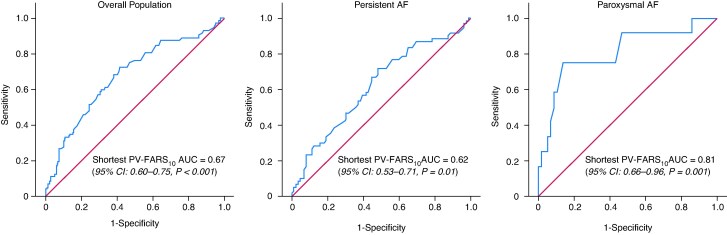 Figure 3
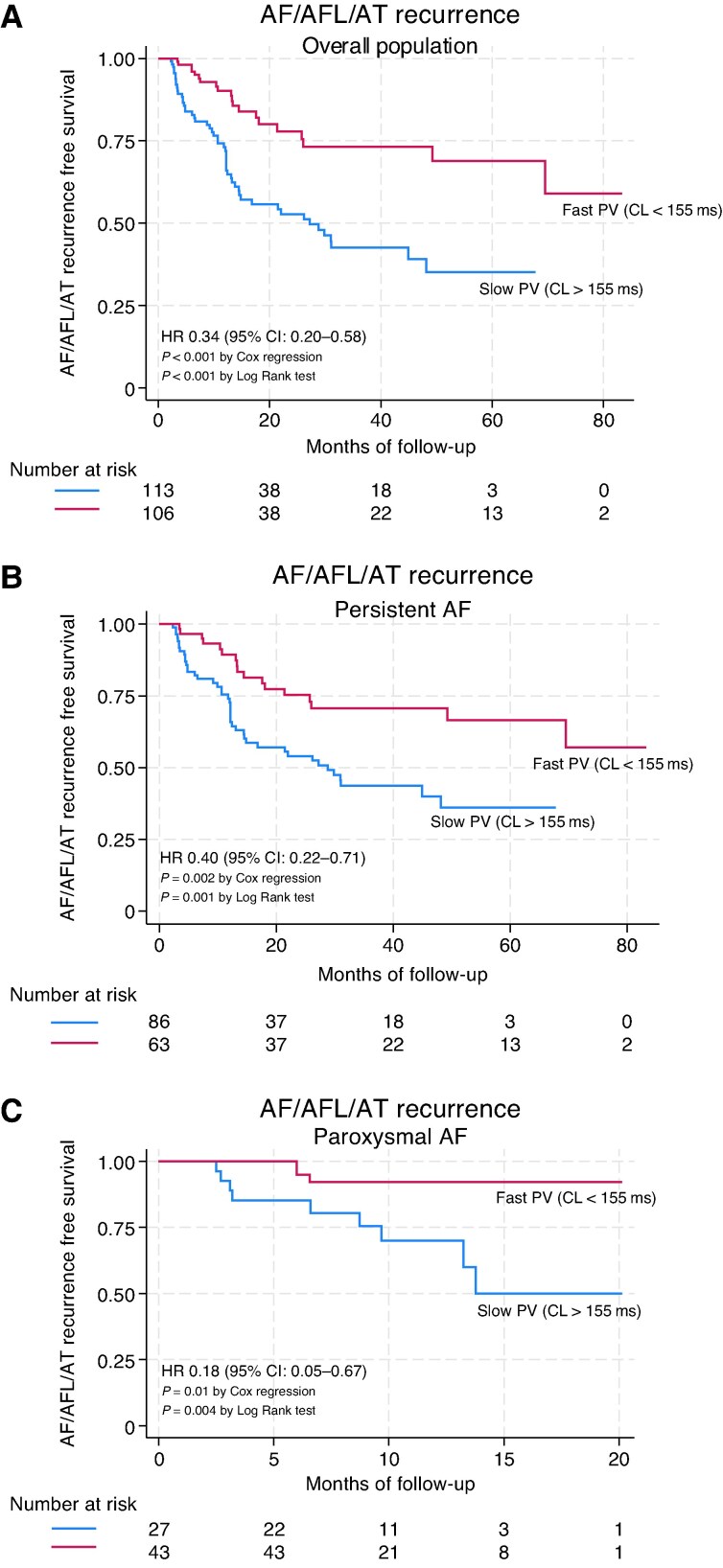 Figure 4
Peer Reviews
No public reviews on file for this paper yet. If you reviewed it on a platform where reviews are public (OpenReview, ICLR, NeurIPS, ICML), you can paste yours below so the community can read it here.
Videos
No videos yet. Explain this paper in a talk, walkthrough, or lecture? Add one.
Taxonomy
TopicsAtrial Fibrillation Management and Outcomes · Cardiovascular Disease and Adiposity · Cardiovascular Function and Risk Factors