Synergistically Optimizing the Thermoelectric Performance of n‑Type SnS through an Integrated Systematic Approach
Sidharth Duraisamy, Yang-Yuan Chen, Kuei-Hsien Chen, Maw-Kuen Wu, G. Peramaiyan, V. K. Ranganayakulu, Muluken Biadgelegn Wollele, Min-Nan Ou

TL;DR
Researchers improved the thermoelectric performance of n-type SnS by addressing challenges related to native Sn vacancies and enhancing conductivity.
Contribution
A novel integrated approach combining sulfur vacancies, Cl– and Se2– substitutions, and SnCl2 compensation to optimize n-type SnS thermoelectric performance.
Findings
n-type SnS1−δ samples with sulfur vacancies and Cl–/Se2– substitutions showed enhanced thermoelectric performance.
SnS0.455Se0.45Cl0.02 achieved a ZT max of ≈0.7 at 823 K, the highest reported for n-type SnS.
Incorporating SnCl2 lowered thermal conductivity and improved power factor.
Abstract
Tin(II) sulfide (SnS) is a promising p-type semiconductor known for its high thermoelectric performance and eco-friendly properties, offering a viable alternative to group IV–VI compounds. However, achieving n-type conductivity in SnS has been challenging due to the propensity for native Sn vacancies. This study addresses this challenge by synthesizing polycrystalline n-type SnS1−δ (δ = 0.05 and 0.075) samples through solid-state reaction. By introducing sulfur vacancies to counteract Sn vacancies, followed by aliovalent (Cl–) and isoelectronic (Se2–) substitutions, we significantly enhance the thermoelectric performance of n-type SnS. Chlorine doping further improves electrical conductivity, with SnS0.455Se0.45Cl0.02 showing superior performance. Additionally, incorporating 0.03 mol % SnCl2 in SnS0.475Se0.45 compensates for intrinsic Sn vacancies, optimizing the power factor and…
Genes, proteins, chemicals, diseases, species, mutations and cell lines named across the full text — each resolved to its canonical identifier and authoritative record.
Click any figure to enlarge with its caption.
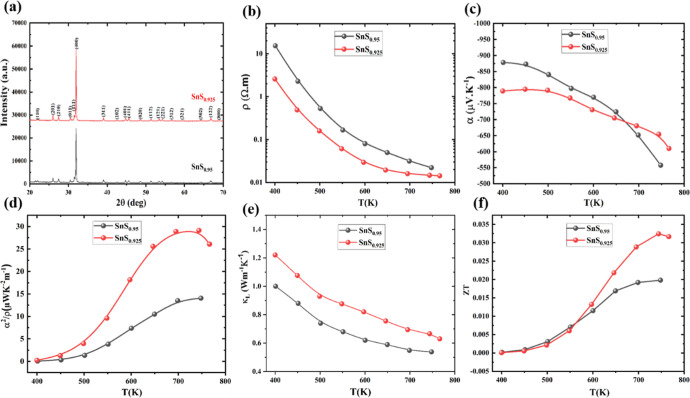 Figure 1
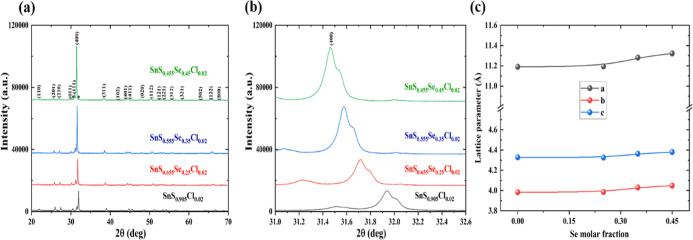 Figure 2
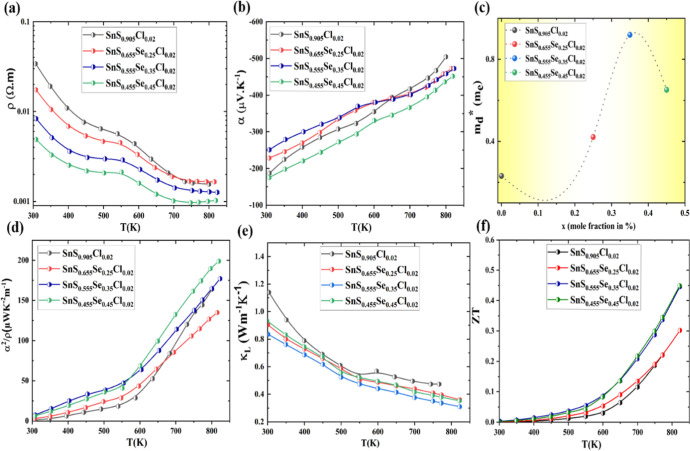 Figure 3
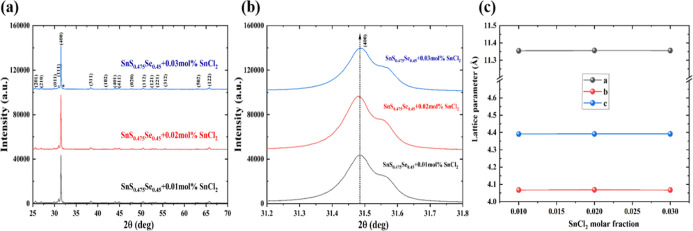 Figure 4
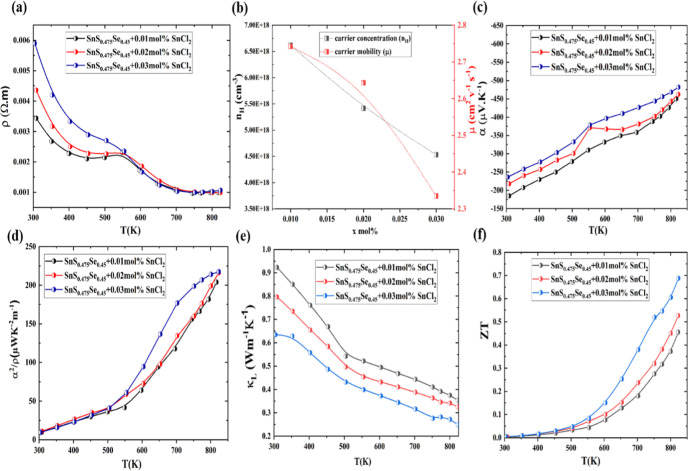 Figure 5
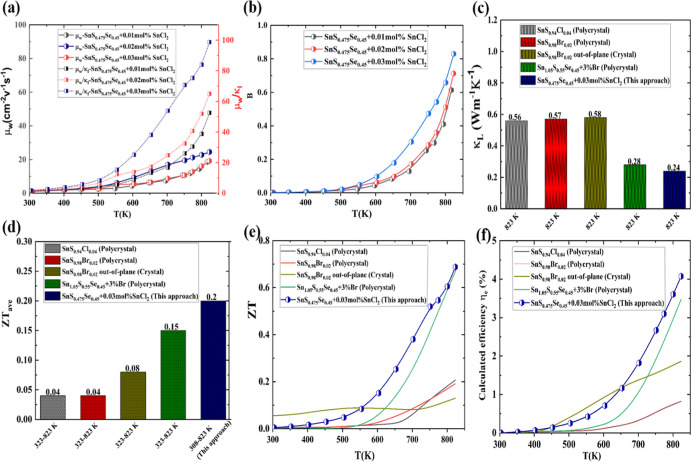 Figure 6
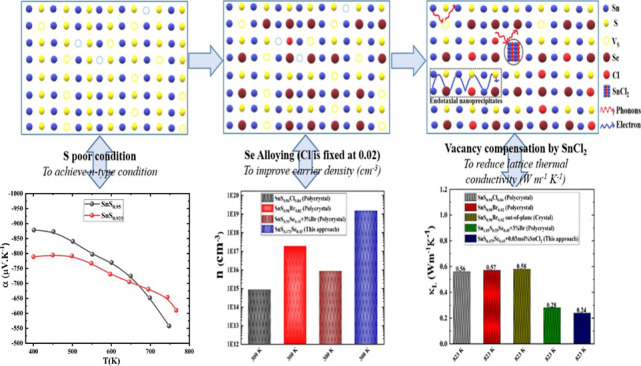 Figure 7
 Figure 8
 Figure 9
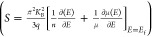 Figure 10
 Figure 11
 Figure 12
 Figure 13
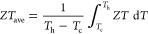 Figure 14
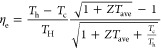 Figure 15
Peer Reviews
No public reviews on file for this paper yet. If you reviewed it on a platform where reviews are public (OpenReview, ICLR, NeurIPS, ICML), you can paste yours below so the community can read it here.
Videos
No videos yet. Explain this paper in a talk, walkthrough, or lecture? Add one.
Taxonomy
TopicsAdvanced Thermoelectric Materials and Devices · Chalcogenide Semiconductor Thin Films · Perovskite Materials and Applications