Unraveling Defect-Dependent Conductivity-Type Switching in CuFe2O4 for Enhanced Photoelectrocatalytic Reduction of Benzaldehyde
Yen-Chun Huang, Manoj Kumar Mohanta, Jun-Lin Fong, Abdul M. Reyes, Sebastian E. Reyes-Lillo, Chang-Ming Jiang

TL;DR
A defect-engineered CuFe2O4 photocathode enables efficient and sustainable benzaldehyde reduction under mild conditions using photoelectrocatalysis.
Contribution
A defect-tuned CuFe2O4 photocathode enables direct PEC reduction of benzaldehyde with high efficiency and low energy input.
Findings
Oxygen-rich annealing stabilizes copper vacancies and enhances hole concentration in CuFe2O4.
The optimized photocathode achieves a benzyl alcohol production rate of 2.57 μmol/h with 51.3% Faradaic efficiency.
The PEC method reduces the required applied potential by ~1 V compared to traditional electrocatalytic methods.
Abstract
Photoelectrocatalytic (PEC) reduction provides a sustainable route for upgrading biomass-derived feedstocks with reduced energy requirements, yet remains largely unexplored beyond hydrogen evolution and CO2 reduction due to the scarcity of stable photocathodes. Here, we report a defect-engineered CuFe2O4 photocathode that enables directly quantified PEC reduction of benzaldehyde to benzyl alcohol using a single-component, earth-abundant oxide. By controlling annealing temperature and oxygen partial pressure, CuFe2O4 is systematically tuned from n-type to p-type conductivity. Electrochemical measurements, X-ray and ultraviolet photoelectron spectroscopy, and first-principles defect calculations collectively show that oxygen-rich annealing conditions suppress deep donor-type oxygen vacancies while stabilizing shallow acceptor-type copper vacancies, resulting in enhanced hole concentration…
Genes, proteins, chemicals, diseases, species, mutations and cell lines named across the full text — each resolved to its canonical identifier and authoritative record.
Click any figure to enlarge with its caption.
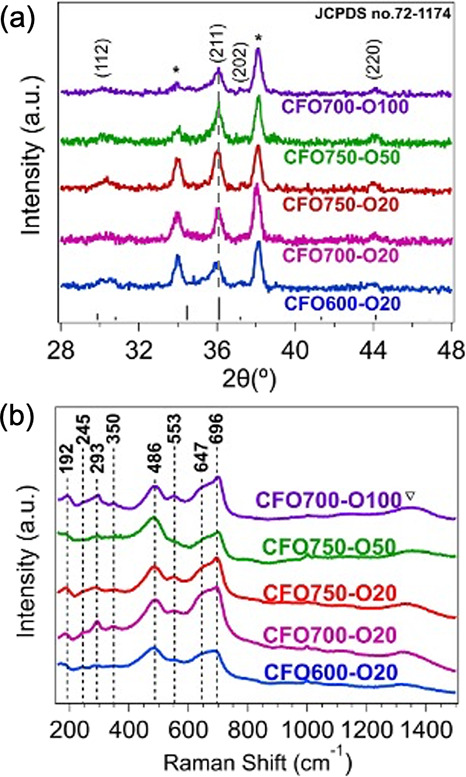 Figure 1
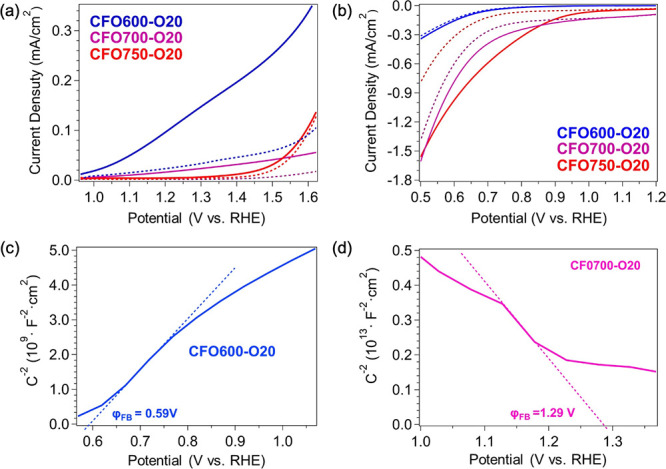 Figure 2
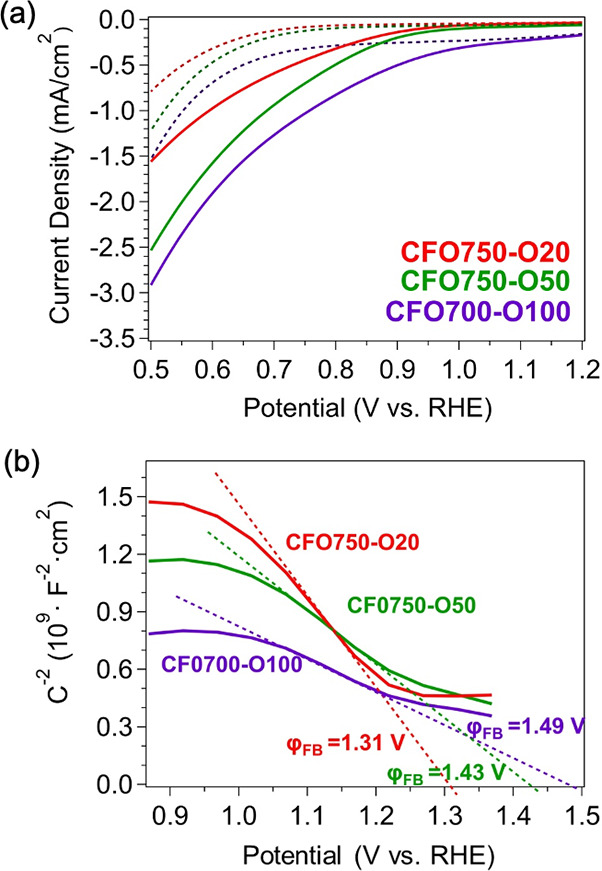 Figure 3
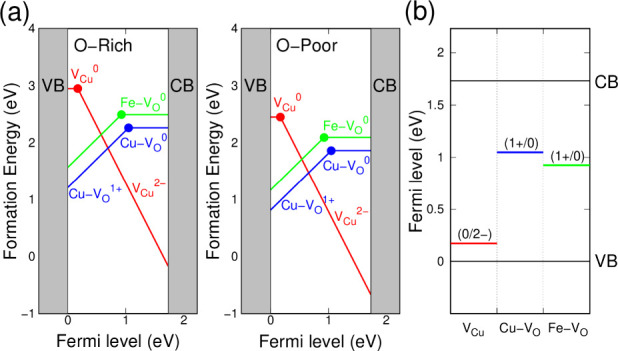 Figure 4
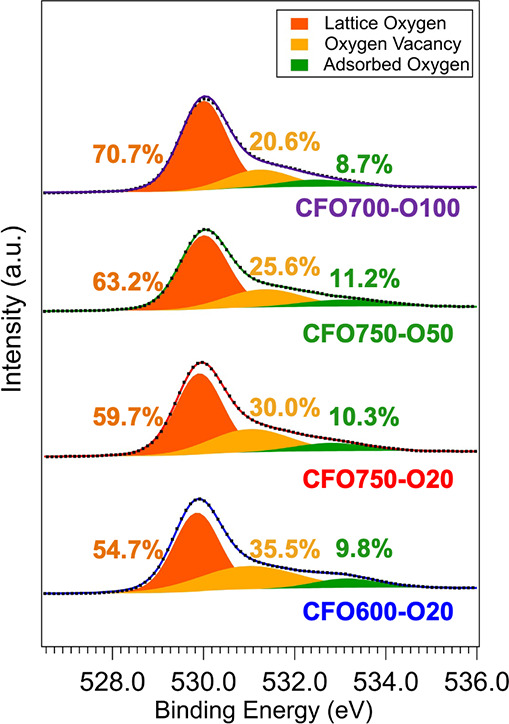 Figure 5
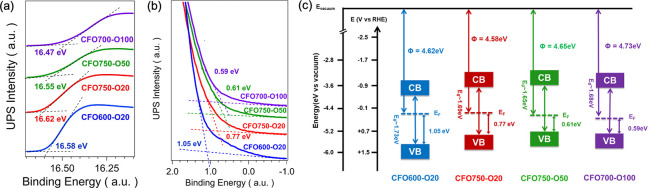 Figure 6
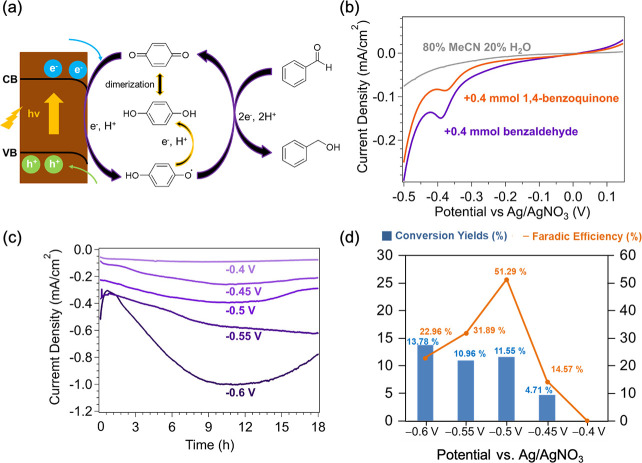 Figure 7
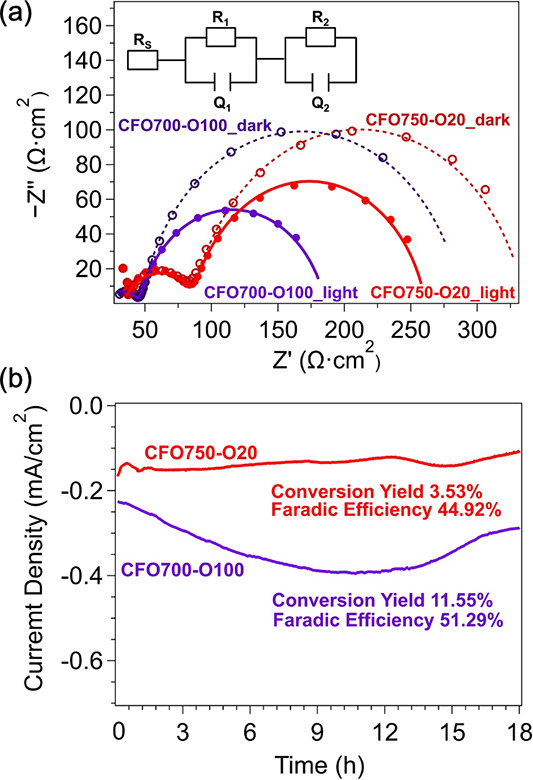 Figure 8
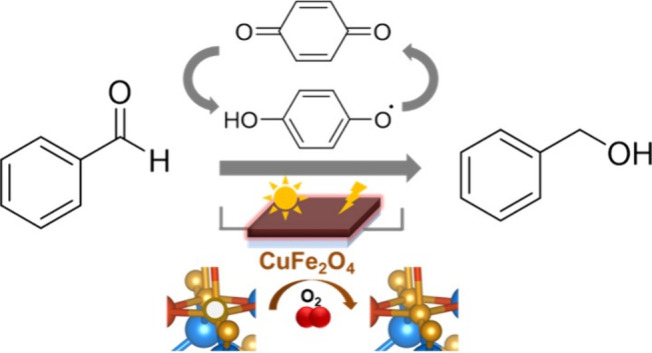 Figure 9
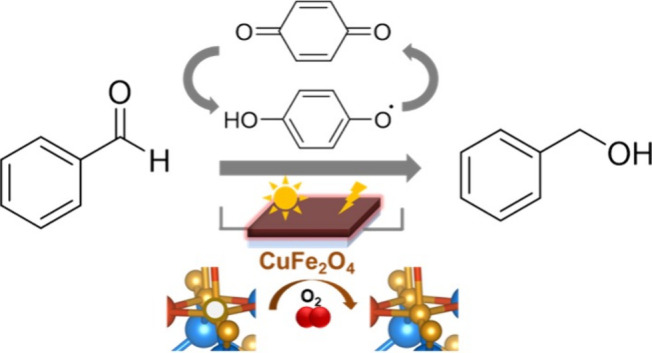 Figure 10
 Figure 11
Peer Reviews
No public reviews on file for this paper yet. If you reviewed it on a platform where reviews are public (OpenReview, ICLR, NeurIPS, ICML), you can paste yours below so the community can read it here.
Videos
No videos yet. Explain this paper in a talk, walkthrough, or lecture? Add one.
Taxonomy
TopicsCO2 Reduction Techniques and Catalysts · Advanced Photocatalysis Techniques · Catalysis for Biomass Conversion