Implementation and product- and process evaluation of a co-created gender-informed and culturally-sensitive toolkit to improve symptom recognition and care seeking for ischemic heart disease: RE-AIM framework
Bryn Hummel, Dinah L. van Schalkwijk, Nina Zipfel, Pearl T. C. Tuithof, Paula M. C. Mommersteeg, Ralf E. Harskamp, Irene G. M. van Valkengoed

TL;DR
A gender-informed and culturally-sensitive toolkit was developed and evaluated to improve recognition of heart disease symptoms and encourage care seeking in diverse communities.
Contribution
The novel contribution is a co-created toolkit that integrates gender and cultural sensitivity to improve IHD symptom recognition and care seeking.
Findings
The toolkit showed a small but measurable increase in knowledge about IHD symptoms.
Community leaders and attendees expressed positive feedback on the toolkit.
Maintenance challenges included lack of experience in organizing community events.
Abstract
Tailored health messaging can be used to improve symptom recognition of ischemic heart disease (IHD) and reduce barriers to care. Therefore, we propose that a gender-informed and culturally-sensitive toolkit for health messaging could improve health outcomes by promoting adequate care seeking in the community. Hence, we will develop, implement, and evaluate a toolkit to improve IHD-related symptom recognition and care seeking in an ethnically-diverse population. We developed a toolkit in co-creation with patients, citizens, community leaders, and healthcare professionals. Subsequently, we pilot-implemented the toolkit through organizing information sessions in four different community-based settings. Finally, using a mixed-methods design, we evaluated the Reach, Effectiveness, Adoption, Implementation, and Maintenance of the toolkit (RE-AIM), including its effect on knowledge gain on…
Genes, proteins, chemicals, diseases, species, mutations and cell lines named across the full text — each resolved to its canonical identifier and authoritative record.
Click any figure to enlarge with its caption.
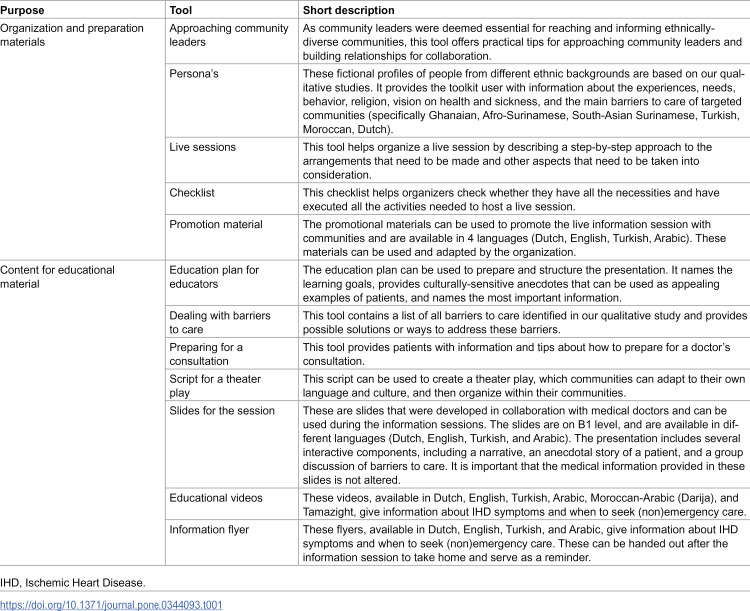 Figure 1
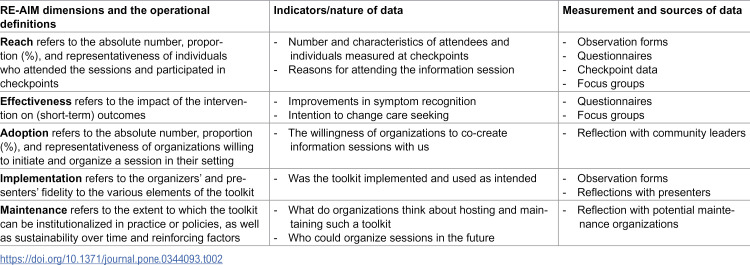 Figure 2
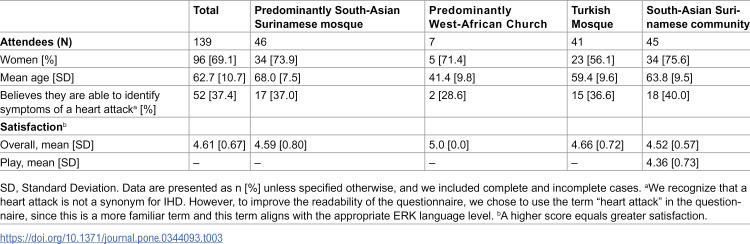 Figure 3
 Figure 4
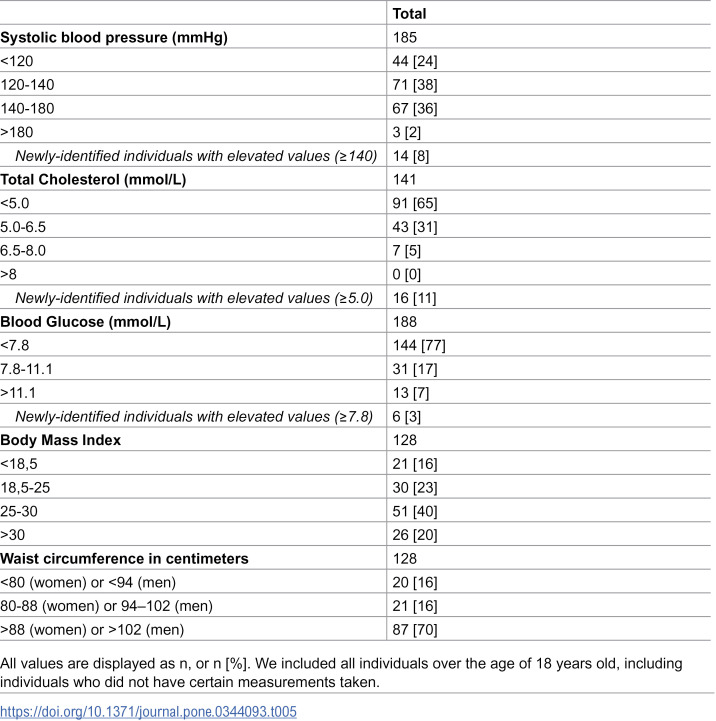 Figure 5
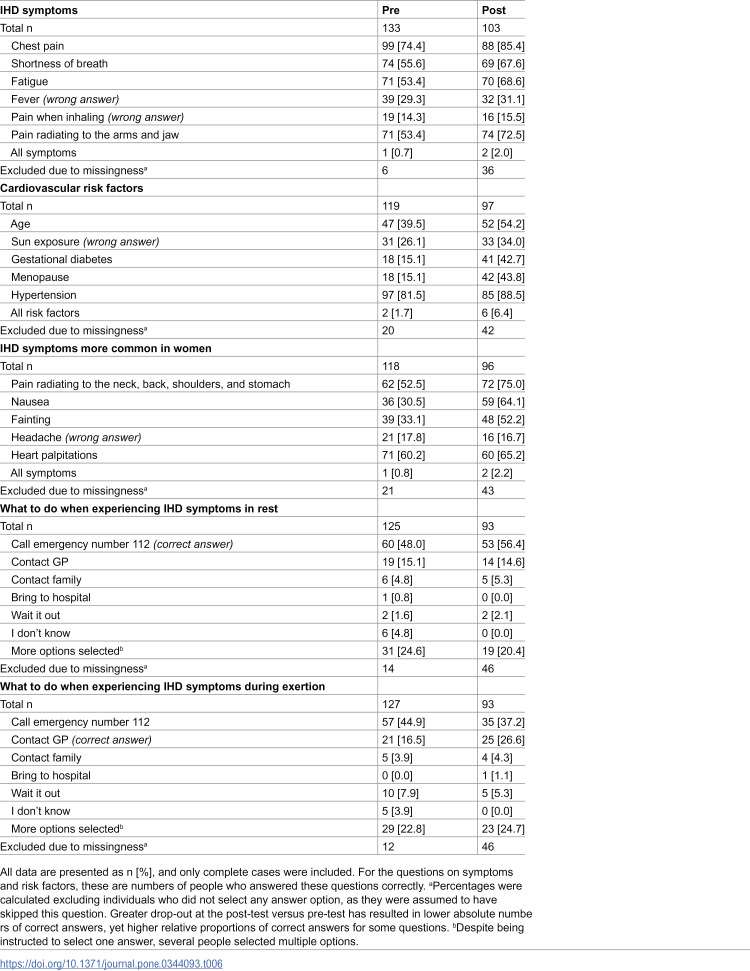 Figure 6
Peer Reviews
No public reviews on file for this paper yet. If you reviewed it on a platform where reviews are public (OpenReview, ICLR, NeurIPS, ICML), you can paste yours below so the community can read it here.
Videos
No videos yet. Explain this paper in a talk, walkthrough, or lecture? Add one.
Taxonomy
TopicsMobile Health and mHealth Applications · Electronic Health Records Systems · Acute Myocardial Infarction Research