The risk of onchocerciasis infection by human population movements between high and low transmission settings in Ghana
Sellase Pi-Bansa, Kwadwo Kyereme Frempong, Joseph Harold Nyarko Osei, Franklin Ayisi, Millicent Opoku, Millicent Selassie Afatodzie, Sampson Otoo, Sarah-Sally Mawunyo Dogbe, Abena Akyeamaa Nyarko, Aissatou Diawara, Sake de Vlas, Wilma Stolk, Daniel Adjei Boakye

TL;DR
This study shows that human movement between high and low-risk onchocerciasis areas in Ghana increases infection risk, suggesting the need to extend treatment to low-risk communities for effective elimination.
Contribution
The study provides empirical evidence on human movement patterns and infection levels between high and low-risk onchocerciasis communities in Ghana.
Findings
Onchocerciasis prevalence was significantly higher in high-risk than low-risk areas for both sero-prevalence and microfilariae prevalence.
Over 60% of participants moved between high-risk and low-risk communities daily or weekly, indicating strong connectivity.
Infection levels were higher among individuals moving from high-risk to low-risk areas, though not statistically significant.
Abstract
Onchocerciasis control strategies have focused on mass drug administration (MDA) to reduce morbidity in high-risk (HR) areas (sites close to blackfly breeding sites). However, with the current drive towards elimination, treatment must be extended to low-risk (LR) areas. It is uncertain how well HR and LR communities are connected for decision making in recommending treatment strategies to include the LR areas. We provided data on current onchocerciasis infection status, connectivity between HR and LR communities and rates of human movement within some endemic communities in Ghana. Selected communities were 5km (HR) and 15km (LR) from breeding sites. Questionnaires were administered to obtain data on demographics and human movement patterns. Samples were collected from participants and tested for O. volvulus infections using Ov16 RDT and presence of microfilariae (mf) in skin snips…
Genes, proteins, chemicals, diseases, species, mutations and cell lines named across the full text — each resolved to its canonical identifier and authoritative record.
Click any figure to enlarge with its caption.
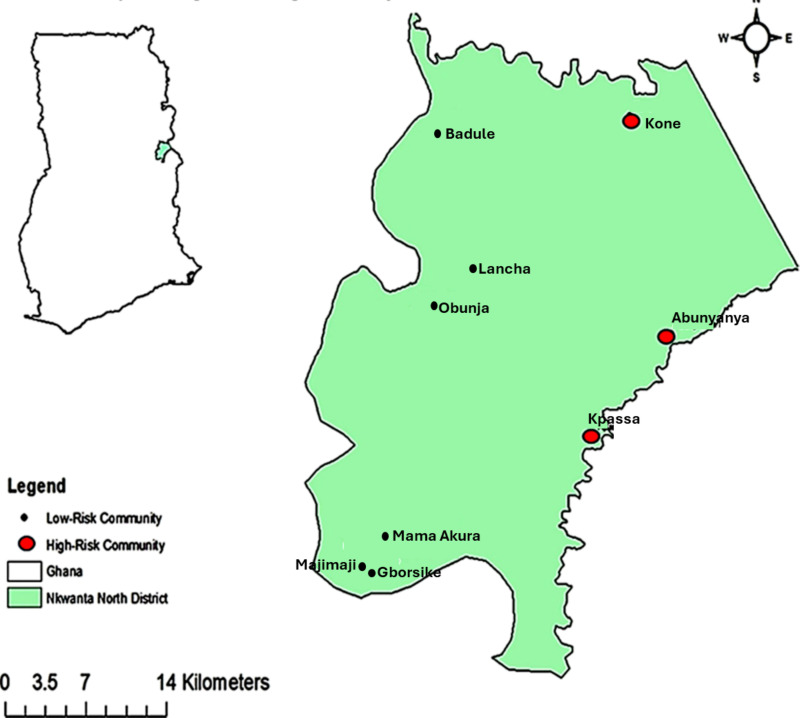 Figure 1
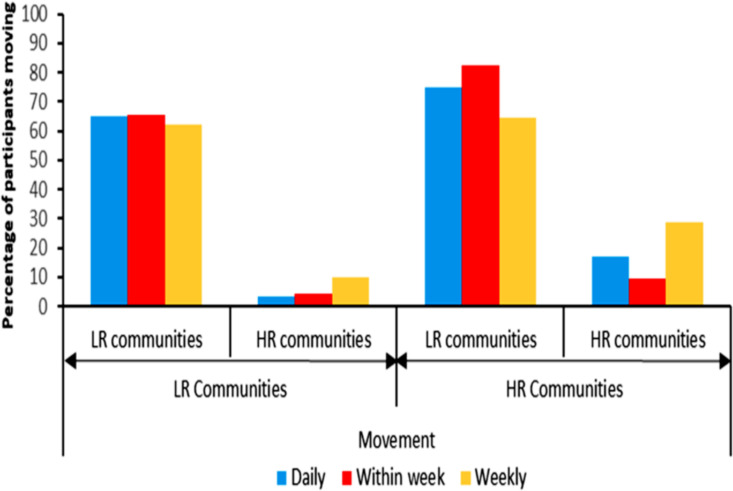 Figure 2
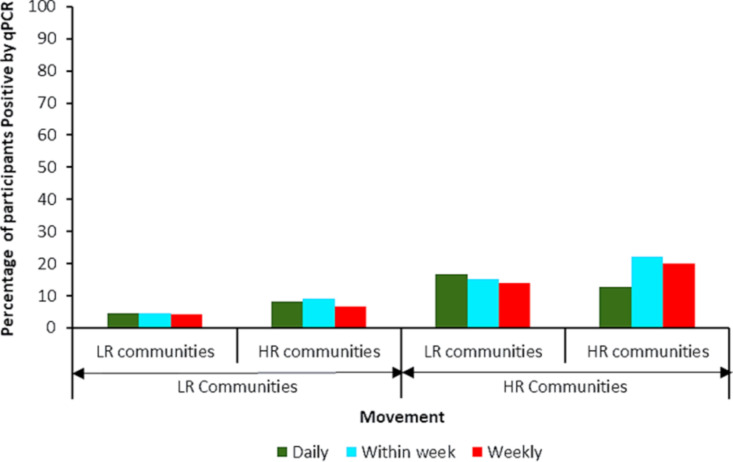 Figure 3
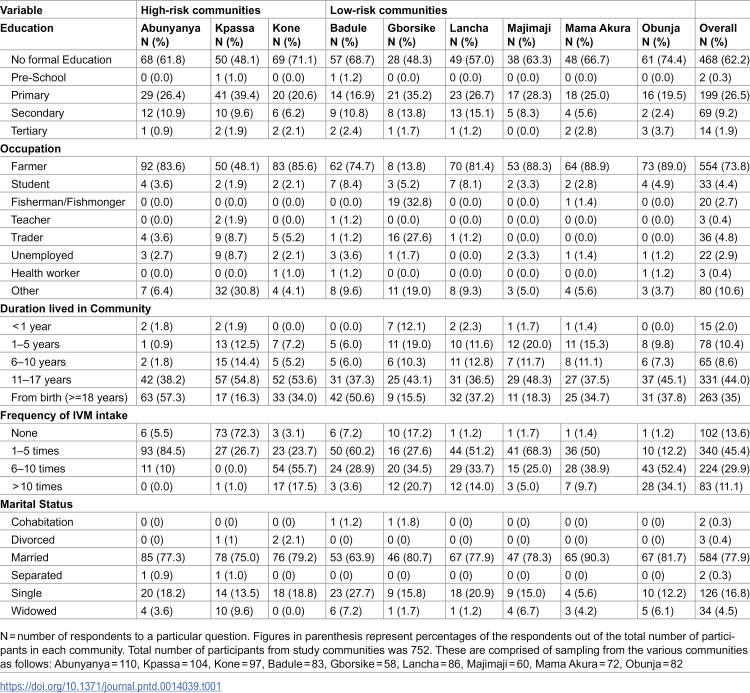 Figure 4
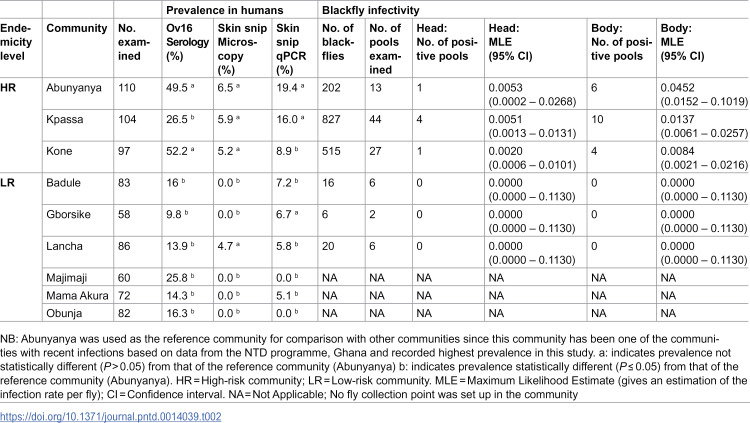 Figure 5
Peer Reviews
No public reviews on file for this paper yet. If you reviewed it on a platform where reviews are public (OpenReview, ICLR, NeurIPS, ICML), you can paste yours below so the community can read it here.
Videos
No videos yet. Explain this paper in a talk, walkthrough, or lecture? Add one.
Taxonomy
TopicsParasitic Diseases Research and Treatment · Insects and Parasite Interactions · Parasites and Host Interactions