Racial variations in sciatic nerve anatomy: A systematic review and meta-analysis
Seid Mohammed Abdu, Hussen Abdu, Endris Seid Muhaba, Ebrahim Msaye Assefa, Gosa Mankelkl, Muhammad Mohsin Khan, Oyelola Adegboye, Oyelola Adegboye, Oyelola Adegboye

TL;DR
This study reviews sciatic nerve variations globally and finds that regional factors, especially in East Asia, have a bigger impact than race.
Contribution
The study provides a systematic review and meta-analysis of sciatic nerve variations across racial and regional groups.
Findings
Type A is the most common sciatic nerve pattern at 86%.
East Asian countries like China and Japan show the highest prevalence of nerve variations.
Regional differences are more significant than racial or continental differences in sciatic nerve variations.
Abstract
The sciatic nerve (SN), the longest and largest nerve in the body, arises from the L4-S3 nerve roots and exits as a single trunk below the piriformis muscle through the greater sciatic foramen. However, variations in its anatomy are common, believed to originate from embryological development. These variations show significant racial and geographical differences, which have often been overlooked in previous review studies. Therefore, this meta-analysis aims to address this gap by systematically reviewing global data to evaluate the impact of race on sciatic nerve variations. A systematic review and meta-analysis were conducted to assess the pooled prevalence of SN variations among racial subgroups. A comprehensive literature search was performed using PubMed, Google Scholar, Hinari, and additional sources, including major anatomical journals and cross-referenced articles. Subgroup…
Genes, proteins, chemicals, diseases, species, mutations and cell lines named across the full text — each resolved to its canonical identifier and authoritative record.
Click any figure to enlarge with its caption.
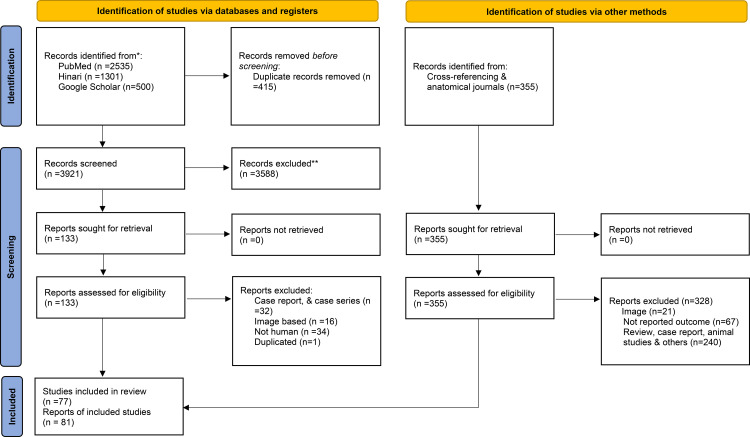 Figure 1
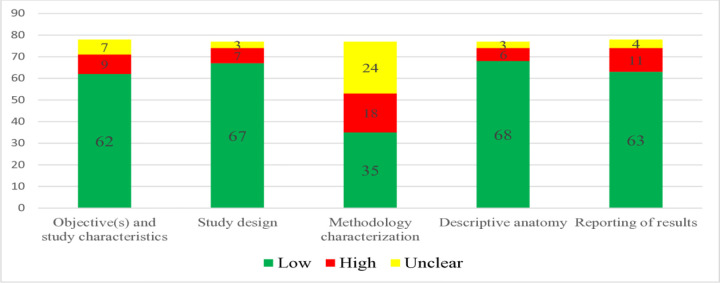 Figure 2
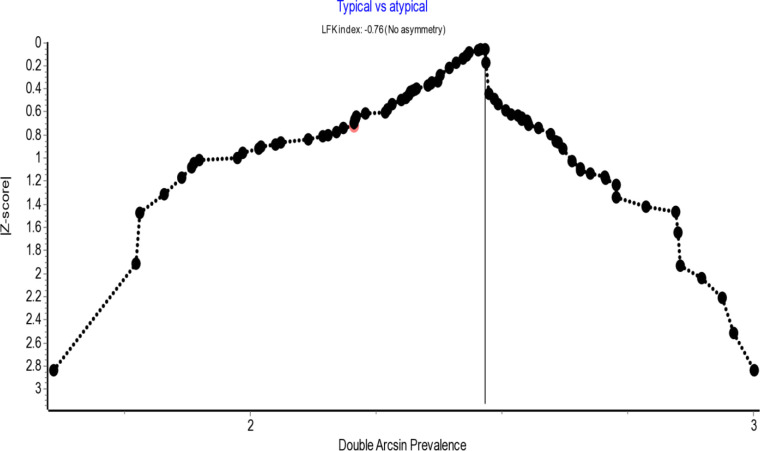 Figure 3
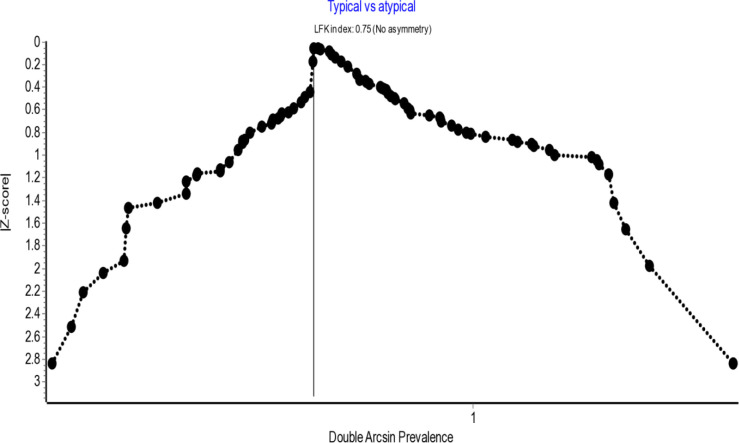 Figure 4
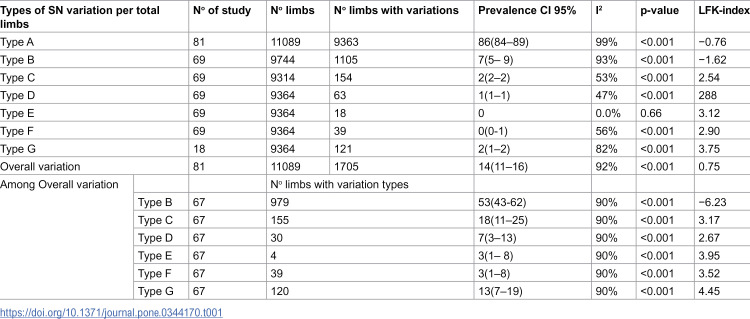 Figure 5
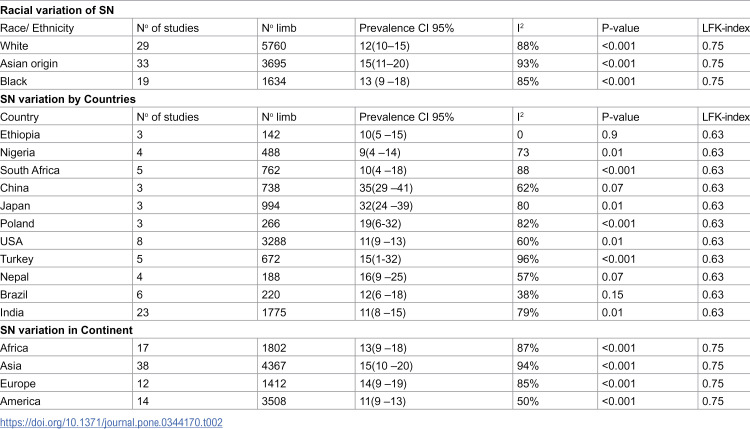 Figure 6
Peer Reviews
No public reviews on file for this paper yet. If you reviewed it on a platform where reviews are public (OpenReview, ICLR, NeurIPS, ICML), you can paste yours below so the community can read it here.
Videos
No videos yet. Explain this paper in a talk, walkthrough, or lecture? Add one.
Taxonomy
TopicsPeripheral Nerve Disorders · Nerve Injury and Rehabilitation · Nerve injury and regeneration