Chlorine dioxide flushing protocols for microbial reduction in dental chair units
Julian Winkler, Susann Herzog, Felix Dahlhaus, Arndt Matschulat, Helmut Uhlmann, Alexander Mellmann, Thorsten Kuczius

TL;DR
This study shows that using chlorine dioxide in dental chair units can effectively reduce microbes and biofilms, with continuous low-dose applications being most effective for long-term disinfection.
Contribution
The study introduces and evaluates continuous low-dose chlorine dioxide protocols for sustainable microbial and biofilm reduction in dental chair units.
Findings
Continuous low-dose ClO₂ (1.2 mg/L) achieved up to 2.51 log₁₀ microbial reduction in DCUs.
High-dose shock disinfection (22.7 mg/L) provided only transient microbial reduction.
ClO₂ was effective in removing biofilms, particularly of P. aeruginosa.
Abstract
Dental chair unit (DCU) waterlines are often microbiologically contaminated. This poses infection risks for patients and dental staff if they are not regularly rinsed and disinfected. This clinical hygiene study evaluated chlorine dioxide (ClO₂) rinsing protocols for microbial and biofilm reduction in DCUs. Automated protocols were tested with varying ClO₂ concentrations and flushing frequencies. Flow cytometry and agar culturing were used to assess microbial load. Continuous low-dose rinsing (1.2 mg/L ClO₂) achieved sustainable microbial reduction (up to 2.51 log₁₀), whereas single high-dose shock disinfections (22.7 mg/L) resulted in transient reductions. ClO₂ was effective in biofilm removal, but its depletion during stagnation highlights the need for continuous application. ClO2 seems to be a suitable disinfectant for removing both microbiological contamination and biofilms of DCUs;…
Genes, proteins, chemicals, diseases, species, mutations and cell lines named across the full text — each resolved to its canonical identifier and authoritative record.
Click any figure to enlarge with its caption.
 Figure 1
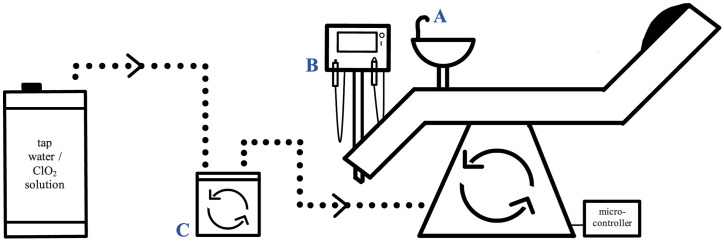 Figure 2
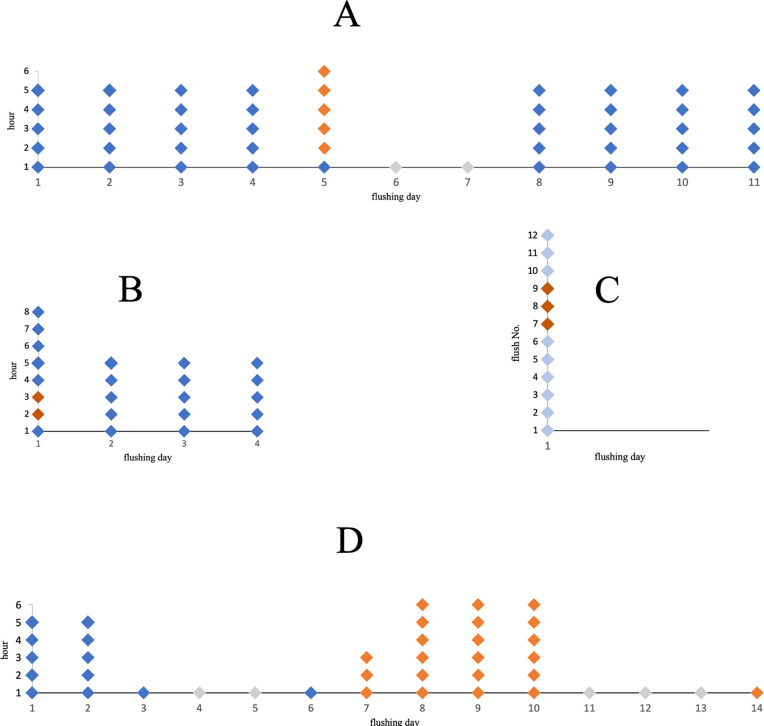 Figure 3
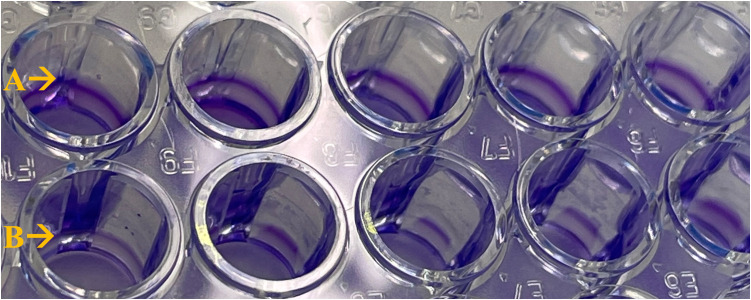 Figure 4
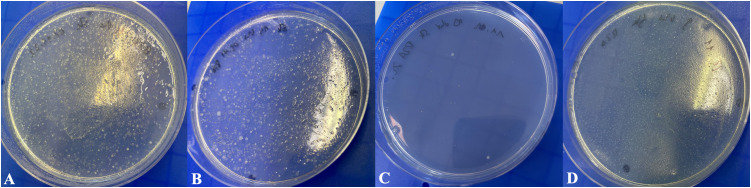 Figure 5
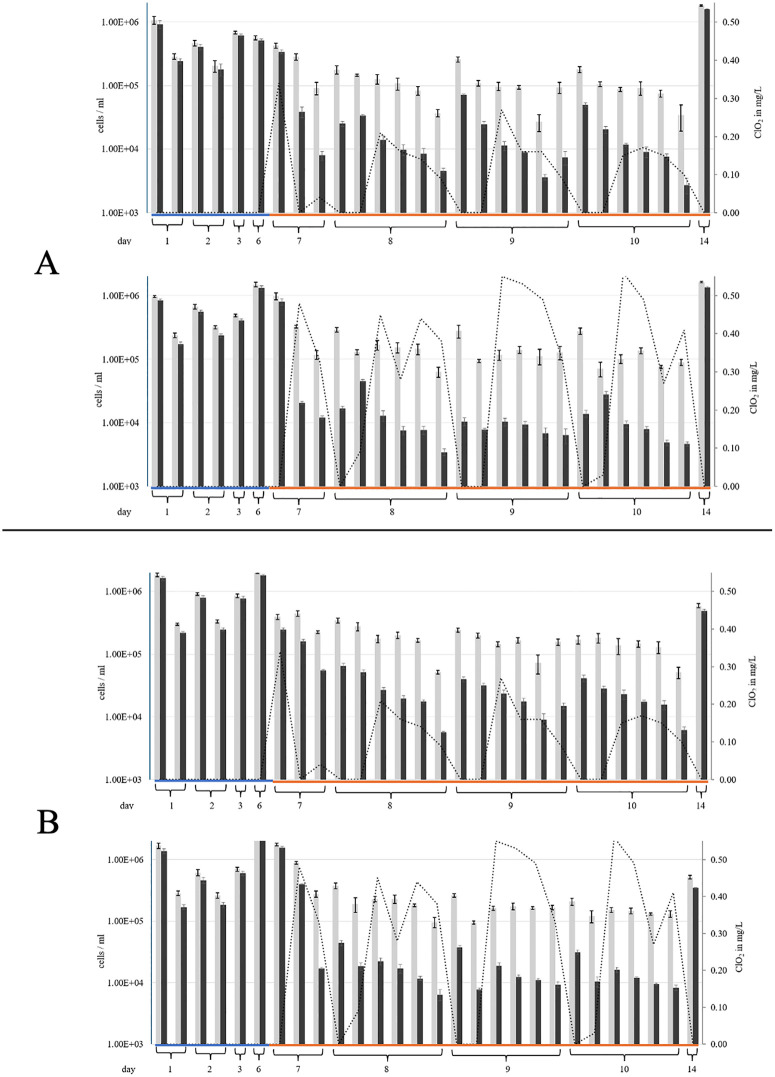 Figure 6
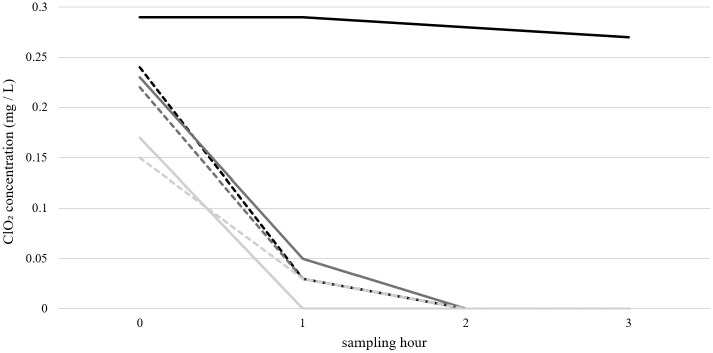 Figure 7
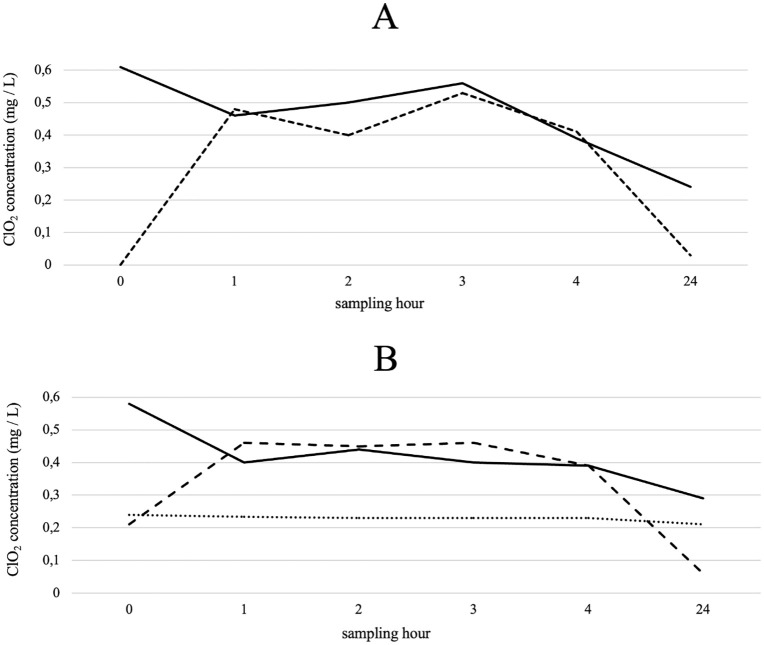 Figure 8
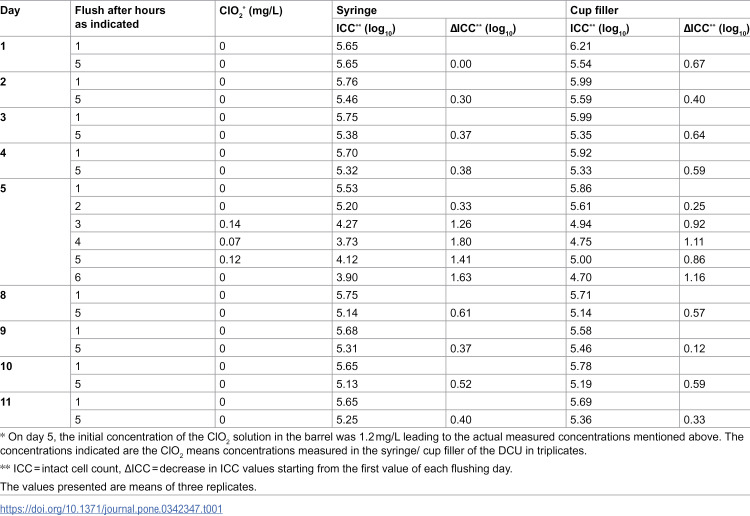 Figure 9
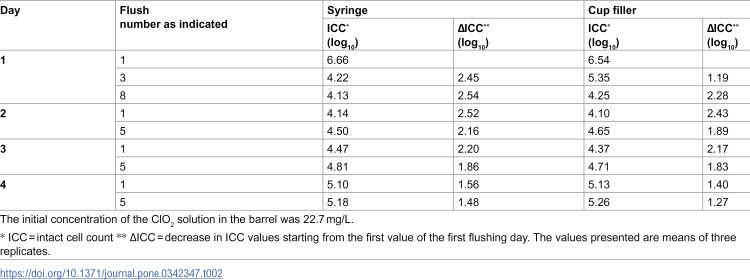 Figure 10
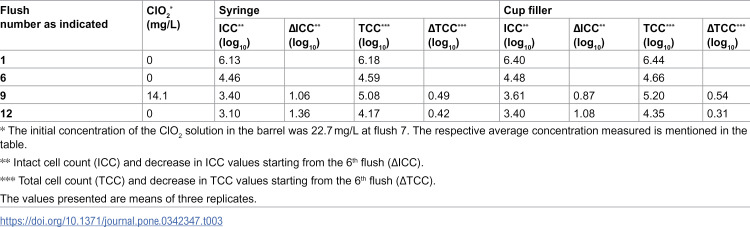 Figure 11
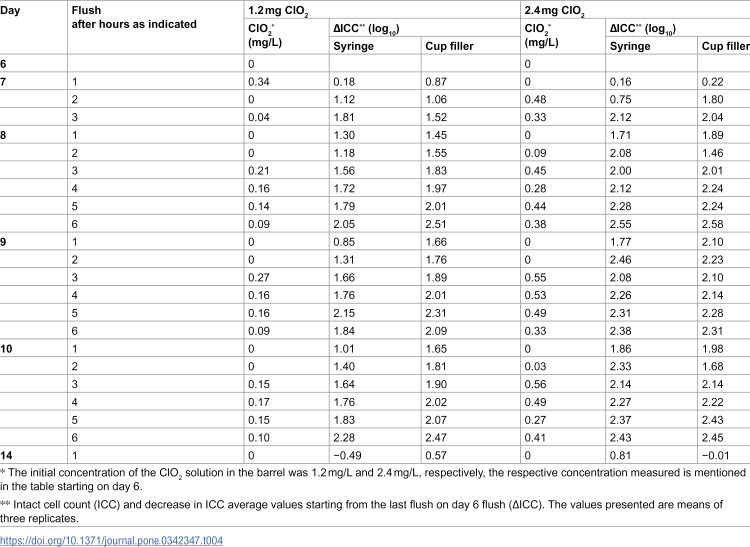 Figure 12
Peer Reviews
No public reviews on file for this paper yet. If you reviewed it on a platform where reviews are public (OpenReview, ICLR, NeurIPS, ICML), you can paste yours below so the community can read it here.
Videos
No videos yet. Explain this paper in a talk, walkthrough, or lecture? Add one.
Taxonomy
TopicsLegionella and Acanthamoeba research · Infection Control in Healthcare · Water Treatment and Disinfection