Twenty years of ungulate disease surveillance by the Canadian Wildlife Health Cooperative (2003–2022)
Kerry Schutten, Leonard Shirose, Brian Stevens, Dayna Goldsmith, Owen Slater, Jamie L. Rothenburger, Susan Kutz, Stéphane Lair, Megan Jones, Laura Bourque, Scott McBurney, Margo Pybus, Iga Stasiak, Erin Moffatt, Naima Jutha, Helen Schwantje, Larissa Nituch, Damien O. Joly

TL;DR
This paper analyzes 20 years of Canadian wildlife disease data, revealing rising threats like chronic wasting disease and new infections in ungulates.
Contribution
The study provides the first comprehensive 20-year analysis of ungulate disease trends in Canada using passive surveillance data.
Findings
Chronic wasting disease cases in cervids increased by 22% per year in Saskatchewan.
Parelaphostrongylus tenuis infections in moose showed a significant upward trend.
Emerging diseases like epizootic hemorrhagic disease virus were detected for the first time in Ontario.
Abstract
Free-ranging wild ungulates are integral to the health and well-being of Canadian socioecological systems, contributing various One Health benefits (e.g., nutrient cycling, sustainable food resources) to the people and other animals that coexist with them. In North America, ungulates face a range of threats to their population health. To address knowledge gaps surrounding the health of Canadian ungulates, we conducted a retrospective analysis of 20 years of ungulate morbidity and mortality data collected through passive disease surveillance conducted by the Canadian Wildlife Health Cooperative (CWHC) and through submissions from collaborative partners. In total, 2525 cases across 12 species were assigned a category of diagnosis (COD) by a CWHC veterinary pathologist. Infectious/ inflammatory/ transmissible CODs accounted for 53.0% of all cases, with two diagnoses made most frequently:…
Genes, proteins, chemicals, diseases, species, mutations and cell lines named across the full text — each resolved to its canonical identifier and authoritative record.
Click any figure to enlarge with its caption.
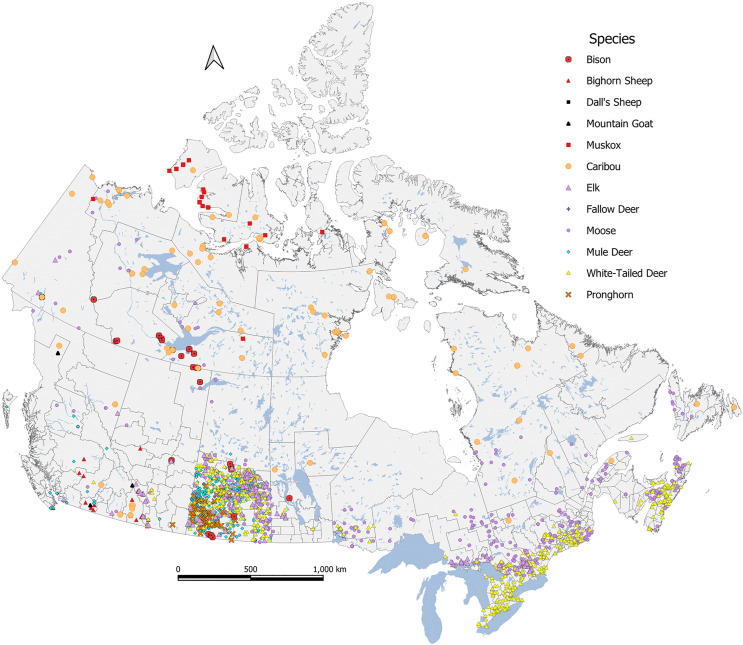 Figure 1
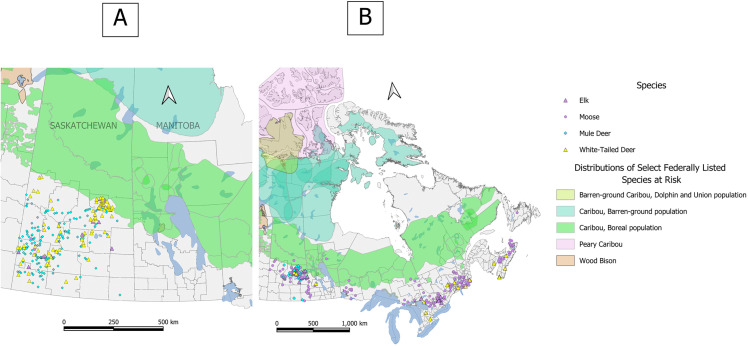 Figure 2
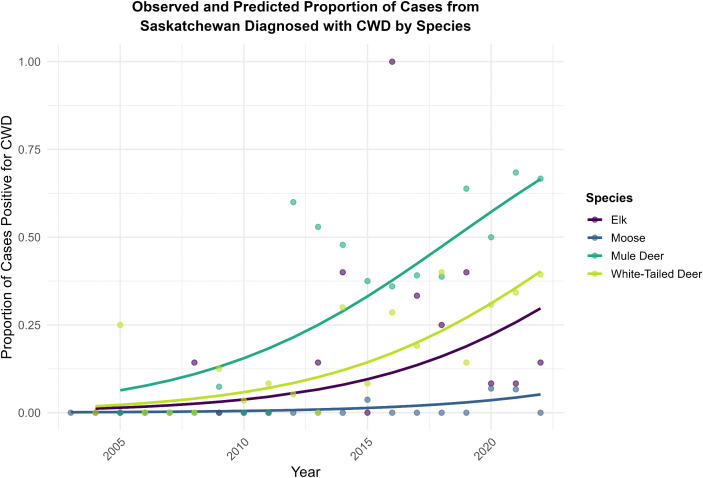 Figure 3
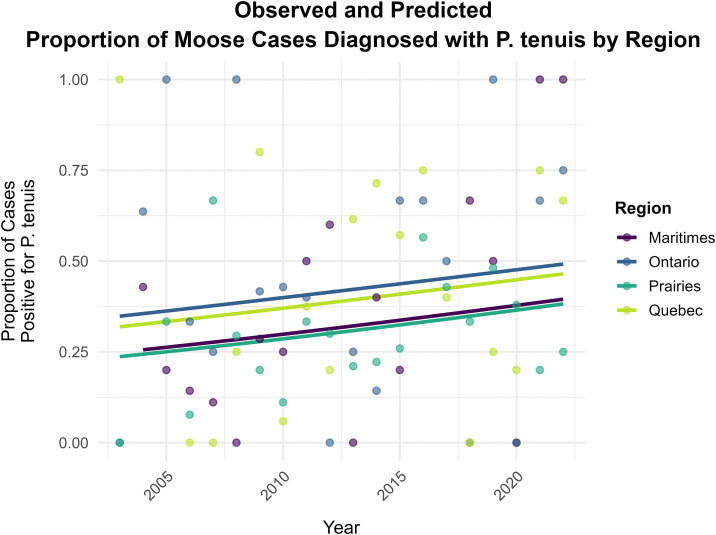 Figure 4
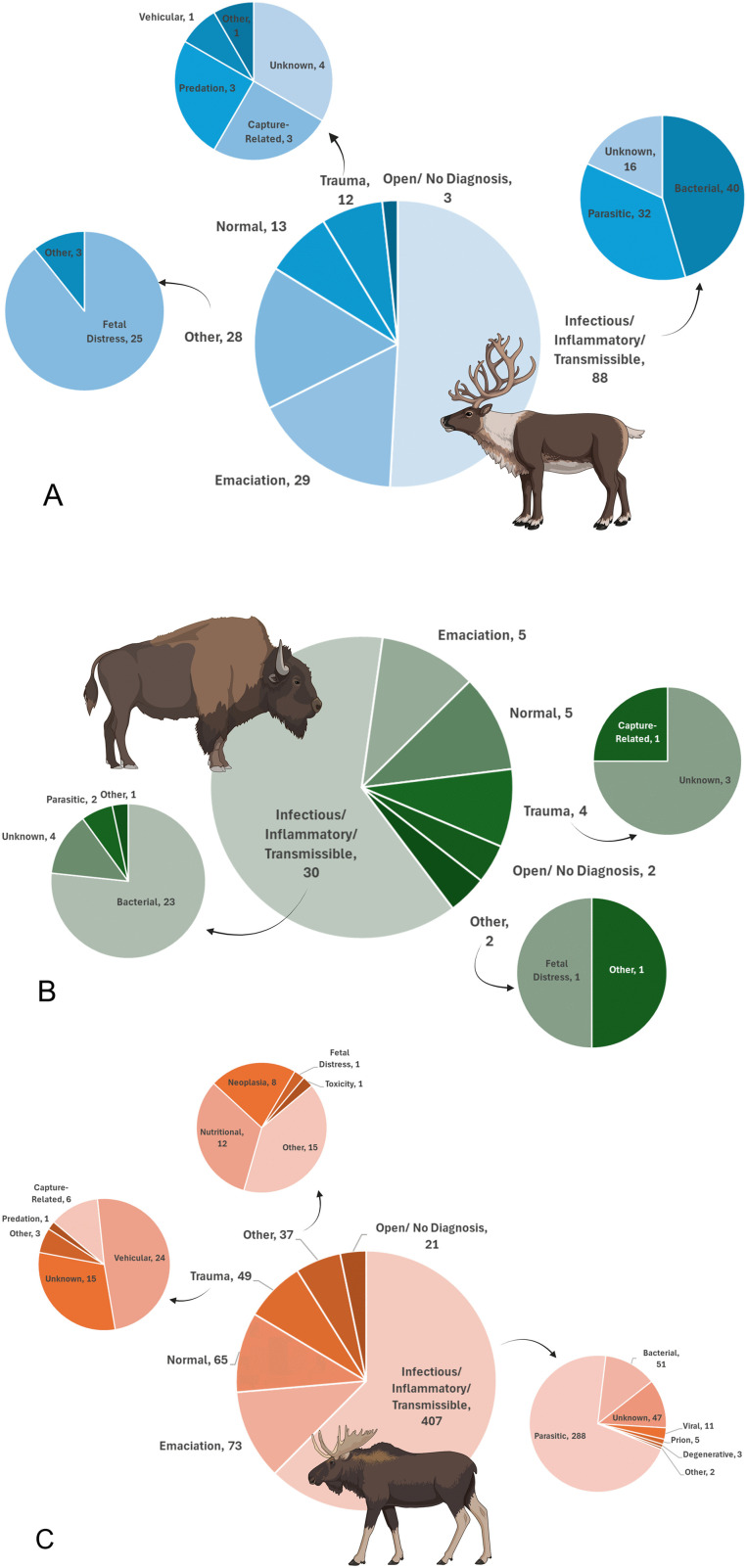 Figure 5
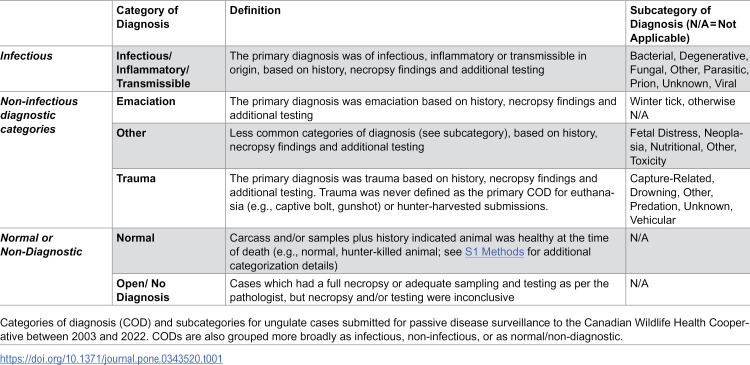 Figure 6
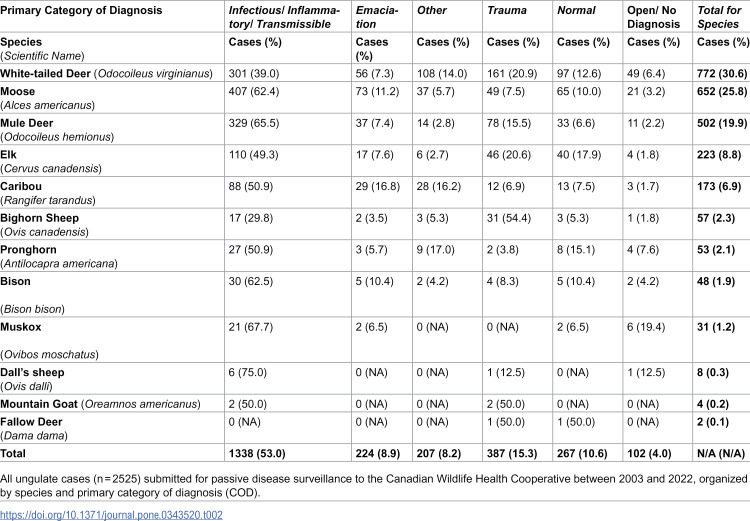 Figure 7
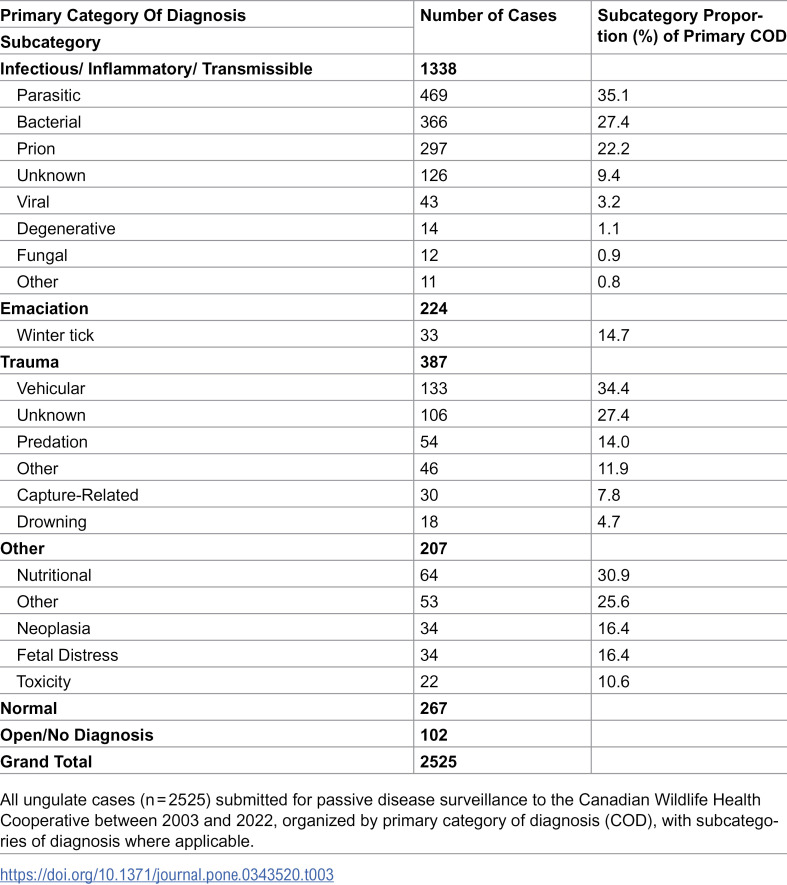 Figure 8
Peer Reviews
No public reviews on file for this paper yet. If you reviewed it on a platform where reviews are public (OpenReview, ICLR, NeurIPS, ICML), you can paste yours below so the community can read it here.
Videos
No videos yet. Explain this paper in a talk, walkthrough, or lecture? Add one.
Taxonomy
TopicsPrion Diseases and Protein Misfolding · Helminth infection and control · Vector-Borne Animal Diseases