Applying machine learning to predict stunting in children under 5 years old based on water, sanitation and hygiene behaviors and infrastructure
Sanaya Sinharoy, Heather Reese, Thomas Clasen, Sheela S. Sinharoy, Ashish Khobragade, Ashish Khobragade, Ashish Khobragade, Ashish Khobragade, Ashish Khobragade

TL;DR
This study uses machine learning to predict childhood stunting based on water, sanitation, and hygiene factors in rural India, showing high accuracy with extreme gradient boosting.
Contribution
The study introduces a novel application of extreme gradient boosting with feature engineering to predict stunting using WaSH data.
Findings
Extreme gradient boosting with forward selection achieved 88% accuracy in predicting stunting.
Four key WaSH factors were identified as strong predictors: improved sanitation, handwashing stations, piped water, and preferred drinking water sources.
The model had an AUROC of 0.959, indicating strong predictive power.
Abstract
Child stunting continues to pose a substantial global health challenge, requiring multifaceted strategies that combine conventional epidemiological approaches with advanced analytic methods. The aim of this study was to determine the most effective machine learning model for predicting stunting based on water, sanitation, and hygiene behaviors and infrastructure, with the goal of identifying high-risk children who would benefit most from targeted interventions. This study was a secondary analysis of data from a matched cohort study assessing the effectiveness of combined on-premise piped water and improved sanitation for improved health outcomes in rural Odisha, India. Data for the parent study were collected from 2,398 households with a child under five years of age across 90 villages, and complete data were available for 1,196 children. Feature engineering techniques were employed to…
Genes, proteins, chemicals, diseases, species, mutations and cell lines named across the full text — each resolved to its canonical identifier and authoritative record.
Click any figure to enlarge with its caption.
 Figure 1
 Figure 2
 Figure 3
 Figure 4
 Figure 5
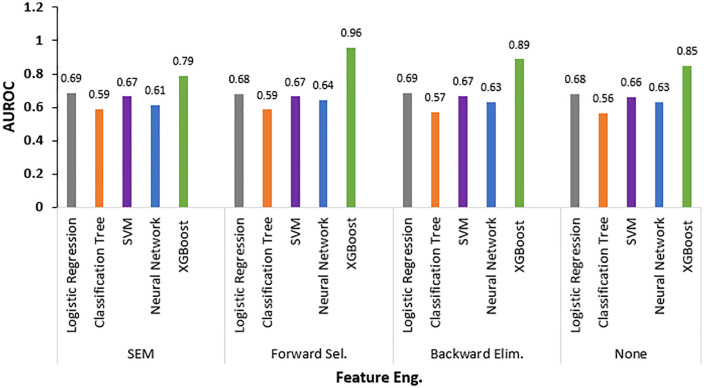 Figure 6
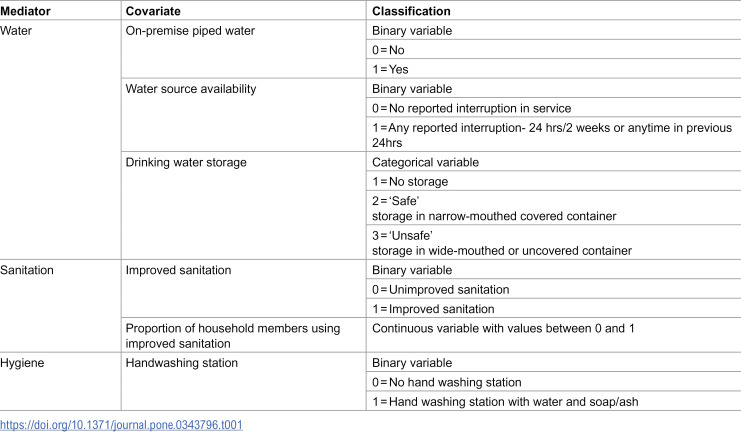 Figure 7
 Figure 8
 Figure 9
 Figure 10
 Figure 11
 Figure 12
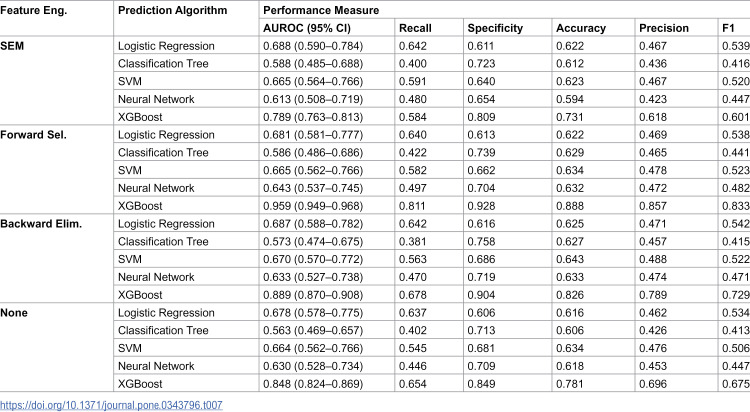 Figure 13
Peer Reviews
No public reviews on file for this paper yet. If you reviewed it on a platform where reviews are public (OpenReview, ICLR, NeurIPS, ICML), you can paste yours below so the community can read it here.
Videos
No videos yet. Explain this paper in a talk, walkthrough, or lecture? Add one.
Taxonomy
TopicsChild Nutrition and Water Access · Wastewater Treatment and Reuse · Global Maternal and Child Health