Childhood cancer in Sweden during the COVID-19 pandemic: Temporal patterns in incidence and survival in a nationwide register-based cohort study
Christina-Evmorfia Kampitsi, Javier Louro, Hanna Mogensen, Friederike Erdmann, Kleopatra Georgantzi, Mats Heyman, Päivi Lähteenmäki, Anna Nilsson, Maria Feychting, Giorgio Tettamanti, Heather Van Epps, Alexandra Tosun, Alexandra Tosun, Alexandra Tosun

TL;DR
This study found that childhood cancer incidence and survival in Sweden remained stable during the pandemic, with no evidence of worse outcomes despite concerns about disruptions.
Contribution
The study provides novel insights into the resilience of childhood cancer care in Sweden during the pandemic using nationwide registry data.
Findings
Overall cancer incidence rates remained stable during the pandemic years (2020–2022) compared to pre-pandemic years (2015–2019).
Some cancer types showed temporary fluctuations in incidence, but no increase in mortality or worse survival was observed.
One-year survival improved slightly during the pandemic, suggesting care disruptions did not lead to poorer outcomes.
Abstract
The COVID-19 pandemic raised concerns about diagnostic delays and treatment disruptions in childhood cancer, potentially threatening survival. We assessed childhood cancer incidence and survival in Sweden, where only few restrictions were implemented, during the pandemic period. We conducted a nationwide, register-based cohort study including all children and adolescents (0–19 years) with a new cancer diagnosis, defined according to the International Classification of Childhood Cancer, Third Edition (ICCC-3), reported to the Swedish National Cancer Register during 2015–2022 (N = 3,333; 2,069 pre-pandemic and 1,264 during the pandemic). We compared quarter-specific age-standardized incidence rates (ASR) per 1,000,000 (overall and by diagnostic group) during 2020–2022 to the 2015–2019 average. Overall survival at 3, 6, and 12 months post-diagnosis was calculated using the Kaplan–Meier…
Genes, proteins, chemicals, diseases, species, mutations and cell lines named across the full text — each resolved to its canonical identifier and authoritative record.
Click any figure to enlarge with its caption.
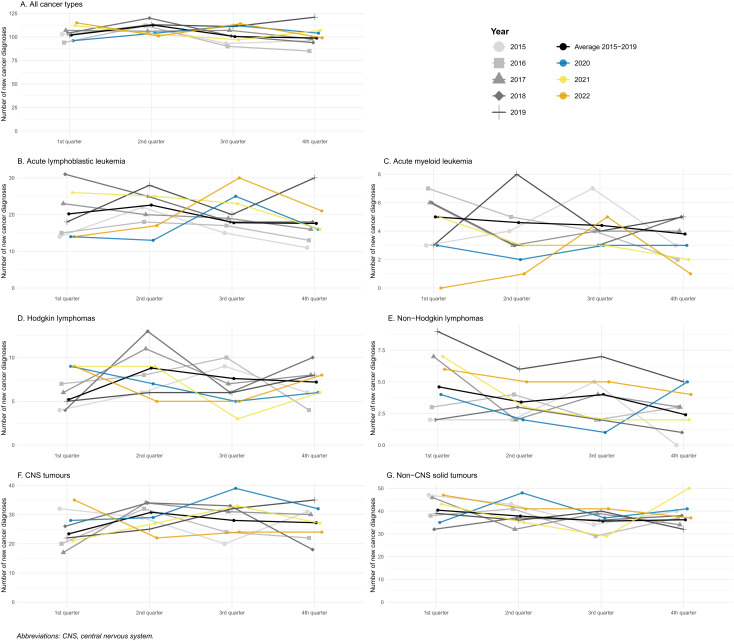 Figure 1
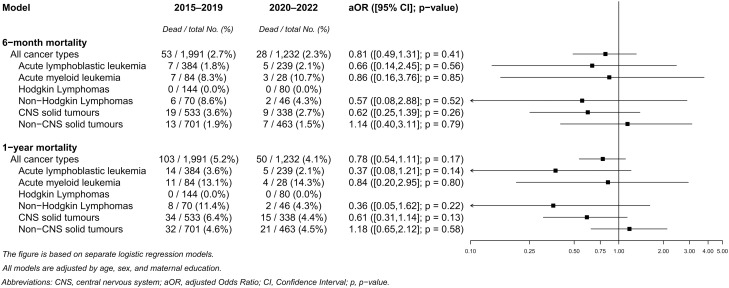 Figure 2
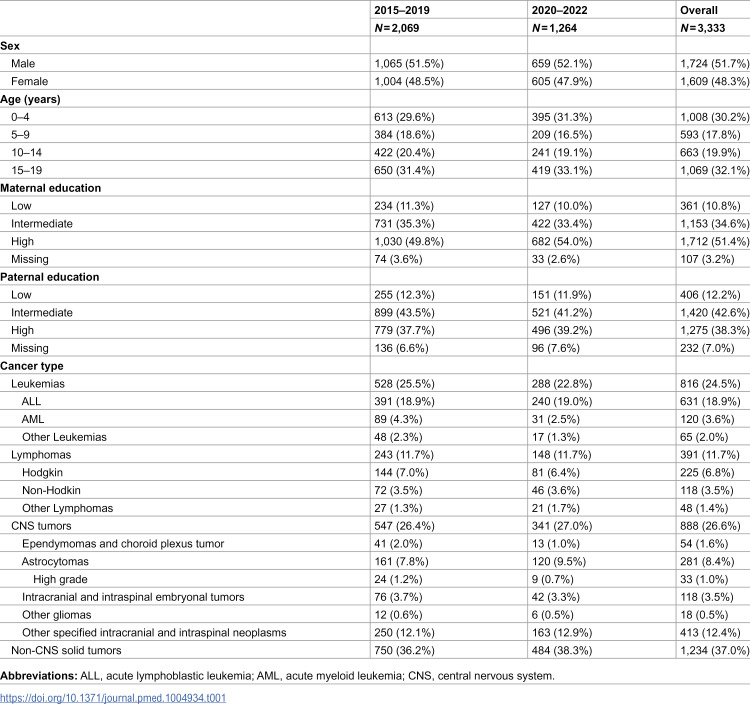 Figure 3
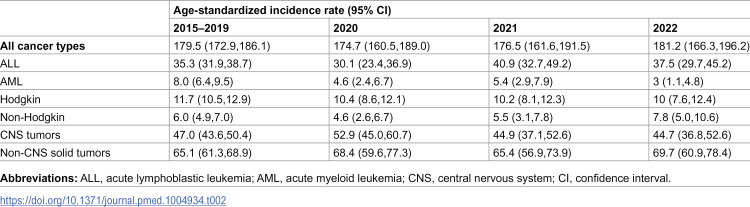 Figure 4
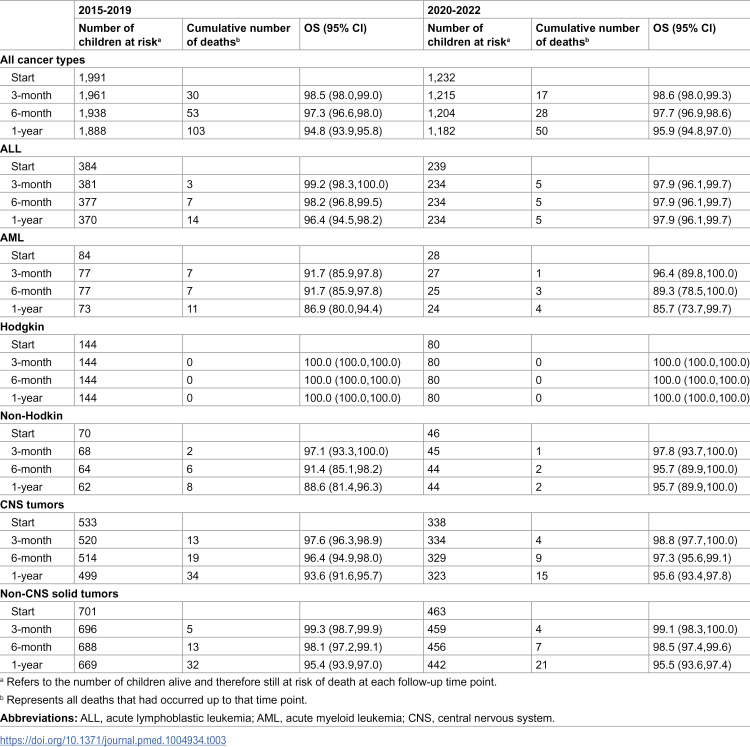 Figure 5
Peer Reviews
No public reviews on file for this paper yet. If you reviewed it on a platform where reviews are public (OpenReview, ICLR, NeurIPS, ICML), you can paste yours below so the community can read it here.
Videos
No videos yet. Explain this paper in a talk, walkthrough, or lecture? Add one.
Taxonomy
TopicsCOVID-19 and healthcare impacts · Acute Lymphoblastic Leukemia research · Childhood Cancer Survivors' Quality of Life