Contraceptive use intention among women in Pakistan: Application of theory of planned behavior
Zoya Waqas, Aisha Irum, Muhammad Ibrahim, Maheen Sughra, Sanaa Khan, Ayesha Khan, Adnan Ahmad Khan

TL;DR
This study explores how social expectations and personal control influence contraceptive use intentions among Pakistani women using a behavioral theory.
Contribution
Applies the Theory of Planned Behavior to contraceptive intentions in a patriarchal, collectivist context like Pakistan.
Findings
Subjective norms negatively influenced contraceptive intentions (β = −0.056, p < 0.001).
Perceived behavioral control positively influenced contraceptive intentions (β = 0.091, p < 0.001).
Most women lacked FP knowledge and were unaware of contraceptive side effects.
Abstract
Unintended pregnancies remain a major public health concern globally and in Pakistan, where family planning (FP) uptake continues to be hindered by entrenched social and behavioral barriers. This study applies the Theory of Planned Behavior (TPB) to examine how attitudes, subjective norms, and perceived behavioral control (PBC) shape women’s contraceptive intentions in Pakistan. We analyzed data from 13,335 non-pregnant women aged 15–49 using the Pakistan Demographic and Health Survey (PDHS) 2017–18. Partial Least Squares Structural Equation Modeling (PLS-SEM) was used to test TPB pathways. Model reliability, validity, and fit were assessed using Composite Reliability, Average Variance Extracted, discriminant validity indices, and bootstrapped estimates to ensure analytical rigor. Over half of respondents lacked formal education, and most (84%) were unemployed. Only 23% had FP…
Genes, proteins, chemicals, diseases, species, mutations and cell lines named across the full text — each resolved to its canonical identifier and authoritative record.
Click any figure to enlarge with its caption.
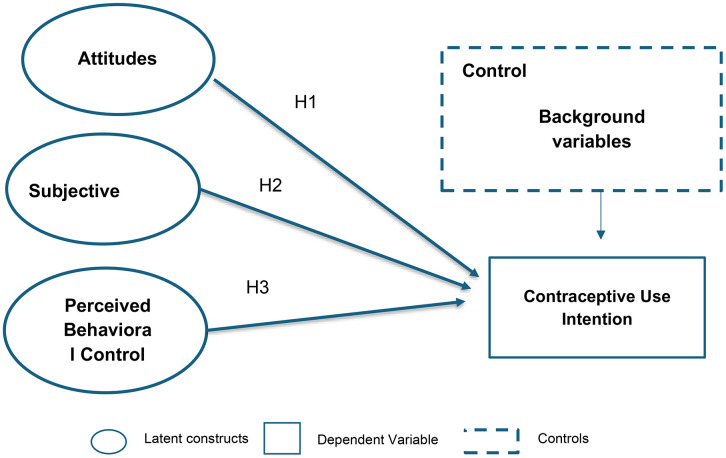 Figure 1
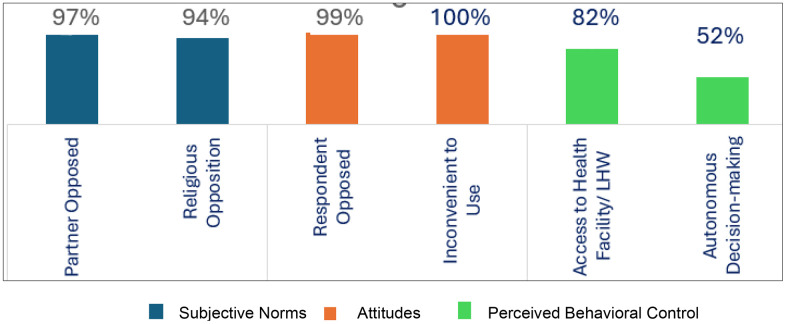 Figure 2
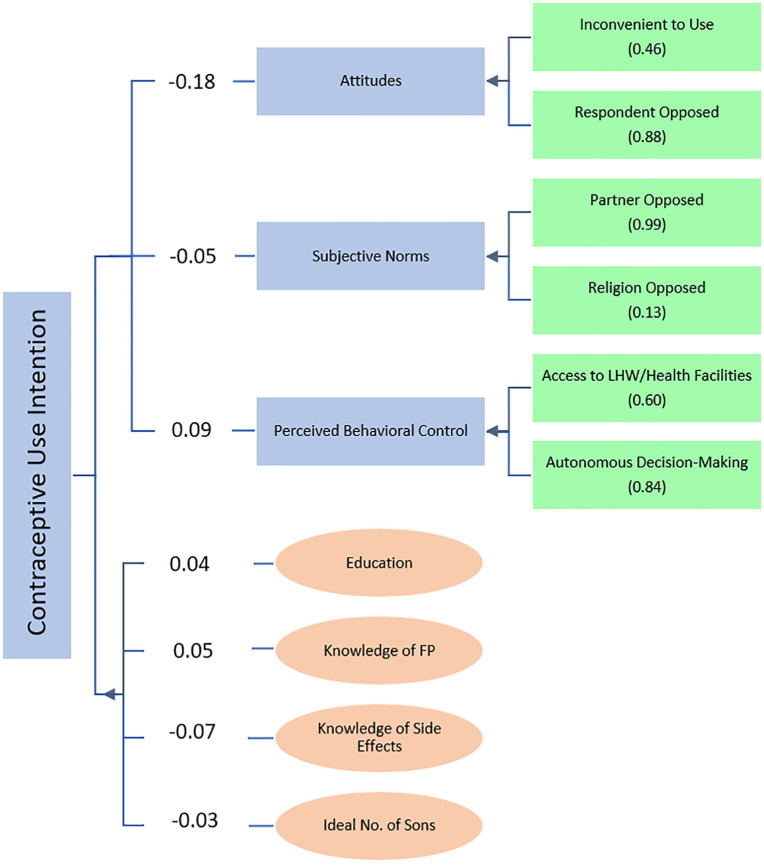 Figure 3
 Figure 4
 Figure 5
 Figure 6
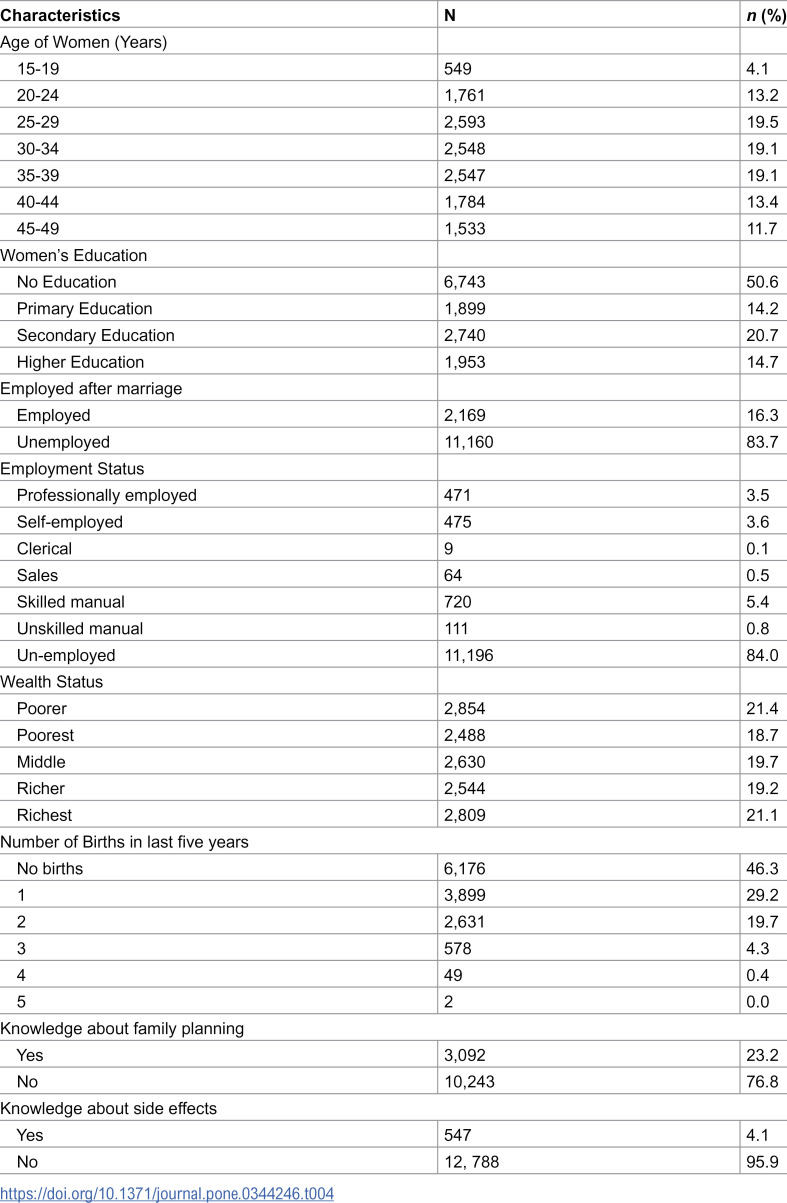 Figure 7
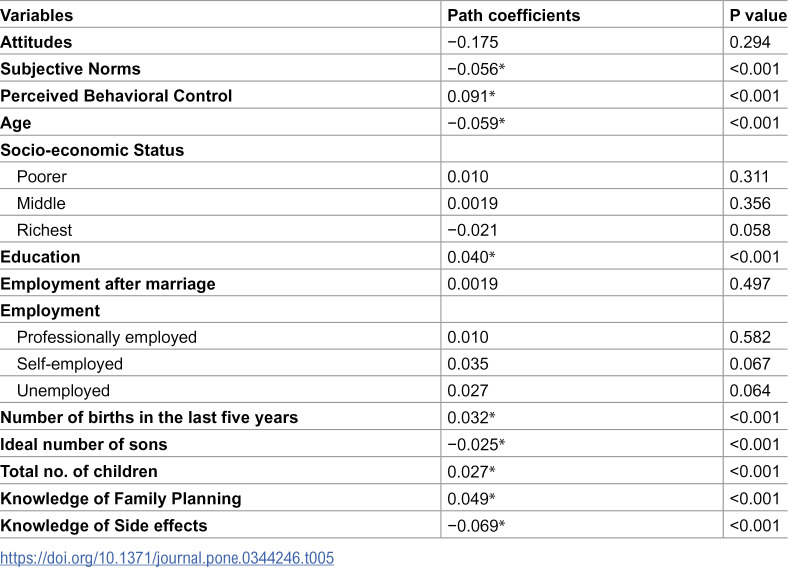 Figure 8
Peer Reviews
No public reviews on file for this paper yet. If you reviewed it on a platform where reviews are public (OpenReview, ICLR, NeurIPS, ICML), you can paste yours below so the community can read it here.
Videos
No videos yet. Explain this paper in a talk, walkthrough, or lecture? Add one.
Taxonomy
TopicsReproductive Health and Contraception · Global Maternal and Child Health · Adolescent Sexual and Reproductive Health