The Effects of Post‐Activation Performance Enhancement on High Intensity Interval Training: A Comparison of Traditional and Cluster Set Protocols
Merve Cin, Özcan Saygın, Refik Çabuk

TL;DR
This study compares traditional and cluster set resistance exercises before HIIT to see how they affect endurance performance in trained athletes.
Contribution
The study reveals that cluster set PAPE protocols enhance HIIT performance more effectively than traditional sets.
Findings
Both PAPE protocols increased time at ≥90% V˙O2max and total work duration compared to control.
PAPEcluster set resulted in significantly longer time at ≥90% V˙O2max and total work duration than PAPEtraditional set.
PAPE effects are attributed to improved exercise tolerance and altered V˙O2 kinetics, not changes in maximal cardiorespiratory responses.
Abstract
The present study aimed to examine the effects of post‐activation performance enhancement (PAPE) protocols employing half‐squat exercises, performed using either a traditional set (PAPEtraditionalset) or a cluster set (PAPEclusterset), on peak oxygen uptake (V˙O2peak), the time spent at ≥ 90% maximal oxygen uptake (V˙O2max), and total exercise duration during high‐intensity interval training (HIIT) in trained athletes. Ten well‐trained endurance athletes involved in endurance sport (V˙O2max: 63.3 ± 5.1 mL·kg‐1∙min‐1) completed three HIIT sessions (until failure x (1‐min run at V˙O2max velocity + 1‐min active recovery at 30% V˙O2max velocity)) under different conditions: (i) control (warm‐up only: jogging and stretching), (ii) warm‐up + three sets of six repetitions of the half‐squat (traditional set; 120 s of rest between sets), and (iii) warm‐up + three sets of 2 + 2 + 2 repetitions of…
Genes, proteins, chemicals, diseases, species, mutations and cell lines named across the full text — each resolved to its canonical identifier and authoritative record.
Click any figure to enlarge with its caption.
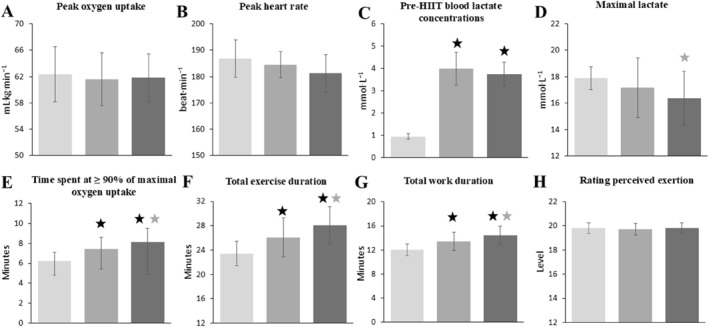 Figure 1
 Figure 2
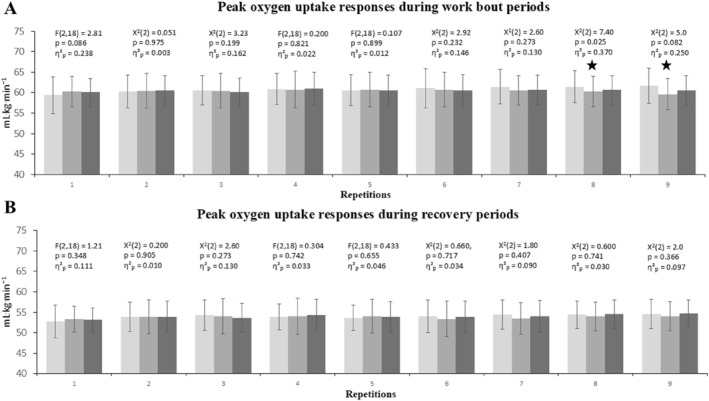 Figure 3
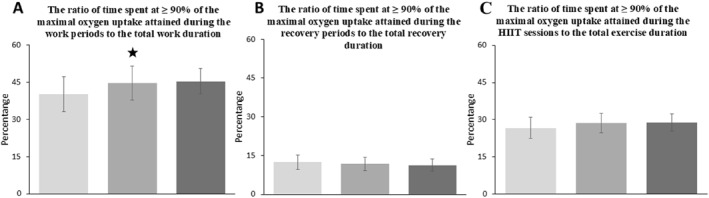 Figure 4
 Figure 5
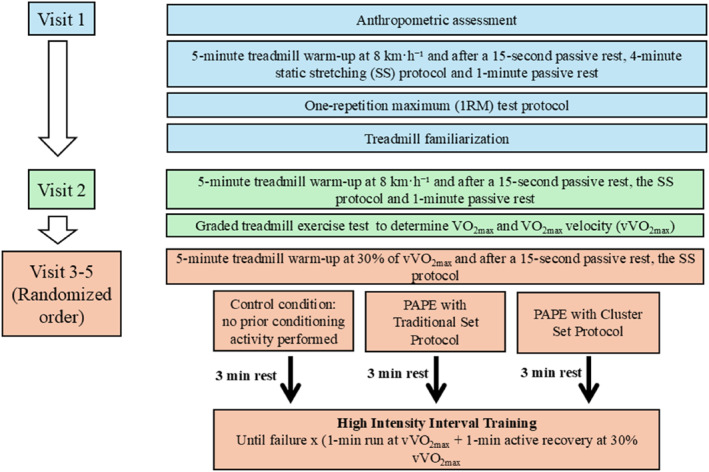 Figure 6
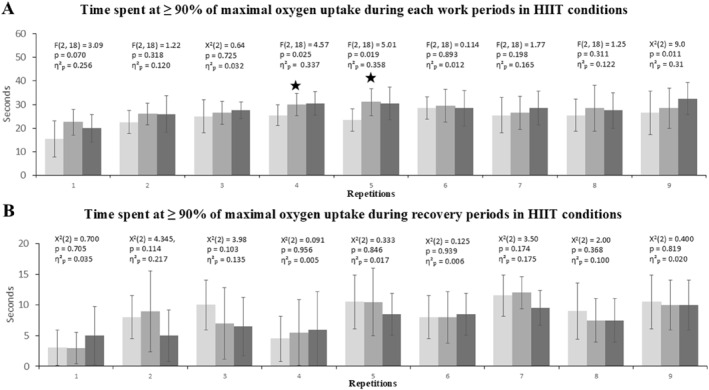 Figure 7
Peer Reviews
No public reviews on file for this paper yet. If you reviewed it on a platform where reviews are public (OpenReview, ICLR, NeurIPS, ICML), you can paste yours below so the community can read it here.
Videos
No videos yet. Explain this paper in a talk, walkthrough, or lecture? Add one.
Taxonomy
TopicsSports Performance and Training · Genetics and Physical Performance · Cardiovascular and exercise physiology