A Case of Atrioventricular Nodal Re-entrant Rhythm
Sudipta Mondal, Nadeem Afroz Muslim, Debargha Dhua

TL;DR
A 60-year-old man with liver disease experienced a heart rhythm issue that was resolved with pacing, prompting investigation into its cause.
Contribution
The paper presents a clinical case highlighting the diagnosis and management of an unusual heart rhythm.
Findings
The patient's rhythm was easily terminated with ventricular overdrive pacing.
The ECG showed transitions between a borderline R–P narrow complex rhythm and sinus rhythm.
The case raises questions about the underlying mechanism of the observed rhythm.
Abstract
A 60-year-old male with a history of decompensated chronic liver disease and resolving hepatic encephalopathy was transferred for further evaluation following a witnessed episode of prolonged asystole. The patient’s admission electrocardiogram showed spontaneous transitions between a borderline R–P narrow complex rhythm and sinus rhythm. The rhythm was observed to be easily terminated with ventricular overdrive pacing via the temporary catheter. We questioned what the mechanism of the rhythm may be.
Genes, proteins, chemicals, diseases, species, mutations and cell lines named across the full text — each resolved to its canonical identifier and authoritative record.
Click any figure to enlarge with its caption.
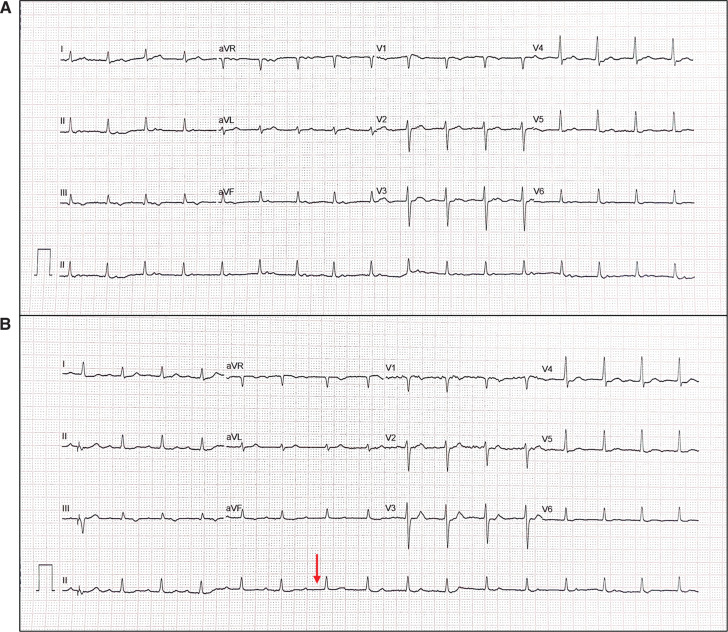 Figure 1
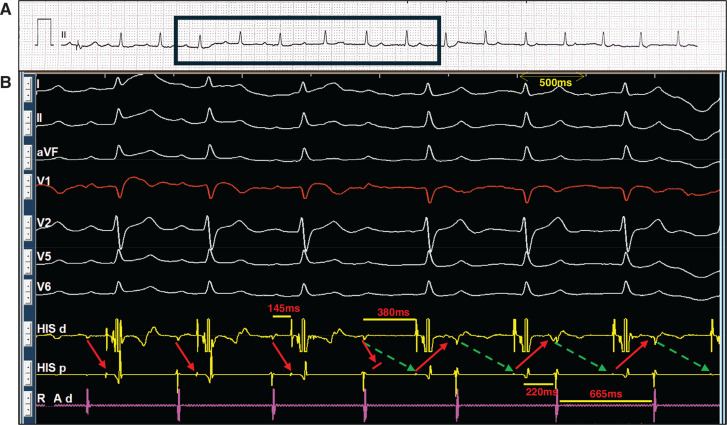 Figure 2
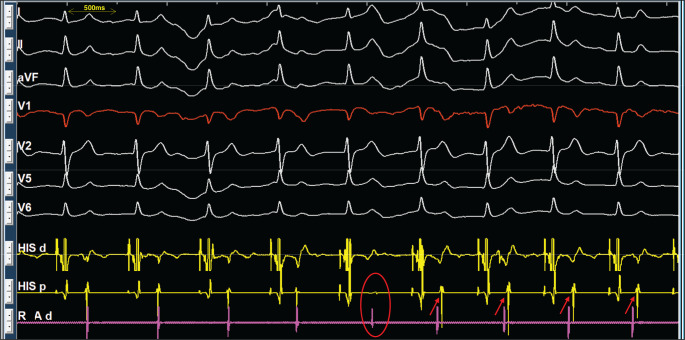 Figure 3
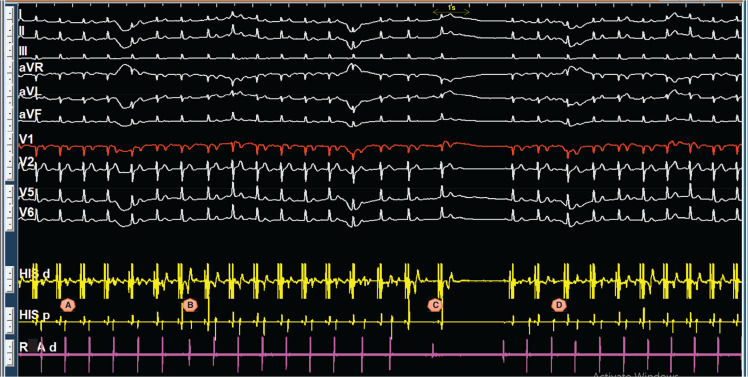 Figure 4
Peer Reviews
No public reviews on file for this paper yet. If you reviewed it on a platform where reviews are public (OpenReview, ICLR, NeurIPS, ICML), you can paste yours below so the community can read it here.
Videos
No videos yet. Explain this paper in a talk, walkthrough, or lecture? Add one.
Taxonomy
TopicsCardiac Arrhythmias and Treatments · Cardiac pacing and defibrillation studies · Cardiovascular Effects of Exercise