Clinical, Radiological, and Genetic Profile of Patients with FA2H-Associated Neurodegeneration: Eight Cases from India and a Review of the Literature
Vikram V. Holla, Riyanka Kumari, Neeharika Sriram, Nitish Kamble, Jitender Saini, Ravi Yadav, Babylakshmi Muthusamy, Pramod Kumar Pal

TL;DR
This study reports on eight Indian patients with a rare neurodegenerative disorder caused by mutations in the FA2H gene, detailing their clinical, radiological, and genetic features.
Contribution
The study identifies novel FA2H gene variants and their potential roles in iron binding and loss of protein domains in FAHN patients.
Findings
Eight patients with FAHN presented with early-onset neurological symptoms and characteristic brain imaging findings.
Seven unique FA2H gene variants were identified, including missense, frameshift, and in-frame deletion/duplication mutations.
Some variants affect iron-binding regions or lead to loss of critical protein domains, potentially disrupting FA2H function.
Abstract
Autosomal recessive spastic paraplegia 35 (SPG35), also known as Fatty acid hydroxylase-associated neurodegeneration (FAHN), is a rare recessive neurodegenerative disorder with or without ataxia, dystonia, and other neurological findings. It is caused by genetic variants in FA2H, which encodes fatty acid 2-hydroxylase. To report the clinical, electrophysiological, radiological, and genetic profile of patients diagnosed with FAHN. We performed a retrospective chart review of genetically proven cases of FAHN from our database. We identified eight patients (6 females) with genetically proven FAHN. All patients presented with first-decade onset pyramidal syndrome with or without ataxia and with radiological findings of callosal atrophy, peri-ventricular white matter hyperintensity, and cerebellar atrophy. Iron accumulation was observed in four of them. Whole exome sequencing revealed…
Genes, proteins, chemicals, diseases, species, mutations and cell lines named across the full text — each resolved to its canonical identifier and authoritative record.
Click any figure to enlarge with its caption.
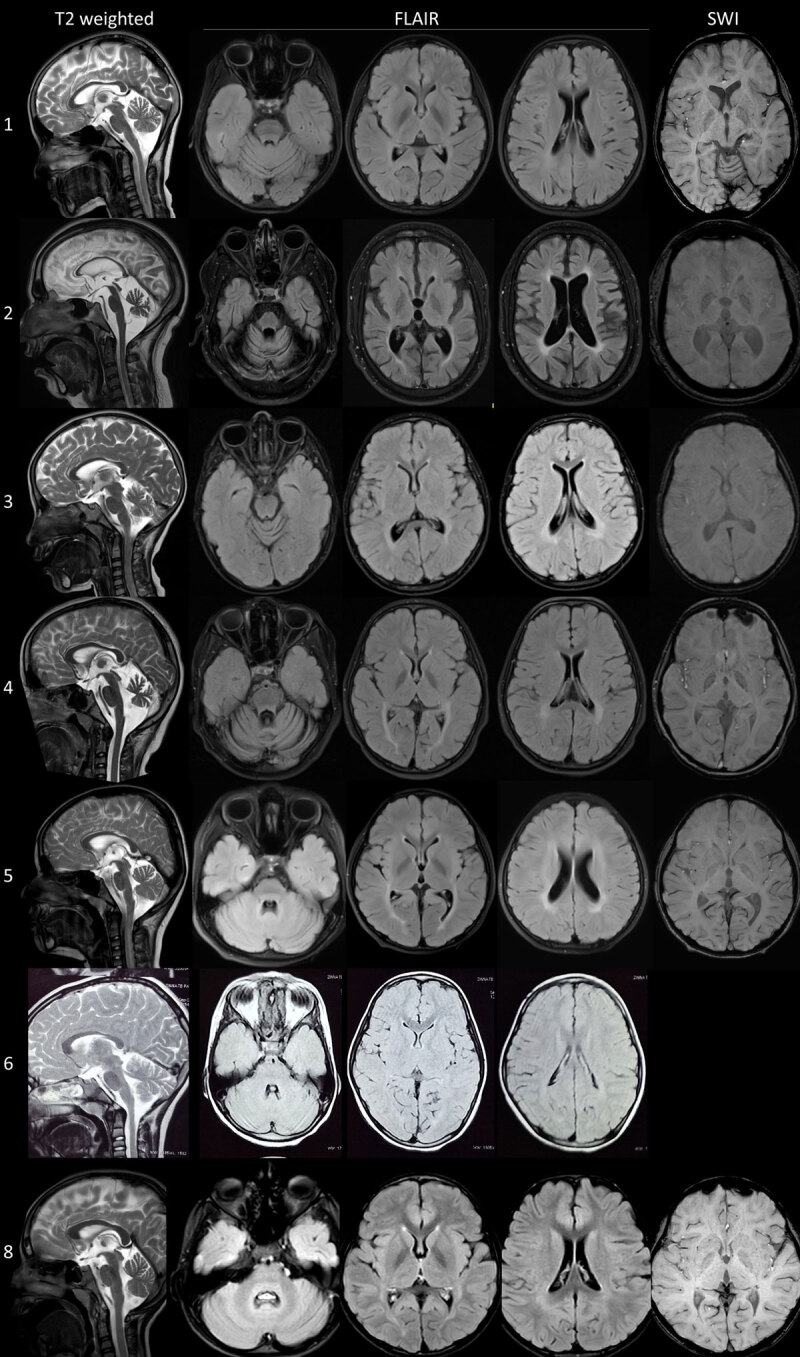 Figure 1
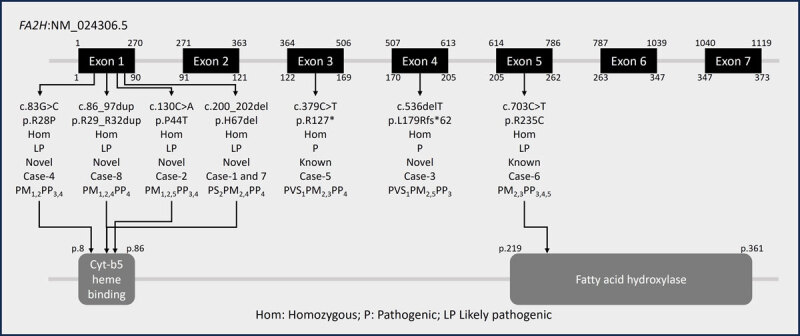 Figure 2
Peer Reviews
No public reviews on file for this paper yet. If you reviewed it on a platform where reviews are public (OpenReview, ICLR, NeurIPS, ICML), you can paste yours below so the community can read it here.
Videos
No videos yet. Explain this paper in a talk, walkthrough, or lecture? Add one.
Taxonomy
TopicsNeurological diseases and metabolism · Metabolism and Genetic Disorders · Genomics and Rare Diseases